

















































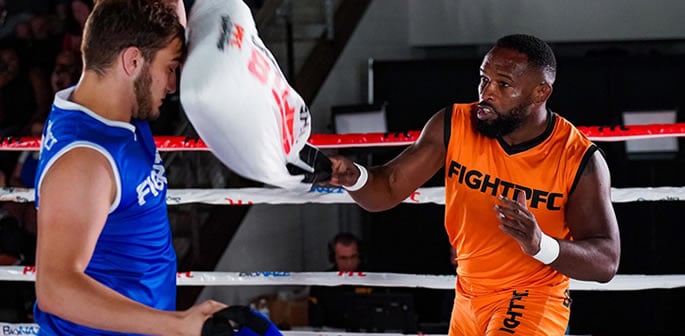
The stage was set for something bigger.
Once confined to sleepovers, pillow fighting has dramatically evolved.
It has shed its pyjama-party image entirely and has stepped into the bright lights of the combat sports arena.
This transformation birthed a new, legitimate athletic endeavour.
Professional pillow fighting is a sport demanding great skill and strategy. It also requires a surprising level of stamina from its athletes.
The sport offers all the drama of a professional fight. However, it removes the associated violence and danger.
Let’s delve into this compelling spectacle and the rules.
A Surprising History

Pillow fighting might seem like child’s play, but it has deep roots in informal play across generations and cultures.
Long before it became a spectacle, it was a joyful outlet, letting kids and siblings burn off energy and release frustration in a safe, harmless way.
Early home videos captured their chaotic charm, making it a near-universal part of growing up.
But it wasn’t until the 21st century that someone tried to formalise the chaos.
In 2004, Toronto saw the launch of the Pillow Fight League (PFL), a semi-professional, women-only competition that mixed pro wrestling flair with the softness of pillows.
The PFL garnered media attention and built a niche following through a string of organised events.
While it eventually faded from the spotlight, it proved there was a real appetite for a more structured, sport-like version of the game. The stage was set for something bigger.
The Pillow Fight Championship (PFC)
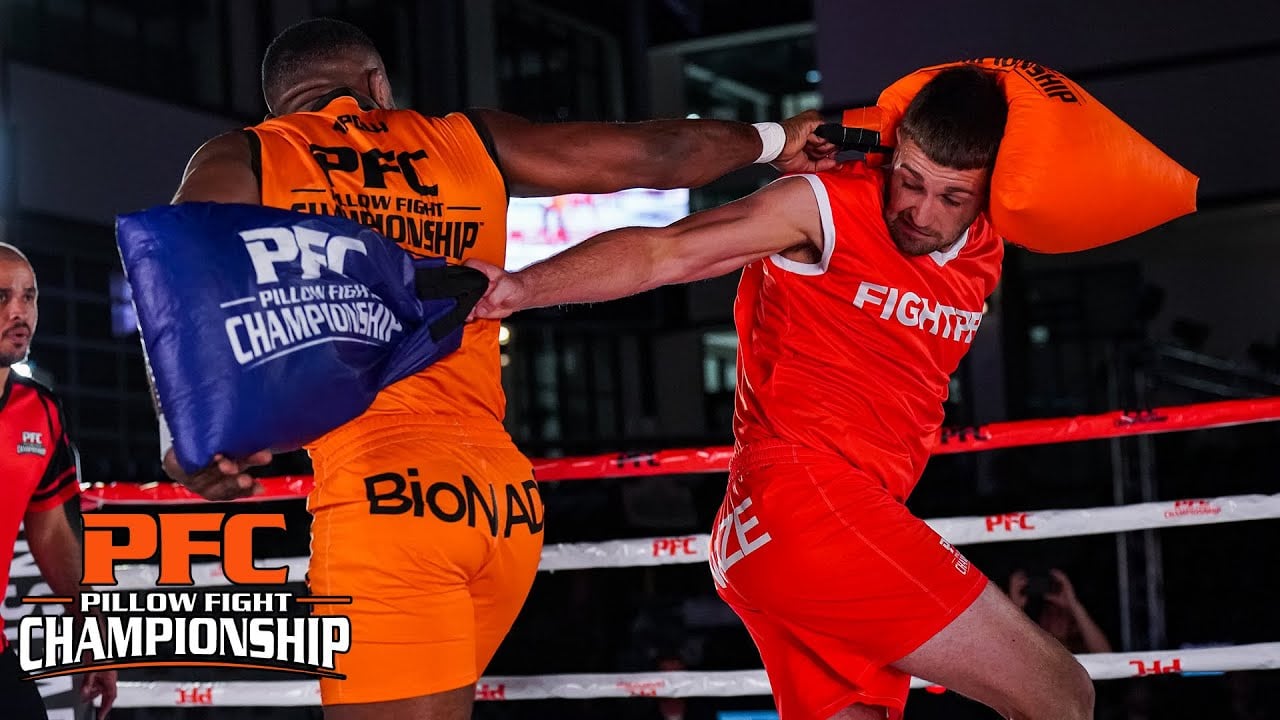
Enter the Pillow Fight Championship (PFC), the sport’s modern face.
Founded in 2021 by brothers Steve and Paul Williams, the PFC was born during the Covid-19 pandemic and positioned as a clean, family-friendly alternative to MMA.
The idea was simple: retain the thrill of combat sports without the blood and brutality.
They saw a gap in a market flooded with violent content and aimed to fill it with something just as exciting but safe.
Their goal? Build a combat sport that advertisers could get behind, and one that families could actually watch together.
The PFC’s first event took place in August 2021, with its inaugural championship held in Florida just five months later.
Sixteen men and eight women competed in the January 2022 tournament, broadcast on pay-per-view.
It was a pivotal moment that cemented the PFC’s reputation as the sport’s flagship organisation.
Audiences responded to its mix of physicality, showmanship and novelty, minus the gore.
What are the Rules?
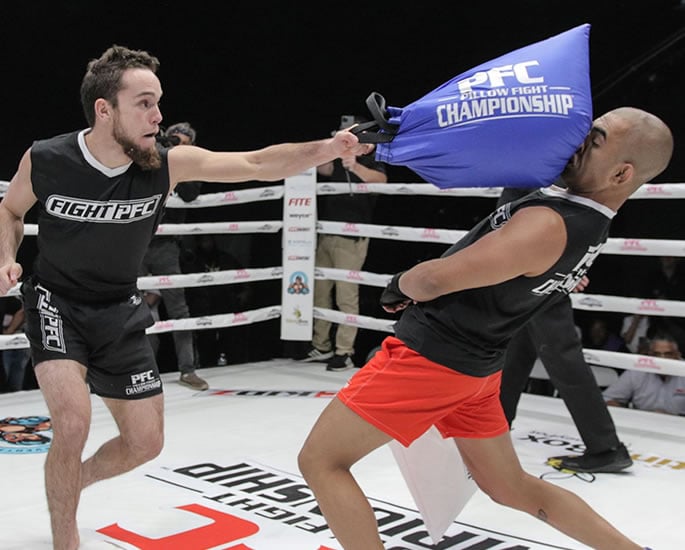
Despite its playful image, pillow fighting in the PFC is governed by strict rules to ensure fairness, safety, and entertainment.
Each bout has three 90-second rounds, with one-minute breaks in between.
Fighters aim to score points using specially designed pillows, and three judges oversee each match using a clear scoring system.
A clean headshot gets one point. A more complex spinning back strike to the head earns three. The big prize? Knocking an opponent down is worth five.
But it’s not just about scoring; how you fight matters. Every swing must be full force, and any strike below the shoulders is ignored.
Conduct in the ring is equally important. Fighters are expected to give maximum effort and display proper sportsmanship.
Grabbing, pushing, charging, or even snatching an opponent’s pillow is strictly forbidden.
Break the rules and you’ll get a warning. Keep breaking them, and points will be deducted.
There’s even a rule about distance; fighters must stay four feet apart, preventing crowding and allowing room for clean strikes.
Blocking with a fully extended non-pillow arm isn’t allowed either. If the match ends in a tie, a sudden-death 30-second round decides the winner.
These clear and consistent rules have helped build the sport’s legitimacy and fast-paced appeal.
The Warriors and Their Weapons

PFC fighters aren’t just playing around; they’re athletes, many of whom come from established combat sports like MMA and boxing.
Their backgrounds bring credibility to the league and prove that professional pillow fighting demands real skill. Agility, endurance, footwork, and sharp strategy are all essential.
The first championship showcased just how serious the competition is.
Hauley Tillman became the first men’s champion after defeating UFC veteran Marcus Brimage. In the women’s division, ex-UFC fighter Istela Nunes claimed the title after an intense bout with Kendahl Voelker.
These fighters have helped shape the image of pillow fighting as a legitimate sport where serious athletes can thrive.
As for the weapons? Forget your bedtime pillow; these are built for battle.
Each PFC pillow weighs around one kilogram and features a foam core wrapped in tough nylon or sailcloth.
Strong handles allow fighters to swing with force and precision, and the materials are durable enough to survive repeated impacts.
They’re designed to deliver satisfying hits without risking injury, and they can only be used on opponents. Anything else is off limits.
The Road to Mainstream Recognition
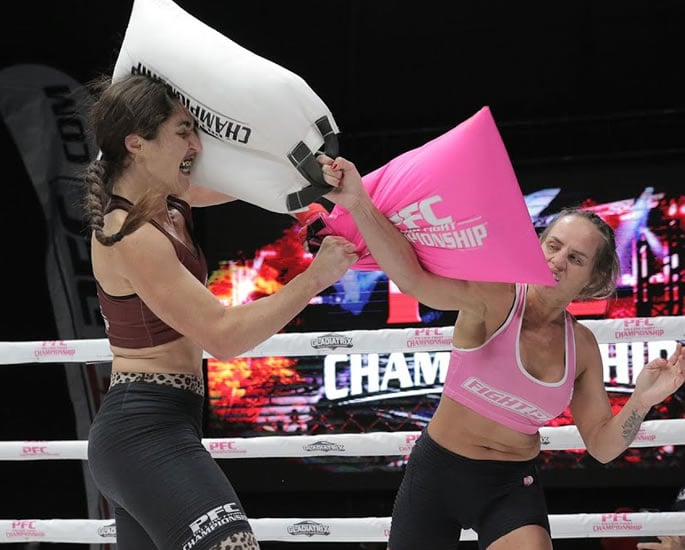
Since launching, the PFC has made serious strides in pushing the sport into the mainstream. It’s been relentless in securing broadcast deals and brand partnerships.
A major breakthrough came when the sport featured in ESPN’s “The Ocho” event, exposing pillow fighting to a much wider audience and adding another layer of credibility.
From there, PFC events aired on platforms like DAZN and SFT Combat.
More recently, a partnership with 2500 Media promises new television and streaming content, bringing the sport into even more homes around the world.
These media moves are central to the PFC’s growth strategy, and the momentum shows no signs of slowing.
Internationally, the PFC is expanding fast. It’s sanctioned leagues in countries like Brazil, Ghana, Nigeria, India, and Malaysia.
A promotional event in Paris was recently held to engage fans ahead of the International Day of Play, just another step in building a global presence.
The PFC has also turned its attention to younger audiences with PFCKidz, a dedicated youth league that keeps things safe while introducing children to the sport.
This initiative reinforces the organisation’s image as family-friendly and inclusive.
By combining global expansion, strategic media moves, and a safe but exciting format, the PFC is positioning itself as more than a novelty; it’s aiming to become a fixture in the world of combat sports.
Pillow fighting has gone from spontaneous bedroom chaos to structured, professional competition.
Its evolution from a childhood game into a global sport is a testament to vision, persistence, and timing.
The PFC has taken a playful concept and given it structure, rules, trained athletes, and a growing international audience.
It’s managed to walk the line between physical intensity and viewer-friendly entertainment. And with its rapid growth, global reach, and emphasis on safety, it’s clear the sport has found its moment.
Pillow fighting isn’t just play anymore; it’s a serious, competitive sport that’s here to stay.