

















































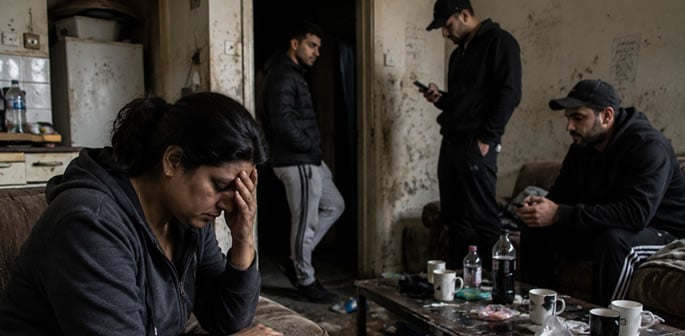
she felt like “a prisoner in my own home”.
Cuckooing is directly affecting UK housing by turning ordinary homes into bases for criminal activity.
It is happening inside properties across the country, often without neighbours or even families realising what is going on.
Police say it is linked to organised drug networks, but its impact sits much closer to home.
It strips people of control over their own living spaces and, in some cases, leaves them trapped inside them.
As housing insecurity and vulnerability rise in parts of the UK, cuckooing is exposing how quickly a home can stop being a place of safety.
What is Cuckooing?
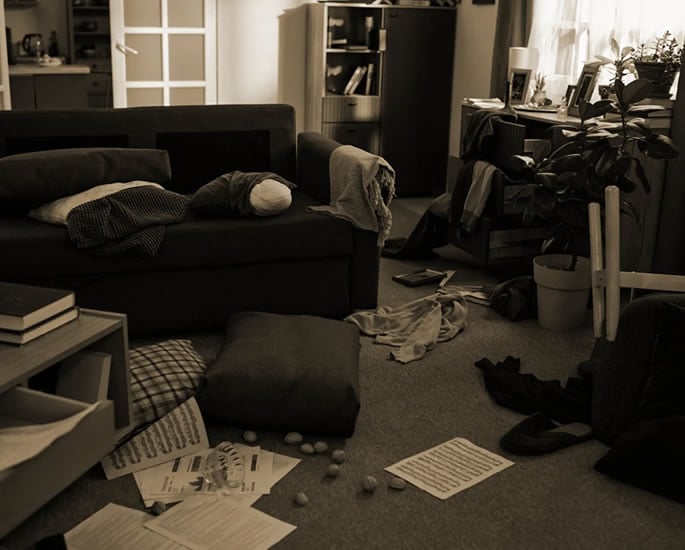
Cuckooing happens when criminals move into someone’s home and use it for illegal activity. That can include drug dealing, storing weapons, sex work, or other organised crime.
It is named after cuckoos, who frequently take over other birds’ nests to lay their own eggs.
The purpose of cuckooing is straightforward. A fixed address gives them cover and reduces the risk of detection.
Victims are usually people who are already vulnerable in some way. That includes those with drug or alcohol addiction, mental health conditions, disabilities, financial pressure, or older age.
Criminals often do not force their way in at the start. They may offer money, drugs, or help, building a relationship first. Over time, that shifts into pressure and control.
Once they are inside, the situation often changes quickly.
Victims can find themselves confined to one room or restricted in how they use their own home. Other people may come and go at all hours, using the property as a base.
In some cases, victims are pressured into helping with drug-related activity. Many do not report what is happening because they fear violence or believe the situation will get worse if they speak out.
The Link to Organised Crime
Police say cuckooing is closely tied to county lines drug networks, where gangs move drugs from cities into smaller towns and rural areas.
Homes become operational bases, allowing dealers to avoid hotels or public spaces that might draw attention.
The scale is difficult to measure because cuckooing is not yet a specific criminal offence in its own right.
That limits how consistently it is recorded.
Even so, data from London shows 1,539 reported incidents between May 2025 and April 2026. Most victims identified in that period were men.
Kirsten Dent, of the National Police Chiefs’ Council (NPCC), said:
“We’ve had cases where they’ve been forced to eat dog excrement or perform sexual acts, and those will be recorded and then used as a form of blackmail for the perpetrator to say ‘if you don’t do as I say, then ultimately we’ll share this with friends and we’ll put this on social media’.”
Police also say the practice is often missed because it happens behind closed doors.
Officers are not dealing with public street crime but with exploitation inside private housing, where signs are easy to overlook.
Closure orders are increasingly being used to shut down properties linked to cuckooing, but enforcement still relies heavily on identifying related offences such as drug supply or modern slavery.
The Difficulty of Escaping Control

When police enter suspected cuckooed properties, the conditions are often poor, with officers describing rubbish-filled rooms, damaged interiors, and strong smells.
In some cases, homes appear partly abandoned but still actively used by criminals moving in and out.
For victims, the experience is usually a mix of fear and dependency.
One woman, Jackie, described how she ended up living under the control of a dealer after falling into drug debt.
She told the BBC: “I had to stay in my bedroom. Occasionally he might say ‘I’ll buy you chicken and chips or something’ but it was very rare.”
She added that she felt like “a prisoner in my own home”.
Her case reflects a wider pattern seen by officers. Some victims are actively dependent on drugs, while others are isolated or struggling with housing insecurity.
That makes them easier to manipulate and harder to reach through traditional safeguarding routes.
Police also report repeat victimisation. Some people are targeted again after moving, while others remain in the same property under continued exploitation
Inspector Andrew Cameron from the Metropolitan Police said data shows patterns among victims, including drug dependency and age profiles, but stressed that cases vary widely.
Support services and researchers say recognition is still inconsistent.
Dr Amy Loughery from the University of Leeds has noted that victims are not always seen as victims, particularly when they have prior contact with police.
That can delay intervention and allow exploitation to continue longer than it should.
Cuckooing is happening inside homes that often look ordinary from the outside, and it relies on vulnerability, isolation, and silence.
It is expected to become a specific criminal offence by the end of 2026, carrying a maximum five-year prison sentence.
It forms part of the Crime and Policing Act 2026, but the government is yet to issue statutory guidance to police forces before the law can be enforced.
The impact on UK housing is direct. Homes stop being private spaces and become controlled environments where tenants lose power over who enters and what happens inside.
As legislation moves towards making cuckooing a specific offence, the challenge is not only legal definition but detection and response.
Until then, the problem remains largely hidden in plain sight, inside properties that are still officially someone’s home.