

















































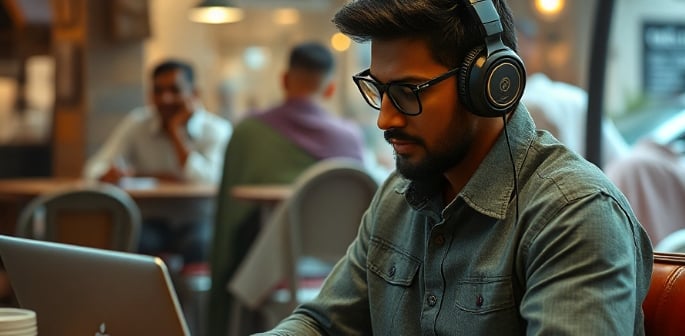
"experienced varying degrees of joy, nostalgia and frustration"
The digital nomad life has gained popularity worldwide. Flexibility, travel, and independence attract many, including South Asians.
Individuals from, for example, Pakistani, Indian, and Bangladeshi backgrounds may seek the freedom it provides from the constraints of office life.
Working remotely and being able to be anywhere has become more desirable.
In 2024, there are estimated to be 35 million digital nomads worldwide, with the highest percentage coming from the USA.
According to the 2024 State of Digital Nomads report, many digital nomads are young people aged between 23 and 44, with the highest percentage being 35 (8%).
Social media romanticises the digital nomad’s lifestyle, portraying it as an idyllic way to work remotely while exploring the world.
DESIblitz explores common myths, challenges, and the truth behind working remotely from anywhere.
The Rise of the Digital Nomad Life

An MBO Partners report said digital nomads “have moved from eccentrics to [the] mainstream in less than a decade”.
The report also asserted: “The Covid-19 pandemic has had the single most significant impact on the growth and makeup of digital nomads.”
The rate of increase for digital nomads has levelled off from its “pandemic-induced skyrocketing during 2020 and 2021”.
Nevertheless, the number continues to grow, with some estimating it will rise to approximately 60 million by 2030.
Not work or travel; you can do work + travel. Many jobs are remote or partly remote and several Indians are embracing the nomad lifestyle, even post pandemic. Facilities have sprung up to cater to them. Today @Shiprasorout captures this trend. https://t.co/ZcHfGKQEPF pic.twitter.com/K76wCbtg7m
— Neil Borate (@ActusDei) October 29, 2024
In 2024, Indian travel influencer Shivya Nath reflected on becoming a digital nomad in 2011:
“I quit my corporate job with a dream of travelling the globe (way before it became trendy).
“For seven years, I lived out of two bags, seeking adventure in some of the world’s remotest places, learning from local communities, and working on the go.”
Shivya continued: “I’ve experienced varying degrees of joy, nostalgia and frustration as an Indian digital nomad.
“But the feeling that has become a constant is that of liberation. In my mind and in my words, I feel no shackles.”
Freedom from the “shackles” of the nine-to-five job and work machine can be intoxicating.
British Bengali Shaila* said: “I’m so tired of this work-life; I’m not getting to live, and everything is getting more expensive.
“I’m working for what? The wage covers nothing. If I didn’t live with family, I’d be done for.
“My brother and I have talked seriously about looking for remote work and moving abroad to Southeast Asia with our parents.
“We can travel and live more cheaply and have a better quality of life.
“I would be travelling a lot more. My brother isn’t keen on that. He’d be more at home, travelling in the country we have as our base.
“We’ve seriously started to look and plan; many factors are in play.
“Trying not to fall for the romanticised version and be realistic. It’ll mean we need to make lifestyle changes and me going to places with good internet connection.”
Many, like Shaila, want the work-life balance and freedom that they hope come from transitioning to a digital nomad lifestyle.
Myth of Digital Nomads Always Being on Holiday

It’s easy to imagine digital nomads lounging on beaches with laptops. The reality is different.
Remote work involves balancing productivity with location changes.
Digital nomads can work independently or for a company. Either way, they are not immune to the long hours and mandatory deliverables that characterise corporations.
Research has shown that most digital nomads work at least 40 hours weekly.
Digital nomads must seek stable internet and quiet workspaces rather than just adventure. The lifestyle prioritises planning over spontaneity.
Digital nomads might travel a lot, but this is no holiday. The nomad lifestyle comes with responsibilities and the need for effective time management and planning.
Overall, it is important to remember digital nomads are professionals who work hard on their careers, even while enjoying the freedom to choose their workspace.
Realities of Visa Challenges

Many assume digital nomads can work anywhere without restrictions. However, visa requirements are a significant challenge.
Nevertheless, South and Southeast Asian countries are now working to attract digital nomads with long-stay visas, hoping to boost their economies.
Danny, a 24-year-old British Pakistani, told DESIblitz:
“My goal is Indonesia or Thailand. Work remotely and live and travel in those two countries.
“The lifestyle and cost are way better there than in the UK.
“I’m going to be a part-time digital nomad, but I want my home base in Indonesia or Thailand.”
“I think it’ll mean fewer headaches in the long term if I give up UK citizenship when it comes to tax, too, but I need to look into that.”
Countries like Thailand and Indonesia have launched digital nomad visas, but the UK does not offer a similar option.
A 2023 Global Nomad Index ranks the UK low for remote work opportunities due to stringent visa regulations.
Although the UK has become less accessible to foreign workers after Brexit, it is still an attractive option for remote work.
Moreover, where countries have introduced digital nomad visas, they come with specific conditions, such as particular earning thresholds that have to be proven.
Individuals working in creative industries or freelancing may fall short of these requirements due to fluctuating incomes.
Additionally, remote workers must comply with local tax regulations. Failure to do so can result in fines or bans.
Frequent relocations also mean dealing with repeated visa applications and the associated costs, which can reach thousands of pounds annually.
Myth of Digital Nomads Earning High Salaries

A common misconception is that remote workers always enjoy high earnings.
Industry choices such as IT and design can offer higher incomes, but they’re not guaranteed.
Additionally, costs like accommodation, co-working spaces, and travel can strain budgets.
Income disparities exist for digital nomads, depending on industry and origin.
Moreover, living costs vary by destination and accommodation type.
In some places, travelling and living can be cheaper than people think. However, to achieve low costs, people may need to alter their lifestyles and expectations.
1 year of being a nomad in India! ?
These are the places I’ve been to and how much I’ve spent on my stay. Travelling is cheaper than you think.
I urge y’all to go places, discover yourself and see what’s out there. Optimise for life and not work. We literally just get one shot pic.twitter.com/JFX3CguPzq
— Neil Agarwal (@regalstreak) March 16, 2022
Currency fluctuations can also significantly impact individuals, especially when sending money to families.
Issues of Loneliness and Family
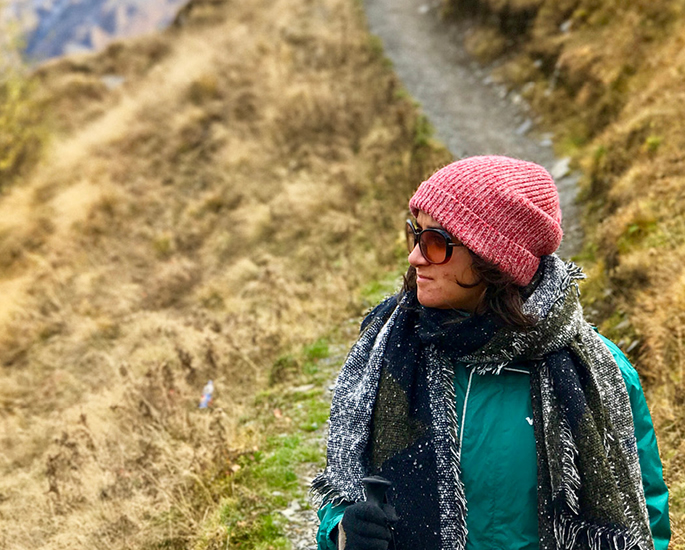
The digital nomad life can isolate people. A 2023 Buffer Report examined 3,000 remote workers worldwide and found that 45% feel lonely.
Many South Asians value strong community ties, which may intensify feelings of isolation when travelling long-term.
Burnout is another issue. Constantly adapting to new environments and maintaining productivity can exhaust workers.
Thus, decisions must be made on how much travel will occur and whether a base is needed.
Co-working spaces and local communities help alleviate this stress but are not always accessible.
If you travel solo, you must be comfortable spending time alone.
Nevertheless, you can make lifelong friendships and rich experiences through the digital nomad life.
Although digital nomads work alone, they might share a flat with roommates and spend their working hours in co-working spaces.
Digital nomad communities exist in almost every country, helping mitigate issues of loneliness.
For South Asians, cultural and family expectations further shape their experience.
Shivya Nath stated: “I won’t lie to you. I love what I do, and I’ve worked hard to get here.
“But that’s not to say that I don’t have to deal with the s**t that life throws at us anyway.”
“The frustrations of dealing with a protective family, who don’t necessarily get what you do, and expect you to call even when you’re in Timbuktu.
“Or of opening your news feed and seeing pictures of friends getting married and having babies and asking you, when is your turn?
“Or of a bank balance that’s always low. Or of multi-million dollar companies asking for free work.
“Or of not getting paid on time. Or of the slow Wi-Fi when you’re reaching a deadline… You get the picture!”
Shivya acknowledged that some may find that the digital nomad life “isn’t what [they] really aspire to”. Nevertheless, she stressed:
“But I can promise that you’ll be richer in your experiences and feel a sense of liberation that most people won’t in this lifetime.
“And like Mary Anne Radmacher once said, you won’t be the same having seen the moon shine on the other side of the world.”
Shivya’s words highlight the challenges and benefits of digital nomad life equally.
The digital nomad lifestyle offers a unique blend of freedom, flexibility, and adventure, making it appealing to many.
However, moving beyond the romanticised image often portrayed on social media is essential.
This way of life comes with challenges like visa hurdles, income unpredictability, managing work time effectively, and emotional tolls like loneliness.
Balancing expectations and responsibilities requires careful planning and adaptability for aspiring digital nomads.
By acknowledging the benefits and challenges, individuals can make informed decisions and craft a lifestyle that aligns with their aspirations and values.