














































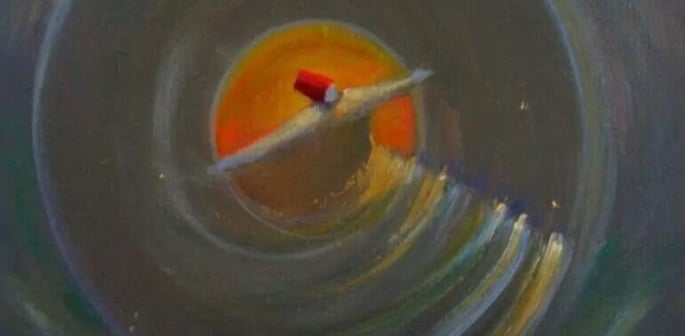
“Sufi painting is about the love of God."
Sufi art offers a glimpse into a world where spirituality, philosophy and creativity come together.
From intricate calligraphy and miniature paintings to symbolic imagery of flowers, birds and dancing figures, these artistic traditions have long been used to express ideas.
Often, these ideas are difficult to put into words.
At the heart of this expression is Sufism, a spiritual tradition concerned with the relationship between humanity and the divine. Its influence can be seen across different forms of Islamic art.
In particular, this influence appears in the use of symbolism to communicate devotion and spiritual connection.
On the relationship between Sufism and artistic expression, Usama Zafar explains that understanding the philosophy is an important starting point.
To explore the relationship between Sufism and artistic expression, Zafar brings an academic perspective shaped by his studies in art history.
He completed a Master’s in History of Art: Renaissance to Modernism at the University of Buckingham.
Furthermore, he is preparing to pursue a PhD in Arts and Culture. His background informs his interest in the historical development of artistic traditions. This includes the influence of spirituality on visual culture.
“Sufism is a mixture of philosophy and spirituality,” he says, highlighting how its complex ideas cannot always be easily condensed into simple explanations.
The historical development of Sufism and its artistic influence
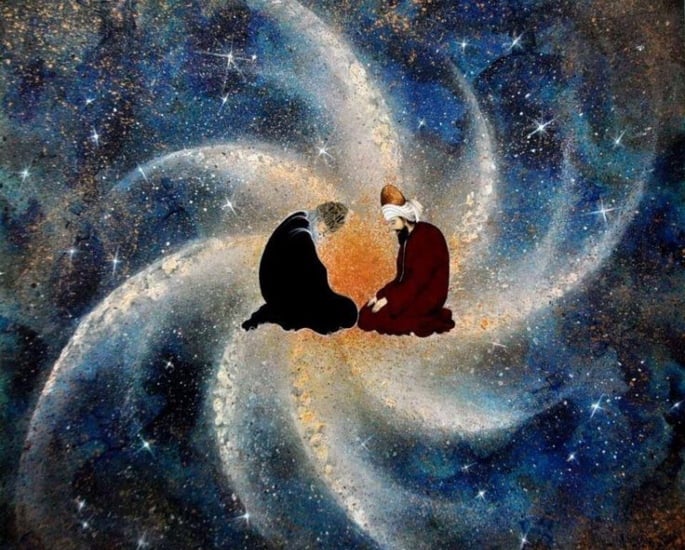
Sufism developed over centuries, spreading through different regions and influencing the cultural and artistic traditions of the societies it reached.
Zafar traces its early development to the eighth and ninth centuries, explaining how it expanded throughout Central Asia and Persia before becoming established across the Indian subcontinent.
He also points to the impact of the Mongol invasions, which devastated major cultural centres including Samarkand, Bukhara and Baghdad.
According to Zafar, artists, scholars and Sufi figures subsequently moved towards the Indian subcontinent. As a result, they contributed to the development of its artistic and spiritual traditions.
The relationship between Sufism and art can be seen particularly clearly through calligraphy. As Zafar explains, calligraphy was among the earliest artistic forms associated with Sufi traditions.
Manuscripts also became an important space for artistic expression. Books were often decorated with poetry and small illustrations, bringing together written language and visual storytelling.
One artist Zafar highlights is Kamal ud-Din Behzad, whose miniature paintings are particularly recognised within Islamic art. His work reflects the significance of detailed illustration and artistic craftsmanship within the wider tradition.
Sufism also became deeply rooted in different parts of South Asia through the presence of influential spiritual figures and religious centres.
Zafar refers to Ali Hujwiri’s association with Lahore. In addition, he mentions the establishment of Sufi traditions in Multan, Delhi and Ajmer.
These spiritual centres, known as khanqahs, became part of the wider cultural landscape across Punjab and other areas of the subcontinent, including Kashmir.
The symbolism behind Sufi paintings
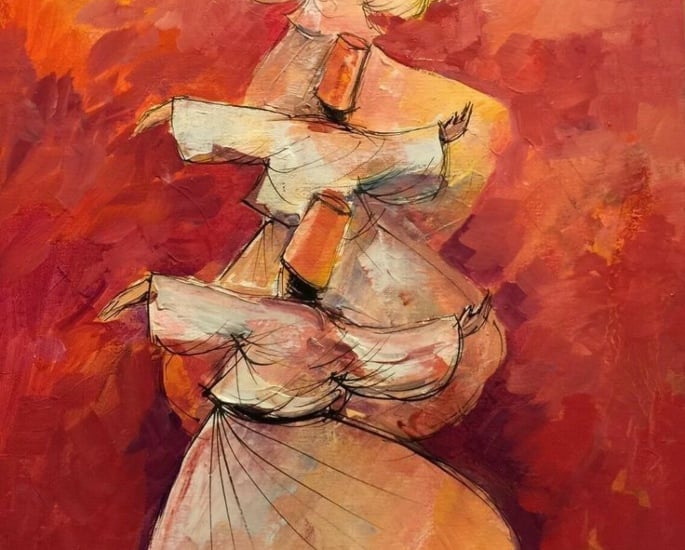
Beyond its historical development, one of the most distinctive aspects of Sufi art is its use of symbolism.
Rather than simply depicting physical subjects, Sufi paintings often use familiar images to communicate spiritual ideas. Flowers, birds, gardens and other natural elements can carry meanings that extend beyond their appearance.
Zafar explains: “Sufi painting is about the love of God. This love is something that cannot be physically seen; it can only be expressed and communicated.
“Artists, therefore, use visual symbols and imagery to represent it.”
He explains that Sufi poets have historically used particular symbols in their poetry, which have also found their way into visual art.
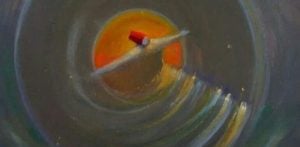
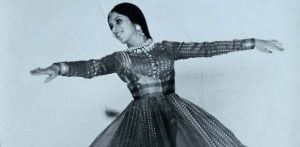
Among the recurring images are the candle and moth, the nightingale, birds, gardens, roses and trees. Zafar also mentions the occasional appearance of a wine cup, alongside figures shown participating in dance.
These images offer artists a way to explore spirituality through visual expression. Rather than relying entirely on written explanations, they create a language of imagery.
Through this imagery, audiences can engage with ideas of devotion and the spiritual world.
The candle and moth, for example, are among the recognisable images within Sufi symbolism, while the nightingale and rose are recurring motifs in poetic traditions.
Their presence in artistic representations reflects the close relationship between Sufi poetry and visual culture.
Where poetry, philosophy and art meet
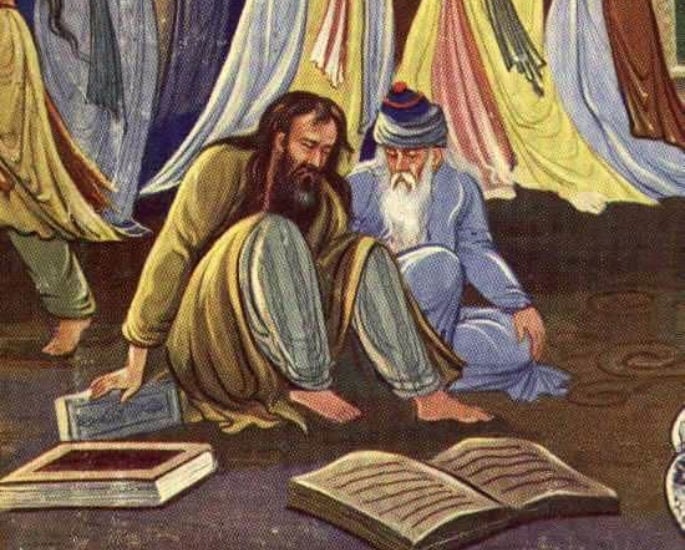
Sufi art demonstrates how creative expression can communicate ideas that go beyond what is immediately visible. Its relationship with poetry, calligraphy and miniature painting shows how different artistic forms can work together to explore spirituality.
For Zafar, the subject is particularly extensive because its history and philosophy are closely connected. He describes how difficult it can be to reduce centuries of historical and artistic development into a short explanation.
His reflections highlight the importance of looking beyond individual paintings and understanding the wider traditions that shaped them.
From the spread of Sufism across Central Asia and South Asia to the use of recurring symbols in paintings, the tradition reflects a long relationship. This relationship exists between spirituality and artistic creativity.
Ultimately, Sufi art invites audiences to look beyond the image itself.
Through its use of symbolism, poetry and intricate visual detail, it offers a way of exploring the relationship between art, devotion and the unseen.