

















































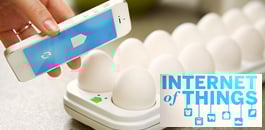
IoT offers us a direct look into the future – where everything is available to us at a touch of a button.
Imagine a world where your fridge knows your eating habits, where your car knows or can even predict where you’re going to go based on your past history of journeys. Welcome to the Internet of Things (IoT). Sounds a little freaky, doesn’t it?
The Gartner Symposium ITXpo in October 2013, made some remarkable predictions on how IoT could transform the face of technology and business as we know it. According to Gartner, by 2020, IoT will have added $1.9 trillion to the US economy.
International Data Corporation (IDC) said that this figure could even increase to $7.1 trillion. Almost 30 billion products will be connected in some way, and all tech products and devices over $100 will be smart.
 In addition the work force will also see a transformation, as knowledge workers will give way to digital and smart machines, that can do a more efficient job.
Not everyone is supportive of this new future, where technology tracks our every move, but there are many, including consumer industries, who are openly embracing this change; household names like Nike, Oral B, are all adapting this movement and designing high-tech and intelligent products designed to make our lives easier.
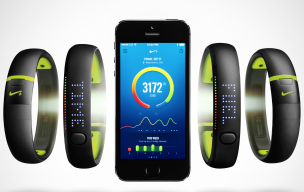
Nike have their fitness-tracking device, the Fuel Band that competes with Fitbit’s range of fitness trackers, wherein your food, sleep, and daily activity is tracked via a compatible app or on-line. Your data is synced across a variety of platforms and accessible through the Internet. But let’s move closer to home, literally.
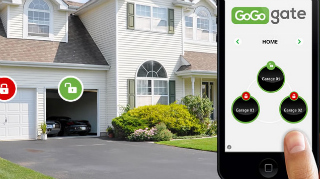
Washington DC based technology company, SmartThings have come up with the ingenious idea to combine up to a 100 plain household objects to a centralised ‘hub’ and allows the user to do a whole host of things. From controlling the power, temperature, finding your keys in your home to things like your dog or cat reminding you when they’re hungry or you receiving a notification if your child is going for the medicine cabinet – this is the future.

Controlling your home and ensuring the safety of your family and house is only one way of many that companies are utilising the Internet.
Marketing using data collection is also a highly effective tool – like Tesco, for example. Your Tesco Clubcard is a hive of information. Your age, location, shopping habits, what you buy, when you buy it, how much of it you buy; all of this information is stored and then spat back out at you every three months when you receive your vouchers.
It’s a highly innovative way of keeping customers by making things personal; remembering you purchased that fabric softener that you loved so much, or that different brand of coffee you tried some time ago.
If marketing using the Internet works so well, it is surprising that many local business owners aren’t adapting similar tactics to market their businesses, especially those of the Asian community.
 Prashant, a local clothing store owner says: “I’ve always thought about advertising on Facebook, but I have found that a lot of my business comes from repeat custom and people spreading the word about my shop.”
On finding the time to market on-line, Prashant said: “It’s about trying to balance running the business and marketing on-line. If I hire somebody to market on-line I have to make sure they are doing a good job and accurately displaying information. My children have taught me that one wrong step on-line will haunt you.”
Business owners like Prashant rely on loyal customers and word of mouth to keep their business going. The comfort and experience of having relied on repeat custom for so many years is what keeps local business owners set in their ways.
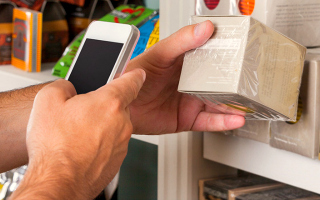
Now translate the Clubcard process but to something household like your refrigerator. Reminding you when you’ve ran out of that very particular brand of milk you like, or reminding you you’re low on juice.
But with every new innovation, there is a downside and many see the IoT movement as the loss of our freedom and our independence.
 In January 2013, a smart fridge had gone ‘rogue’, along with smart TVs and media players, sending out 750,000 spam emails between December 26 and January 6.
This brings up an interesting point: if hackers are able to access our fridges or even smart TVs, it unveils huge safety concerns for cars that have advanced computing capabilities, and even our home and office, including SmartThings connected to your home network.
But for every positive there is a negative, and, like most new things, will take some trial and error before issues can be resolved. So it’s not all doom and gloom, think about how much easier our lives can become.
IoT offers us a direct look into the future – where everything is available to us at a touch of a button, and living in well developed countries is made even easier by having technology operate and cater directly to our individual needs.
How convenient will our day to day activities be? Or are we looking at a sad future as depicted in Disney Pixar’s Wall-E (2008), where the human race are so reliant on smart technology that they are unable to think or do anything for themselves?
Is technology advancing too much for our own good? Or is this the future that we have always aspired to achieve?