





































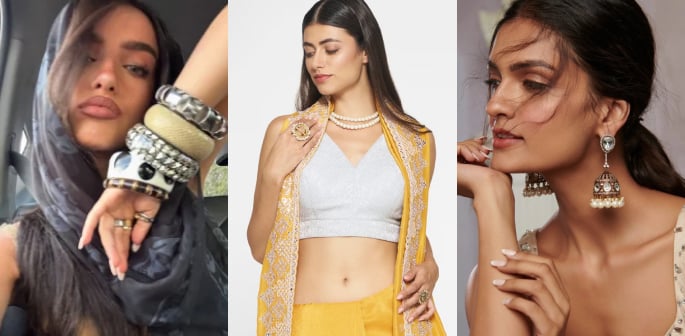
Blouses carry more weight in the styling than the saree itself
Desi-core has seen young women reclaim traditional Indian fashion and style it with the kind of unapologetic confidence that makes you stop mid-scroll.
For years, items such as bangles and bindis sat in rotation for weddings and family functions.
But slowly, these pieces made their way into everyday style, where a kurta didn’t feel out of place on a night out or a bindi formed part of a makeup look.
Bollywood gave people a visual vocabulary for this long before anyone had a name for it.
Young South Asian women took fragments and made them their own.
What makes Desi-core interesting is how instinctive it feels. There’s no single rulebook. It sits somewhere between memory, mood and experimentation, and that’s exactly why it travels so well online.
Hot-Girl Saree
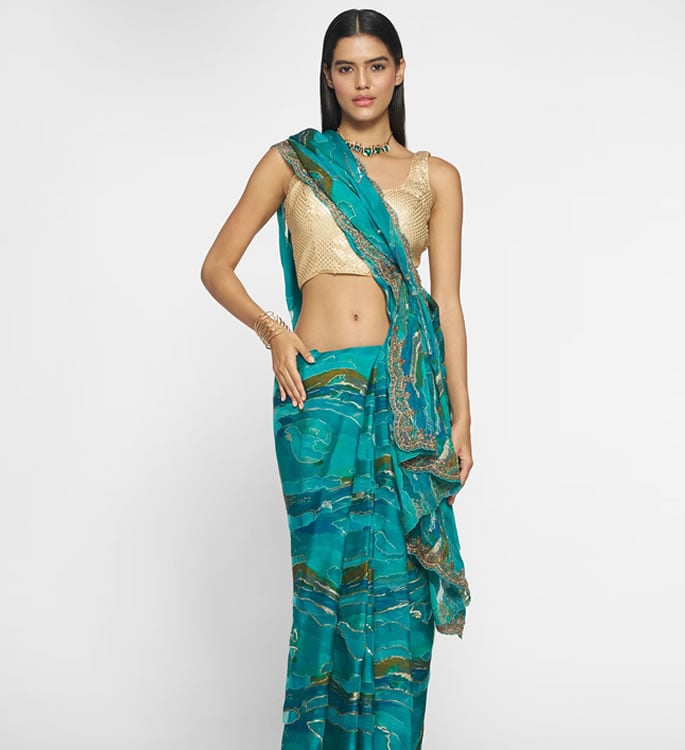
The saree is being worn differently now, and you can tell within seconds of scrolling on Instagram and Pinterest.
It sits lower, drapes cleaner, sometimes barely follows convention at all.
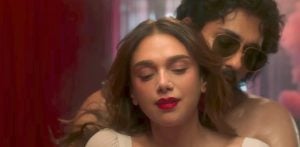
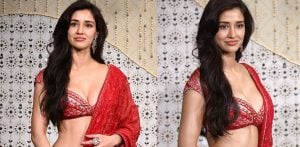
Blouses carry more weight in the styling than the saree itself in some cases, which would have been unthinkable a generation ago.
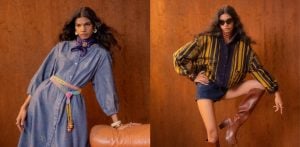
Brands like Twamev have leaned into that confidence-first approach, treating the saree less like something preserved and more like something played with.
The result is sharper silhouettes, bolder cuts, and styling that feels built for cameras as much as people.
Bindis
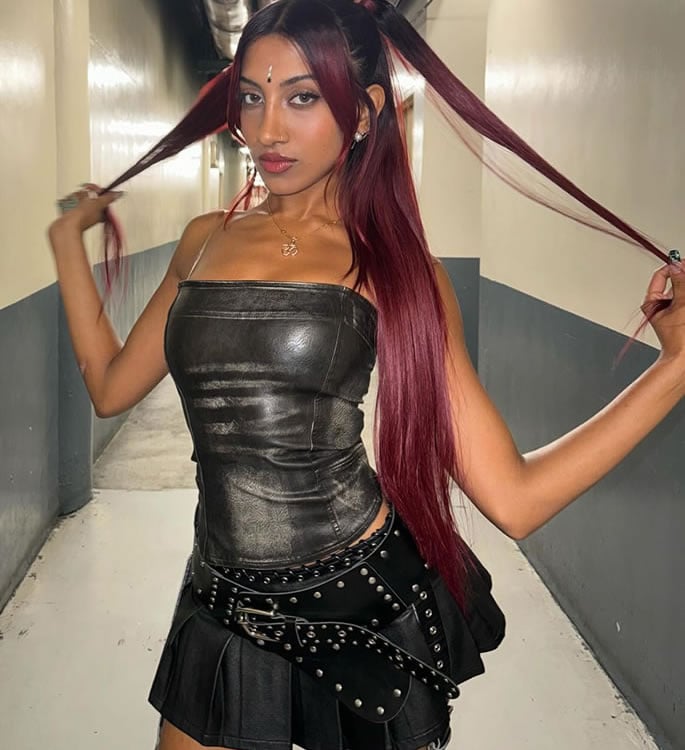
The bindi has started appearing in places it wasn’t really “supposed” to be, and that’s partly why it works so well with the Desi-core aesthetic.
A tiny dot on the forehead with a tank top. A small black bindi with a slip dress. Something minimal with messy hair and gloss-heavy makeup.
It doesn’t scream tradition in those settings, which is exactly the point. It slips in quietly and changes the tone of everything else around it.
The bindi also feels strangely grounding, like a detail that anchors an outfit that otherwise has nothing to do with where it came from.
Stacked Bangles
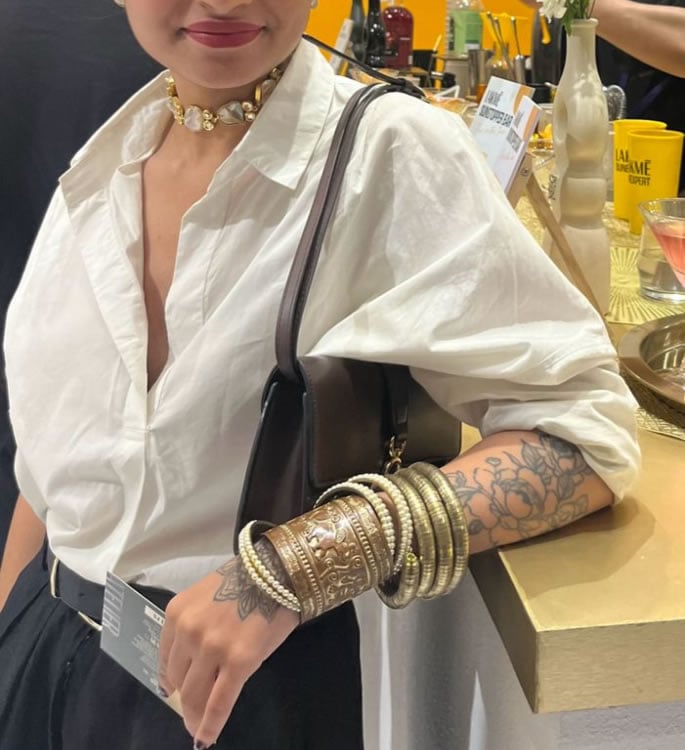
There’s a sound that comes with bangles that no other accessory really matches. That alone changes how they feel in modern styling.
Glass stacks, mixed metals, bright combinations – they bring movement into outfits that would otherwise sit still.
Even when everything else is minimal, the wrists don’t behave that way.
They also carry a kind of familiarity that doesn’t need explaining. People recognise them instantly, even if they’re being worn with something completely unrelated to tradition.
That tension is what makes them interesting again.
Statement Jhumkas
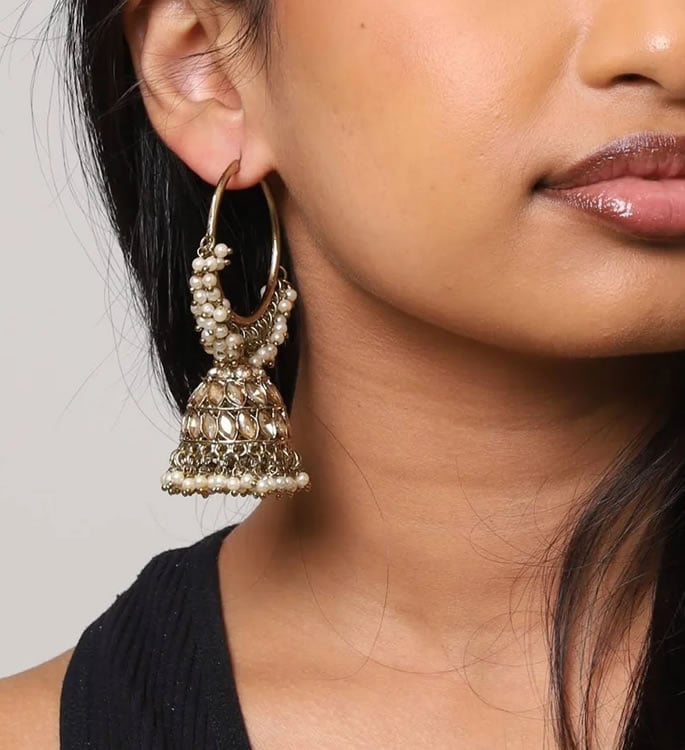
As part of Desi-core, jhumkas are being worn as a fashion statement rather than occasion wear.
They sit against plain white shirts, loose denim, basic kurtas, even outfits that have nothing to do with Indian wear at all. And somehow they still make sense in all of them.
The contrast is doing the work.
Heavy, detailed earrings against something simple create a balance that doesn’t need styling tricks. You put them on and the outfit changes without much effort.
They also photograph well, which matters more than people admit in how trends actually spread now.
Fitted Kurta
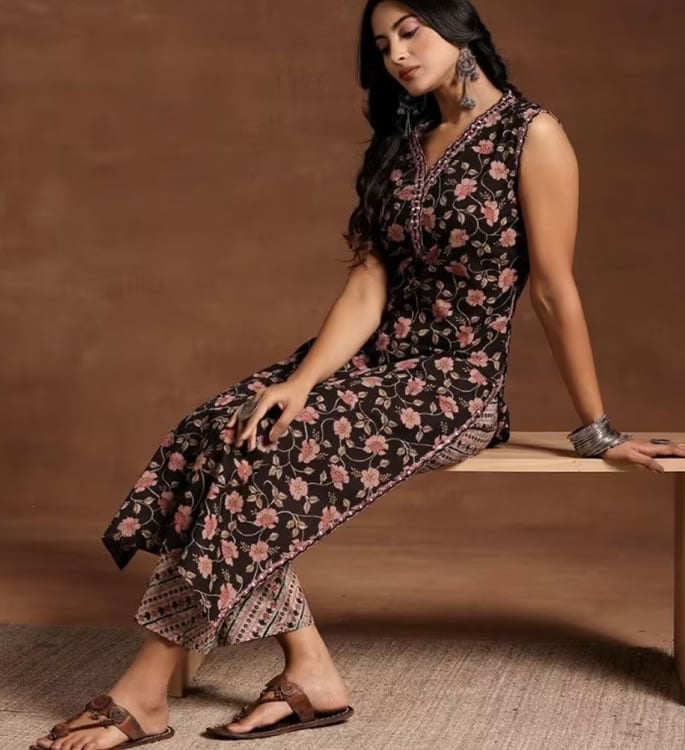
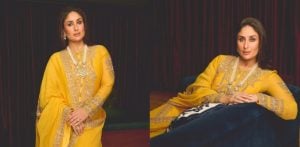
The oversized kurta had a long run, but fitted shapes are quietly taking space again as the Desi-core trend takes over.
There’s more structure coming back into the silhouette. Cleaner lines, closer fits, sharper hems.
Chikankari and prints still show up, but they sit within a frame that feels more deliberate.
It’s less about reinventing the kurta and more about bringing it closer to the body again.
That change alone makes it feel different, even when nothing else is altered.
Chunky Jewellery
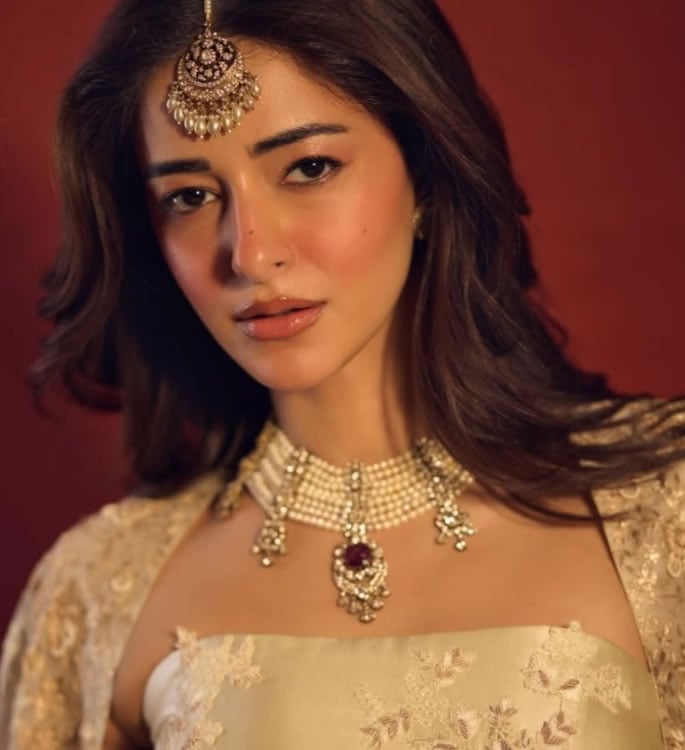
Minimal jewellery had its moment. Now it feels like people want something with presence again.
Big chains, heavy chokers, stacked rings, oversized cuffs – pieces that don’t disappear into an outfit. They interrupt it a bit in a good way.
Even a simple top starts to look styled once something heavy is added to it.
That’s really what’s driving this return. It’s quick impact, no-effort layering.
Dupattas
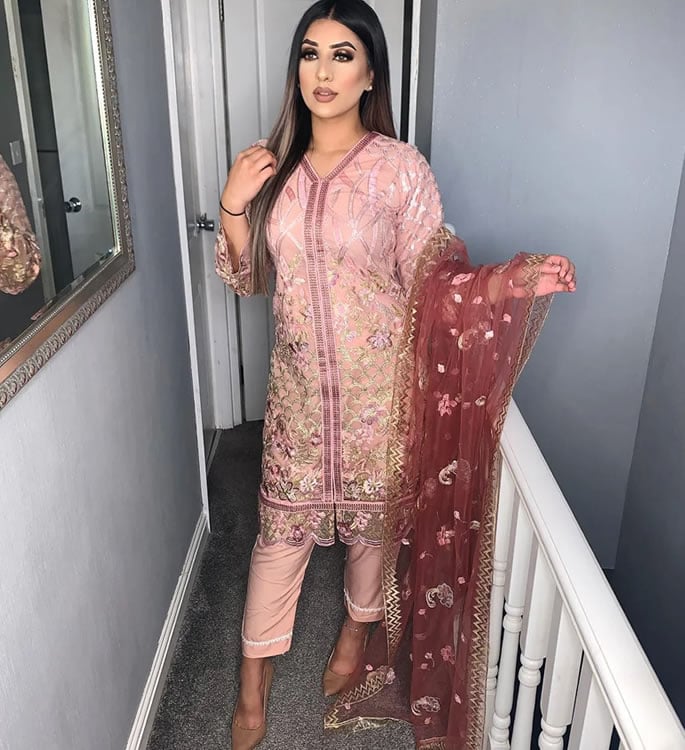
Dupattas are being used more creatively as fashion accessories rather than occasion wear.
Whether draped over the shoulder, worn as scarves or layered over contemporary outfits, the dupatta has become something that feels more personal.
There’s no single way they’re being used anymore, which is probably why they’re showing up more often.
They’ve stopped being tied to rules and started working like an extra layer people can play with.
Desi-core isn’t really about nostalgia, even though it pulls from it constantly. It’s more about taking things that were once boxed into specific moments and letting them exist in ordinary ones.
A saree at night. A bindi with denim. Bangles with a plain outfit. None of it feels forced anymore because it isn’t being worn for permission or tradition alone.
What ties it all together is ease. Not effortlessness, but familiarity mixed with experimentation.
And that combination is what’s making traditional Indian fashion feel newly visible again, without needing to become something else entirely.