


















































“That feeling was warehouse energy. Open-ended."
Indo Warehouse has moved from underground experiment to international force in under three years.
Led by Kahani and Kunal Merchant, the New York-based collective has reshaped how South Asian identity operates inside global electronic music.
They became the first South Asian electronic act to perform at Coachella.
They sold out London’s Roundhouse. They turned a mandap into a DJ booth and filled rooms from Brooklyn to Mumbai.
In the process, they named a genre: Indo House.
The term has gained traction across streaming platforms, DJ sets and festival line-ups.
It signals a strand of house music built around South Asian rhythm, melody and emotional cadence. Audiences across the diaspora have responded quickly. Crowds have grown from a few hundred in New York to several thousand across continents.
Indo Warehouse’s ascent reflects a wider shift in global dance music. South Asian electronic music is no longer peripheral. It is claiming space on its own terms.
Indo House Origins
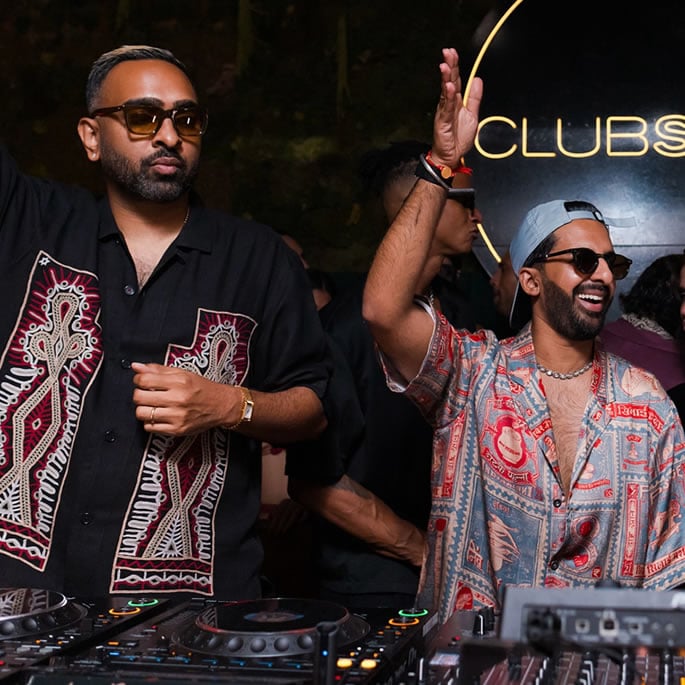
The idea took shape in 2020 on a beach in Mexico. Kahani was listening to a strain of house music that felt unfamiliar to him at the time.
He told Esquire India: “My idea of electronic music was Swedish House Mafia, Afrojack. But this felt emotional. Deep. I didn’t know how to classify it.”
As the beat carried across the sand, his instinct shifted:
“I started singing a qawwali over it in my head. And I thought, wow. It sounds great up here. Where can I find it?”
The starting point came when Kahani found no existing scene built around that sound.
Back in New York, Kahani approached producers with a proposal: integrate South Asian vocals, classical phrasing and rhythmic structures into contemporary house music. The responses were hesitant.
He said:
“They were like, ‘I don’t want to be too Indian’. And I was like, what do you mean? Afro House exists. Latin House exists.”
“This is just another beautiful culture that is yours.”
Kahani reached out to Kunal Merchant and invited him to an early Indo House night in New York, before the concept had a formal name.
Merchant already held credibility within the city’s DJ ecosystem, with his 2021 EP Jai Hov Beats reframing Jay-Z through an Indian sonic lens.
During the summer that followed, Merchant DJed one of the Indo House rooms himself.
Around that time, there was a growing curiosity on Instagram.
Kahani said: “That feeling was warehouse energy. Open-ended.
“And before borders, this whole region was the Indo subcontinent. It wasn’t about countries; it was about people.”
Both artists navigated dual identities and shifting cultural expectations throughout their upbringing.
Merchant added: “We’ve gone through our own journeys as Indians growing up in America.
“And now, coming back here, there’s a lot we’re exploring inside ourselves. We see our community doing the same thing.”
That shared experience of diaspora identity underpins Indo Warehouse’s direction.
New York Rooms to Global Stages
The first year focused entirely on New York and crowds quickly grew.
By the end of year one, they were playing to thousands, with some audience members not even electronic music fans.
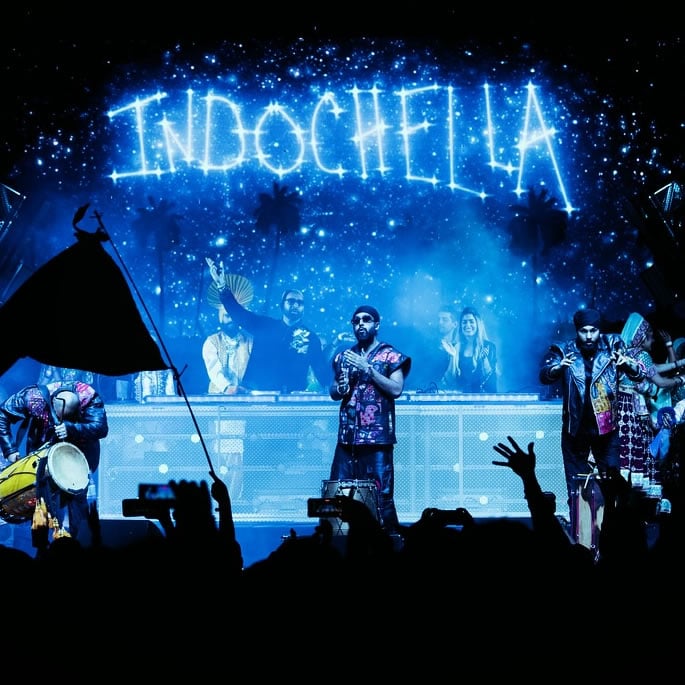
Indo Warehouse treats each show as a constructed environment.
Lighting, visual design and live performers form part of the experience. Bhangra dancers, dhol players and narrative staging appear depending on the venue.
Kahani explained: “We kept it authentic to who we are.
“One of our friends plays the dhol. I play the dhol. So we’re like, let’s do that together.”
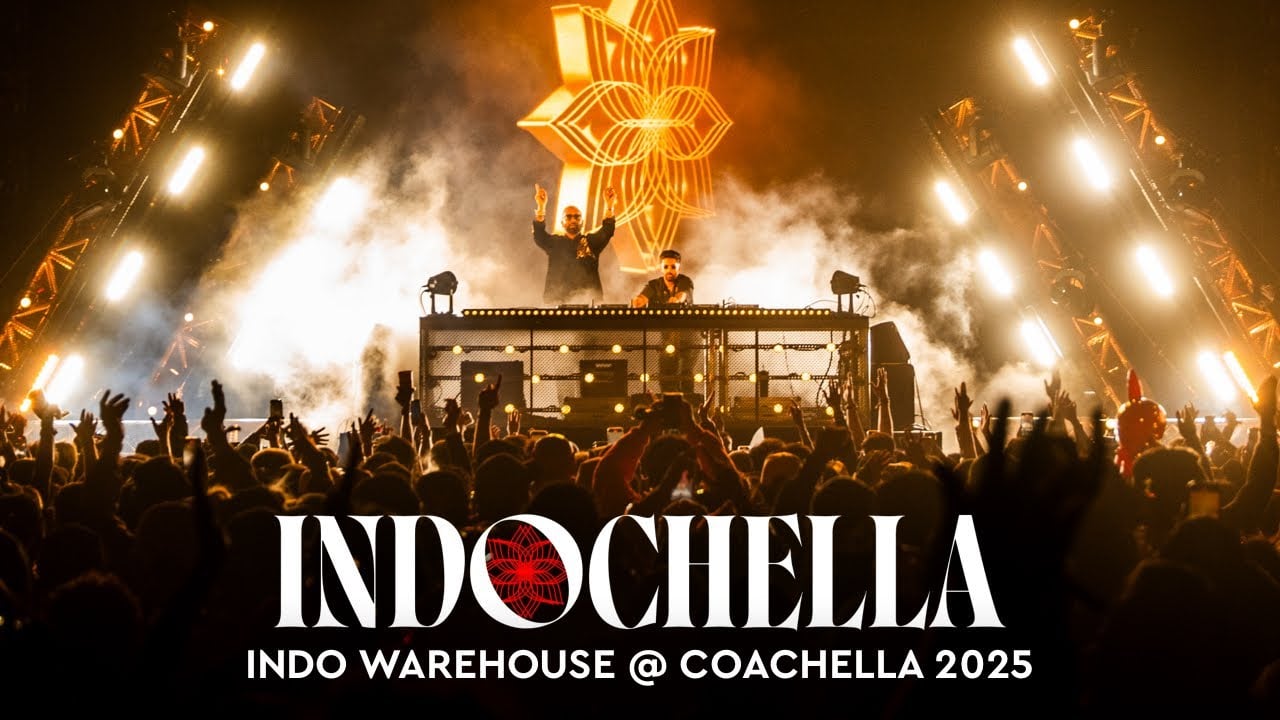
Their appearance at Coachella marked a watershed moment for South Asian electronic music.
On the Gobi stage, Indo Warehouse arrived with a 40-person team that included dancers, percussionists and visual artists.
Soon after, Damian Lazarus signed them to Crosstown Rebels and booked them for Day Zero in Tulum, placing them firmly within the global house circuit.
Despite rapid expansion, their internal decision-making remains consistent.
Kahani said: “We really have to stick to what we actually believe.
“Because we’ve been through it. We’ll be preparing for a show, deciding what to play tonight, and there’s always a pocket of time you need to fill.
“And that’s where you ask, what goes here? And if it feels off, we won’t do it.”
That filter governs track selection, collaborations and production budgets. Growth follows alignment rather than trend cycles.
Crafting the Indo House Sound
The production process focuses on archival listening, specifically overlooked material within well-known catalogues.
The remaining fragments reappear inside a house structure shaped around groove and restraint. The outcome often triggers recognition among South Asian listeners without relying on obvious hooks.
Indo Warehouse’s ‘Bombay Acid’ illustrates this approach. It draws inspiration from ‘Ten Ragas to a Disco Beat’ by Charanjit Singh, a 1982 record frequently cited in discussions about proto-acid house.
Indo Warehouse integrate vocals from Raja Kumari, grounding the production in contemporary diaspora voice.
Merchant calls the method “a translation – futuristic, but also heritage”.
Extended sets allow that journey to unfold. At Brooklyn Mirage, Indo Warehouse played to a 5,500-capacity crowd within 18 months of launching.
In London, they performed a seven-hour open-to-close set without openers.
Indo Warehouse has expanded the visibility of South Asian electronic music within the global house ecosystem. Their trajectory demonstrates sustained demand for culturally grounded club music.
Indo House now appears in playlists, festival schedules and DJ rotations across continents.
The collective’s impact lies in structure, curation and long-form storytelling. Each release and performance builds on a coherent sonic language shaped by diaspora experience.
Indo Warehouse has established Indo House as a recognised strand within contemporary dance music. The next chapter will determine how far it travels.