

















































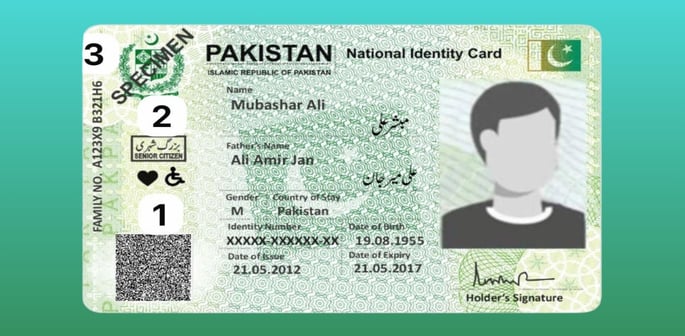
QR codes become mandatory security features.
Pakistan has introduced sweeping legal changes to its identity card system, placing QR-based, biometric verification at the centre of a new national digital framework.
The reforms amend longstanding identity rules through fresh government notifications, formally upgrading both National Identity Cards and Pakistan Origin Cards under a unified legal structure.
Officials describe the move as part of a One Nation One Identity vision designed to standardise identification for citizens and overseas Pakistanis within a single, modern system.
Under the updated rules, QR codes become mandatory security features, allowing instant authentication through machine-readable data that can be scanned across government platforms.
The QR system replaces the previous chip and non-chip card split, meaning all holders will transition to a single uniform card format.
Authorities have also allowed the National Database and Registration Authority, commonly known as NADRA, to introduce future technological upgrades without rewriting legislation each time.
Biometric safeguards have expanded significantly, with fingerprints and iris scans formally recognised as authentication tools, strengthening multi-layer verification and reducing risks of impersonation.
If a card is suspended, all linked verification privileges are automatically revoked across digital services, tightening fraud controls affecting banking, SIM registration and property transactions.
Updated designs now apply to multiple categories, including overseas Pakistanis, children, organ donors and persons with disabilities, each featuring QR security as a design element.
Residents of Azad Jammu & Kashmir will receive standardised identification with clear inscriptions marking residency status, ensuring administrative clarity across official documentation.
Older citizens aged 60 and above, including overseas Pakistanis, will receive lifetime valid cards carrying a distinct logo that signals eligibility for age-related services.
For many families in the UK, the overhaul affects how they manage property, banking and travel matters in Pakistan while living abroad.
Officials say integration with the National Data Exchange Layer will enable faster online and offline verification, supporting future e-government services and remote identity checks.
For British Pakistanis, the shift signals a QR-first identity era that promises stronger security, fewer renewals for older people and clearer rules when cards are disputed or suspended.
The government argues the reforms will make identification easier to verify, harder to forge and better aligned with Pakistan’s broader push towards digital governance.
Implementation is expected to roll out gradually as existing cards expire, meaning many overseas Pakistanis will encounter the new system during routine renewals or administrative updates.