


















































The tale also mirrors Sara’s own experiences.
The upcoming Ramayana film is bringing one of South Asia’s most enduring epic traditions to a new generation of cinema audiences, and its stories have been reimagined by Hollywood for decades.
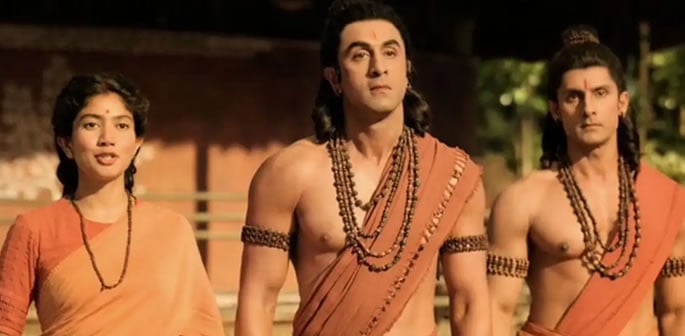
Directed by Nitesh Tiwari, the highly anticipated Hindi-language film releases on November 6, 2026.
It tells the story of Prince Rama’s quest to rescue his wife, Sita, from the demon king Ravana, exploring themes of duty, devotion, exile and justice.
Although the Sanskrit epic has deep roots in Hindu religious traditions, its stories have been retold across South Asia through theatre, poetry, television and film.
Hollywood films have also drawn on its characters and themes to explore everything from family separation to religious identity and social injustice.
These films showcase how the Ramayana continues to inspire filmmakers, even when its influence is not immediately apparent to audiences.
A Little Princess explores Sita’s Struggles
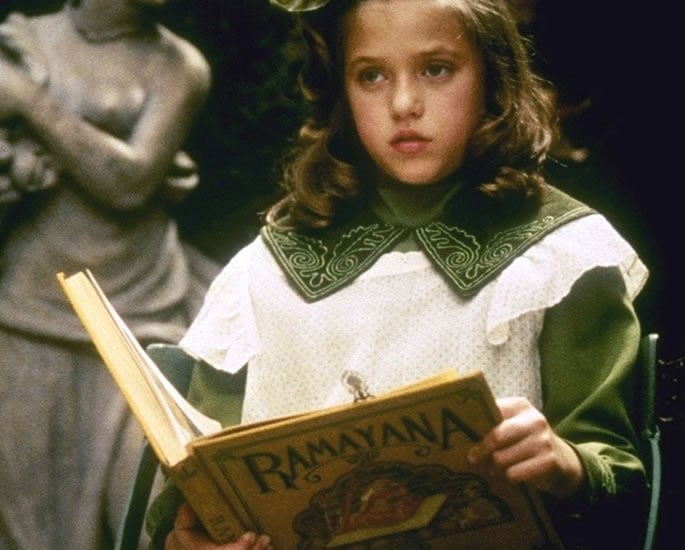
One of the most striking Hollywood interpretations of the Ramayana appears in Alfonso Cuarón’s 1995 film A Little Princess.
Based on Frances Hodgson Burnett’s 1905 children’s novel, the film follows Sara Crewe, the daughter of a wealthy British Army captain stationed in colonial India, who is sent to a boarding school in New York.
The film begins with Sara telling the story of the Ramayana.
As Sara narrates the tale, the film presents scenes inspired by the epic.
Actors portraying Rama and Sita are shown living in exile in a lush green forest. When Sita encounters a demon disguised as a golden deer, she asks Rama to pursue it.
Before leaving, Rama draws a protective circle around her and warns her not to cross its boundaries. When Sita steps outside, Ravana abducts her, setting the epic’s rescue story in motion.
The tale also mirrors Sara’s own experiences.
Initially treated like a princess because of her father’s wealth, she loses her privileged position when he is presumed dead during the First World War. Her headmistress confines her to the school’s attic, leaving her to endure hardship and separation from the parent she loves.
While grieving, Sara draws a circle on the attic floor, echoing the protective boundary Rama creates for Sita. Her story eventually reaches a happier conclusion when her father, who survived the war, finds her and takes her home to India.
Cinema and media studies scholar Jyotsna Kapur explains that “the man cast as Rama is Sara’s father and the Ramayana is the imaginative thread that binds father and daughter together through their struggles while apart”.
By weaving the two narratives together, Cuarón uses the Ramayana to deepen the emotional impact of Burnett’s novel.
The epic becomes a connection between father and daughter, showing how an ancient South Asian story can illuminate experiences that resonate across cultures.
Hanuman in Hollywood

Hanuman is one of the Ramayana’s most recognisable characters.
Celebrated for his courage, strength and loyalty, he helps locate Sita after Ravana abducts her and takes her to Lanka. His influence has extended into Hollywood animation and superhero films, where his character and symbolism have been adapted for new audiences.
Pixar animator Sanjay Patel’s Academy Award-nominated 2015 short film Sanjay’s Super Team explores the relationship between Hindu traditions and modern childhood.
Its protagonist, Sanjay, is an Indian American boy who would rather watch cartoons than worship Hindu deities with his father.
His perspective changes when he imagines Hanuman, Vishnu and the goddess Durga as superheroes resembling the characters in his favourite animated television show.
The film connects religious heritage with the visual language of contemporary superhero entertainment, while exploring the generational differences that can emerge when children negotiate their cultural identity.
Hanuman also features in Ryan Coogler’s Marvel films Black Panther and Black Panther: Wakanda Forever.
In both, M’Baku, the leader of Wakanda’s Jabari tribe, proclaims “Glory to Hanuman!”
The Jabari worship a giant white gorilla deity, whose portrayal differs from Hanuman’s traditional depiction in the Ramayana.
The choice also marks a departure from the original Black Panther comics, in which the gorilla deity is known as Ghekre and draws on traditions associated with the Akan Baoule people of the Ivory Coast.
Monkey Man and Mythology
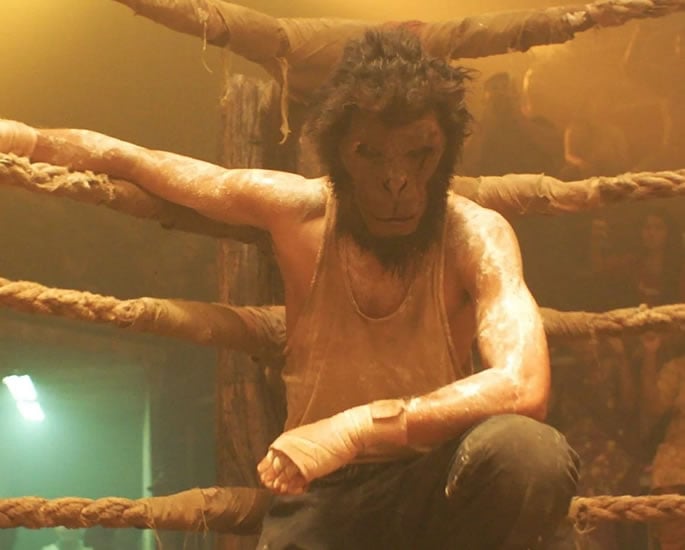
Dev Patel’s 2024 action thriller Monkey Man takes a darker approach to the Ramayana‘s influence, drawing on Hanuman’s cultural significance to tell a story about revenge, corruption and social injustice in India.
The film follows the protagonist who seeks revenge after a corrupt policeman rapes his mother. The policeman works for a powerful spiritual leader, placing the protagonist’s personal tragedy within a wider story about institutional power and religious nationalism.
Hanuman provides a symbolic inspiration for the protagonist, connecting his struggle with a figure traditionally associated with strength, devotion and the fight against evil.
However, Monkey Man is not a straightforward adaptation of the Ramayana. Instead, it combines elements of South Asian cultural traditions with the conventions of American revenge films, including John Wick.
This allows the film to draw on the emotional power of familiar religious imagery while addressing contemporary concerns.
Its story raises questions about corruption, marginalisation and violence, demonstrating how epic traditions can inform modern cinema without requiring filmmakers to reproduce an ancient narrative directly.
The result is a reinterpretation of Hanuman’s symbolism within a contemporary action thriller, showing how mythology can provide a framework for exploring social and political issues.
Slumdog Millionaire and Nationalism
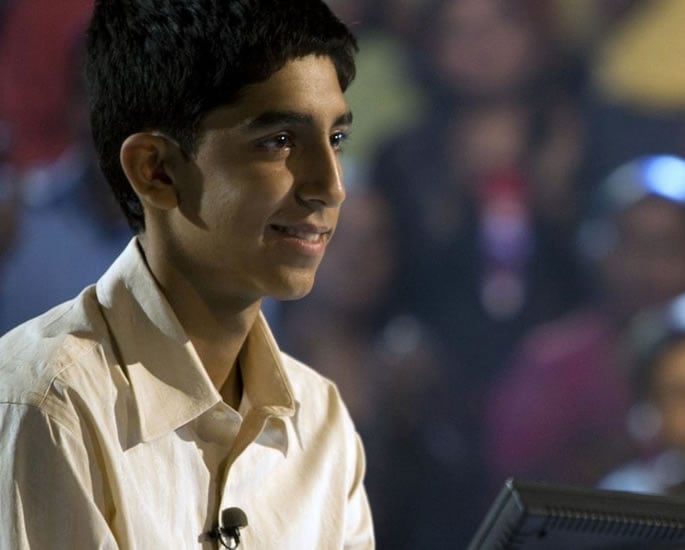
Danny Boyle’s 2008 Oscar-winning Slumdog Millionaire explores a more politically charged interpretation of the Ramayana, examining how religious symbols can become entangled with communal conflict.
The film follows Jamal Malik, a contestant on the Indian version of Who Wants to Be a Millionaire?
During the programme, he is asked: “In depictions of God Rama, he is famously holding what in his right hand?”
The question triggers a flashback to the communal violence that followed the demolition of the Babri Masjid in Ayodhya on December 6, 1992.
The 16th-century mosque was destroyed by Hindu nationalists, who claimed it occupied the birthplace of Rama.
The demolition intensified religious tensions and was followed by deadly riots across India and other parts of South Asia.
For Jamal, the violence is deeply personal: as a child, he witnesses his mother’s killing while fleeing the mob.
During his escape, he encounters a boy dressed as Rama and carrying a bow and arrow. The image becomes inseparable from his traumatic memories.
Reflecting on the quiz question as an adult, Jamal states:
“I wake up every morning wishing I didn’t know the answer to that question. If it weren’t for Rama and Allah, I’d still have a mother.”
The scene illustrates how religious symbols can acquire different meanings within political and social conflicts.
By connecting Jamal’s childhood trauma with the quiz question, Slumdog Millionaire examines the human consequences of communal violence.
Nitesh Tiwari’s upcoming Ramayana represents the latest chapter in a long history of retelling one of South Asia’s most influential epic traditions.
Yet Hollywood films demonstrate that its influence extends well beyond direct adaptations.
Through characters such as Rama, Sita and Hanuman, filmmakers have explored separation, devotion, cultural identity and justice, while using the epic’s symbolism to address contemporary social and political concerns.
The Ramayana has survived through countless retellings across different communities and generations. Its continuing presence in cinema reflects that diversity, showing how a centuries-old tradition can take on new meanings when interpreted through different cultural perspectives.
As Tiwari’s film approaches its November 2026 release, it offers an opportunity for audiences to discover the epic itself and consider the many ways its stories continue to shape filmmaking around the world.