

















































"we could be seeing record prices at the pumps.”
UK drivers could face record-breaking petrol prices within weeks as conflict in the Middle East rattles global oil markets.
Tensions escalated after the United States and Israel carried out strikes on Iran on February 28. Iranian forces responded with attacks on targets in the United Arab Emirates, Qatar, Bahrain, Jordan and Iraq.
Blasts continue across the region as airstrikes intensify, with Iran warning it will “set fire” to ships attempting to pass through the Strait of Hormuz, a crucial shipping lane for the global oil industry.
Around 20 per cent of the world’s oil and gas passes through the waterway.
Brent crude, the global oil benchmark, rose to $82 (£61) a barrel on March 2.
That marked a rise of more than 10 per cent. The price had already reached a seven-month high of $73 (£54) before Saturday’s strikes.
On March 3, Brent crude stood at $81.82 (£61.52) a barrel. This could rise further if the conflict continues.
Edmund King, president of the AA, said: “The turmoil and bombing across the Middle East will surely be a catalyst to disrupt oil distribution globally, which will inevitably lead to price hikes.
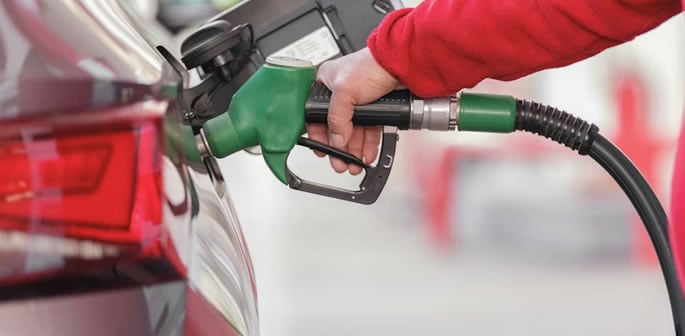
“So drivers beware, within the next 10 to 12 days we could be seeing record prices at the pumps.”
According to the AA, petrol currently averages 132.9p per litre in the UK. The organisation said that once the temporary 5p fuel duty cut is reversed, volatility could push prices to 142.5p per litre.
That would match the highest levels recorded before the Covid-19 pandemic.
Further pressure is expected from planned fuel duty increases. The 5p-a-litre cut was introduced in March 2022 following Russia’s invasion of Ukraine.
Chancellor Rachel Reeves confirmed in November’s Budget that the policy would be reversed in stages. Fuel duty will rise by 1p in September, followed by 2p in December and a further 2p in March 2027.
Some industry figures have urged the government to pause the increases.
Howard Cox, founder of FairFuelUK, said: “In light of the ongoing crisis in the Middle East, Rachel Reeves must declare in her Spring Statement that fuel duty will remain frozen for the duration of her parliament and cancel any planned increases in the Autumn Budget.
“This move would not only be economically prudent – stimulating GDP growth and alleviating inflationary pressure – but it would also provide some much-needed political relief to this government, known for its frequent U-turns.”
Professor Michael Tamvakis, professor of commodity economics and finance at Bayes Business School, part of City St George’s, University of London, said:
“The closure of the Straits of Hormuz is a key bottleneck for the flow of both oil and gas.
“In short, we could lose something like six million barrels per day from the 14 million barrels exported by GCC (Gulf Co-operation Council) countries.
“We face a growing bottleneck in supply if the Straits of Hormuz remain closed for long and if there is no insurance available for vessels sailing through the region.
“The closure also completely chokes natural gas supply from the Middle East and Gulf region.
“There are no pipeline alternatives. It is directed primarily to Asia, but some Qatari natural gas is exported to Europe.
“It is fortunate that we are entering the northern Hemisphere spring. That fall in demand might ease any pressures and price rises.”
Home heating oil has also risen and the impact is already being felt in Northern Ireland, where most households rely on heating oil.
Just before the conflict, the average price of 500 litres of home heating oil in Northern Ireland stood at £307.38, according to the Consumer Council NI.
By March 2, prices had surged to £395 at one provider in County Armagh and £425 at another in County Down.
Nearly two-thirds of homes in Northern Ireland use oil for heating. The UK average is just over five per cent.
Unlike electricity and gas customers on standard variable tariffs, heating oil users are not protected by Ofgem’s energy price cap. Prices are therefore fully exposed to global oil market movements.
Raymond Gormley, head of energy policy at the Consumer Council, said:
“As we import all our home heating oil, Northern Ireland is at the mercy of volatile global oil markets and the price that consumers pay is impacted by a complex range of factors, including geopolitical tensions, which can result in price fluctuations.
“Home heating oil prices had been increasing slowly over the last couple of weeks, with 500 litres £307.38 on the 26th February, up £13 on the previous week.
“This conflict with Iran is very likely to have some impact on home heating oil prices in Northern Ireland and when we publish our weekly oil price check on Thursday, we will know exactly how much of an impact this will be.
“We will continue to monitor the situation very carefully.”