















































"I felt angry on her behalf. I felt insulted and disrespected."
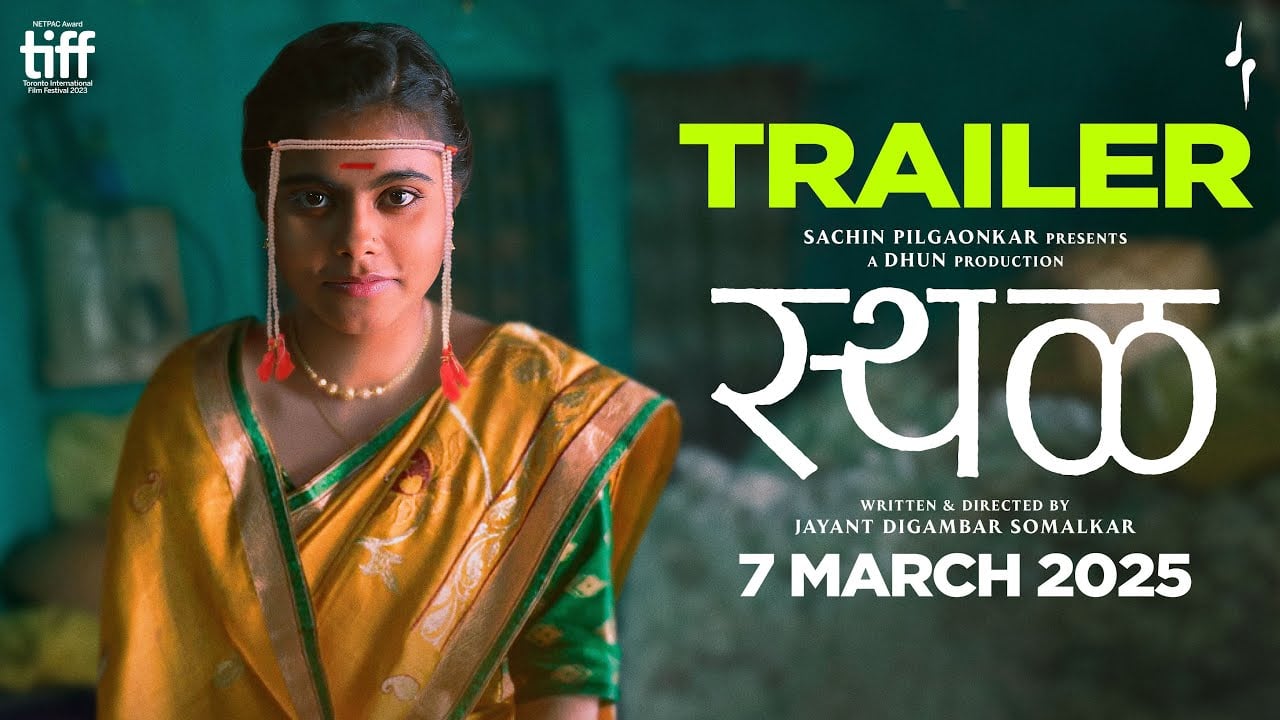
Sthal: A Match is a 2023 Marathi-language film that unflinchingly portrays the harsh realities of arranged marriage in India.
It is often said that marriages are made in heaven.
But in India, where most marriages are arranged, the matchmaking process can feel like a trial by fire for women and their families.
That is the premise of Sthal, which has won prestigious awards at festivals in India and abroad.
It is now set for its theatrical release in India on March 7, 2025.
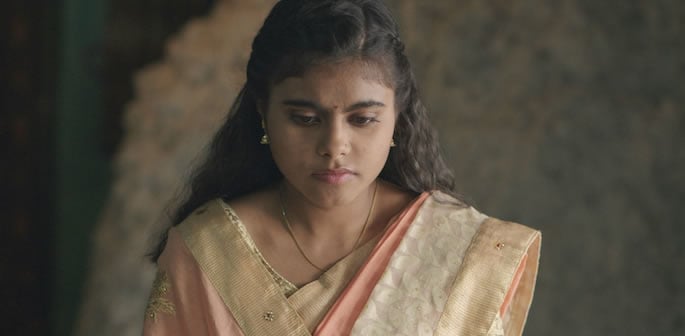
Set in rural Maharashtra, Sthal follows Savita, a young woman striving for education and a career, while her father, Daulatrao Wandhare, a poor cotton farmer, searches for a suitable groom.
Director Jayant Digambar said: “He wants a good price for his crop and a good match for his daughter.”
Unlike many Indian films on arranged marriage, Sthal unflinchingly portrays the “very humiliating” experience of young women.
The entire cast consists of first-time actors from the village where the film was shot.
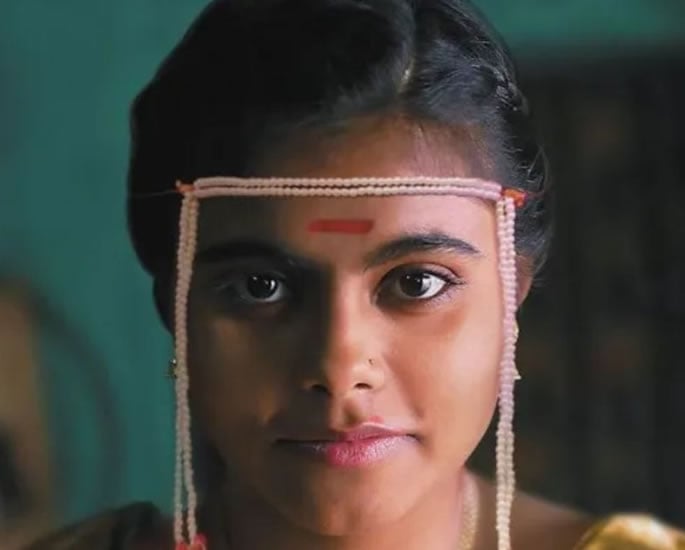
Nandini Chikte, who plays Savita, has already won two awards for her performance.
The film opens with a subversive dream sequence. Savita watches a nervous young man, a prospective groom, serve drinks to her female relatives, stumbling under their scrutiny.
But she is soon jolted awake. In reality, the gender roles are reversed, and the true ordeal begins.
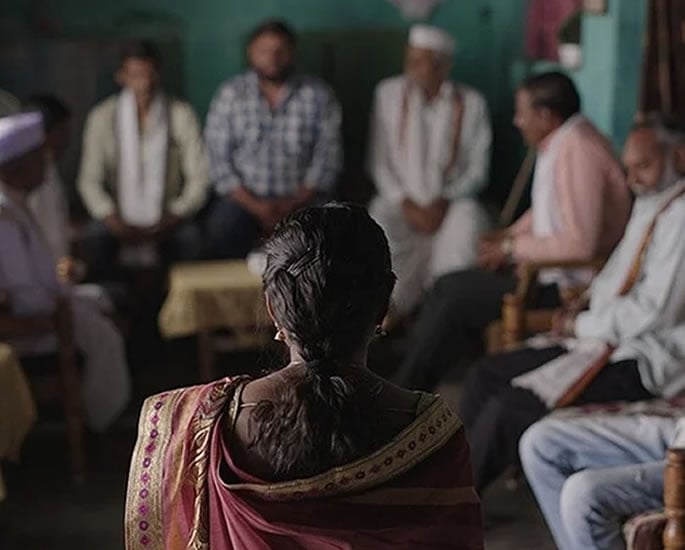
A group of men arrives at Savita’s home. Her father and male relatives greet them with tea and snacks.
Once introductions are done, Savita is summoned. Dressed in a saree, with eyes lowered, she perches on a wooden stool before her interrogators.
Questions come rapid-fire. Name? Mother’s clan? Birth date? Height? Education? Hobbies? Will she work on the farm?
The men step outside to deliberate.
“She’s a bit dark,” one notes. “She had makeup, but did you see her elbow? That’s her real colour.” Another adds, “She’s also short.” Heads nod in agreement before they leave, promising a decision in a few days.
According to her parents, “this is the fourth or fifth time someone has come to see Savita”.
Every rejection deepens their despair.
The scene is painfully familiar. Many Indian men seek brides who are tall, fair and beautiful.
Matrimonial columns and matchmaking sites reflect these demands.
But Savita’s aspirations—”I don’t want to get married. I want to finish college, take the civil services exam and build a career”—hold little weight in her community, where marriage is a young woman’s ultimate goal.
Nandini Chikte said: “Marriage is given far too much importance in our society.
“Parents believe that once the daughter is married, they are free of their responsibility. It’s time to change that narrative.”
She described feeling “very humiliated” while filming scenes where men dissect Savita’s appearance.
Nandini continued: “I was only acting, but as the film progressed, I lived Savita’s journey. I felt angry on her behalf. I felt insulted and disrespected.”
Sthal also tackles the deep-rooted issue of dowry. Though illegal for over 60 years, dowries remain widespread in Indian marriages.
Many families take out loans or sell property to meet dowry demands.
Despite this, thousands of brides are abused or even killed each year over insufficient dowries.
In the film, Daulatrao is forced to put his land up for sale, despite farming being his only livelihood.
Jayant revealed his debut feature is inspired by personal experience.
Growing up with two sisters and five female cousins, he witnessed countless bride-viewing rituals.
He said: “As a child, you don’t question tradition.”
But in 2016, while accompanying a male cousin to see a prospective bride, he saw the process from the other side.
Jayant said:
“I felt uncomfortable when the woman came out, sat on a stool and was asked questions.”
“When we stepped out for discussion, I realised how objectifying it was.”
His then-fiancée, now wife, encouraged him to explore the subject through film.
With 90% of Indian marriages still arranged, Sthal is not the first film to examine the practice.
IMDb lists nearly 30 Indian films about arranged marriage in the past two decades. More recently, Netflix’s Indian Matchmaking showcased the process for an elite class of Indians.
But as Jayant points out, “weddings are hugely glamourised” in popular culture.
He said: “When we think of Indian weddings, we picture lavish celebrations like Hum Aapke Hain Koun.
“Even Indian Matchmaking focuses on wealthy, educated women who have the power to choose.”
For many Indian women, the reality is starkly different. Parents often struggle to marry off their daughters, enduring a gruelling process that Sthal brings to light.
The filmmaker added: “I want to jolt society and audiences out of complacency.
“I want to spark debate and make people reflect on a system that objectifies women and limits their choices.
“One book or film won’t change society overnight. But it can be a start.”
Watch the Sthal Trailer