

















































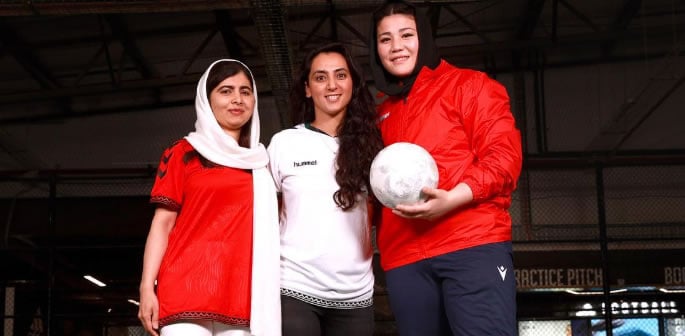
"Just because of the lack of investments, lack of opportunities.”
On June 24, 2025, Nobel Peace Prize laureate Malala Yousafzai unveiled her latest initiative and this time, the battleground isn’t a classroom or a UN stage, but the world of sport.
Speaking at the Billie Jean King Power of Women’s Sport Summit, Malala launched Recess, a campaign designed to champion women’s and girls’ rights through sport, from grassroots to the professional level.
Known globally for surviving a Taliban assassination attempt and becoming a leading voice for girls’ education, Malala is now turning her lifelong passion for sport into something greater.
The timing of the launch couldn’t be more symbolic: in an age where women’s sport is growing yet still grossly underfunded, her mission is clear: to level the playing field.
Recalling her childhood in Pakistan, where boys played cricket during school breaks while girls were left behind, Malala told CNN:
“From that point onwards, I knew that sports was something that girls did not have easy access to.”
That memory, it turns out, planted the seeds for Recess, now a fully-fledged initiative backed by her and her husband, Asser Malik, who brings professional cricket experience to the table.
As the global spotlight increasingly turns to women’s sports, Malala is aiming to harness that energy and transform it into real investment and opportunity, not just inspiration.
From Fan to Founder
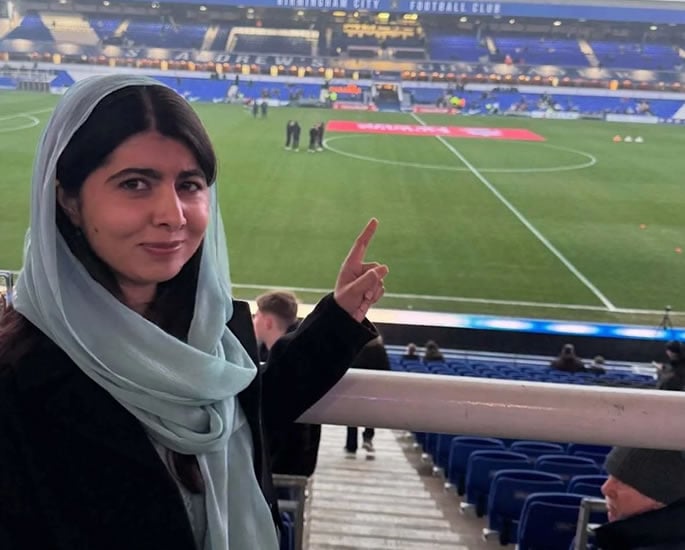
Though her public image is rooted in activism and advocacy, Malala’s sports credentials come from the stands.
Whether it’s cricket, basketball, netball or rugby, she’s often spotted supporting women’s teams around the world.
In fact, she chose to spend a frosty Valentine’s Day watching American rugby star Ilona Maher play for Bristol Bears.
That level of personal dedication has helped shape Recess, not as a campaign from the outside looking in, but from someone embedded in the culture.
She explained: “We were looking for an opportunity where we could bring in our expertise, our platform to benefit women’s sports in general.
“Just because of the lack of investments, lack of opportunities.”
Joining her in that effort are sporting legends Billie Jean King and Ilana Kloss, who have signed on as advisors.
Their belief in women’s sport not just as a moral cause, but a serious business opportunity, aligns squarely with Malala’s vision.
Sport as Resistance and Recovery
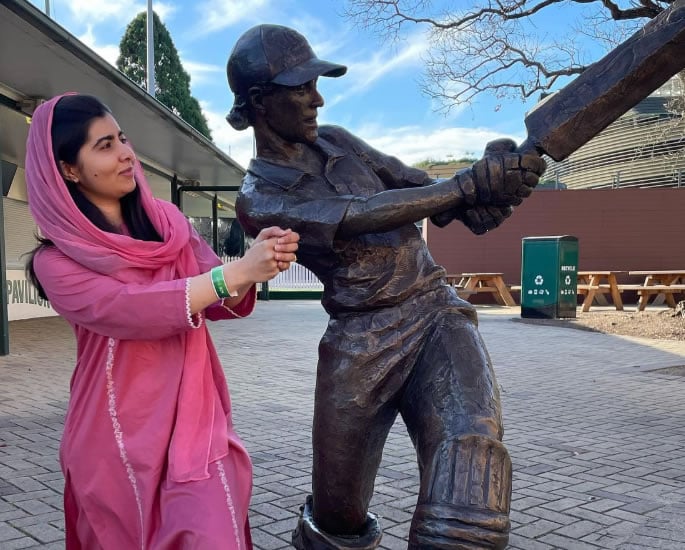
To Malala, sport is more than entertainment; it’s a global equaliser and a political act.
In today’s climate of war, authoritarian crackdowns, and eroded rights for women in places like Afghanistan, she sees sport as a peaceful counter-force.
She said: “We are capable of dialogue, we are capable of coming together.
“Sports… have proven to be that powerful way of bringing communities together.”
“We could be competitive, but at the same time… hug each other, shake hands, and recognise that we’re all one humanity.”
This emphasis on unity isn’t idealistic fluff. It speaks to sport’s potential in post-conflict settings, in refugee communities, and in areas where access to education, let alone sport, is restricted.
Recess isn’t just about elite leagues; it’s about changing lives on and off the field.
Targeting Leagues with Impact
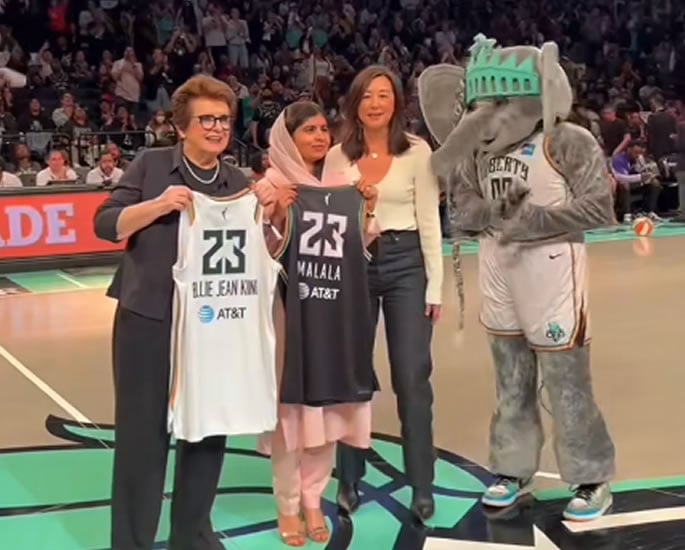
Malala and her husband are starting where they believe change can be felt immediately: established women’s leagues like the WNBA and NWSL.
With packed arenas and rising TV deals, these leagues offer proof of concept that women’s sports are ready for serious business investment.
Asser is clear about their strategy: “Recess’ approach is to treat them like a proper business and to go in and prove that it’s a great business case, so that more capital comes in and it grows.”
But that’s just one side of the coin.
At the grassroots level, Recess is also focused on reversing a worrying global trend.
According to the Women’s Sports Foundation, girls drop out of sport at double the rate of boys by age 14, largely due to stigma, lack of opportunity and few visible role models.
This dropout crisis, Malala believes, is cultural and solvable if role models are made visible and opportunities are fairly distributed.
Asser added: “For women’s sports to grow everywhere, we have to have a different approach for different places.”
That flexibility is central to Recess’ global ambition.
Changing the Narrative

Malala’s belief in the quiet power of athletes is central to her initiative, citing Caitlin Clark, a college basketball star turned WNBA drawcard, as a prime example.
She said: “They have a huge impact without actually saying much.
“The fact that they’re on the field and they’re on the court is already changing perspectives.”
Athletes like Clark are moving the needle, not just in ticket sales and TV ratings, but in perception.
They show that female athletes don’t have to be activists to be impactful; their very presence in major arenas is a statement.
For Malala, that’s the kind of visibility that inspires a generation of girls to believe sport isn’t just for boys, it’s for them too.
Sport, Education and Empowerment
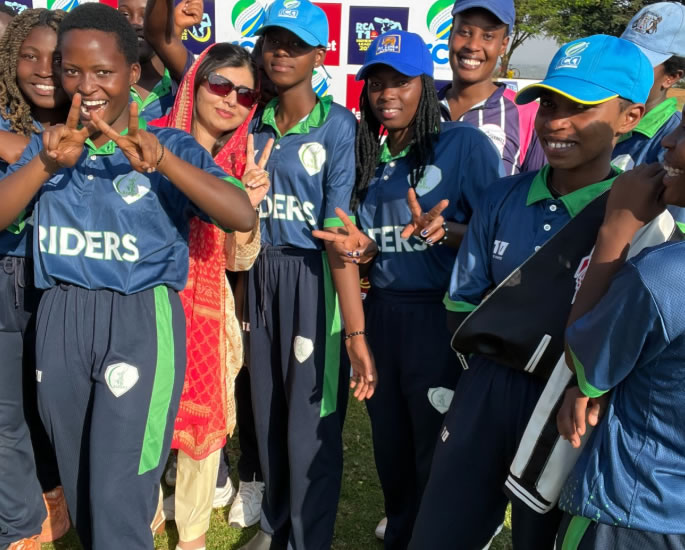
Malala’s career has always merged education with empowerment.
With Recess, she is expanding her vision to include sport as part of that equation.
Her foundation, the Malala Fund, will continue its focus on education, while Recess becomes the vehicle for social change through physical activity.
That dual-pronged approach mirrors how many girls experience life, learning in classrooms but growing through play.
As someone who wasn’t allowed on the cricket pitch as a child, Malala now finds herself helping build those very pitches, not just in Pakistan, but around the world.
In Recess, Malala Yousafzai is doing what she has always done: challenging structures that limit women and girls.
But this time, she’s doing it with a scoreboard in the background and fans in the stands.
By treating women’s sports as both a social cause and a viable investment, Malala is helping rewrite the rules of the game.
And in doing so, she’s sending a message that women’s sport isn’t charity, it’s the future. And the future plays to win.