

















































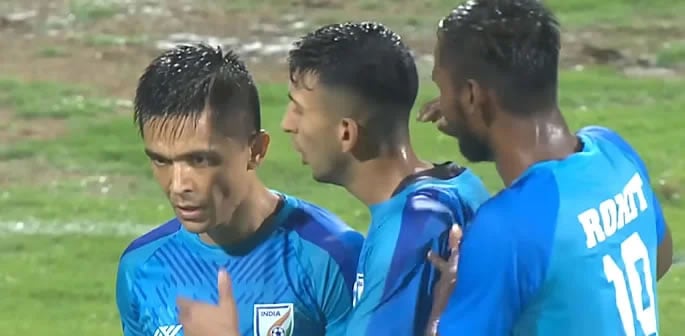
"What is required is proper talent scouting"
Every FIFA World Cup, questions surround India and its continued absence from football’s biggest stage.
It is a debate that resurfaces as the tournament unfolds and global attention shifts to nations that have found a way to compete at the highest level.
The nation has only qualified once, in 1950. However, they withdrew due to a combination of travel costs, lack of preparation and the federation’s decision to prioritise the Olympic Games.
The diaspora is enjoying a presence at the 2026 World Cup, with Sarpreet Singh starting for New Zealand.
It is a sharp reminder that representation is not limited to traditional football powers. Instead, it is built through systems, pathways and sustained development over time.
India’s absence continues to stand out not because of a lack of interest, but because of unresolved structural gaps that remain unchanged.
The answers lie across governance, grassroots development and the way the domestic game is organised.
Governance and Repeated Breakdowns
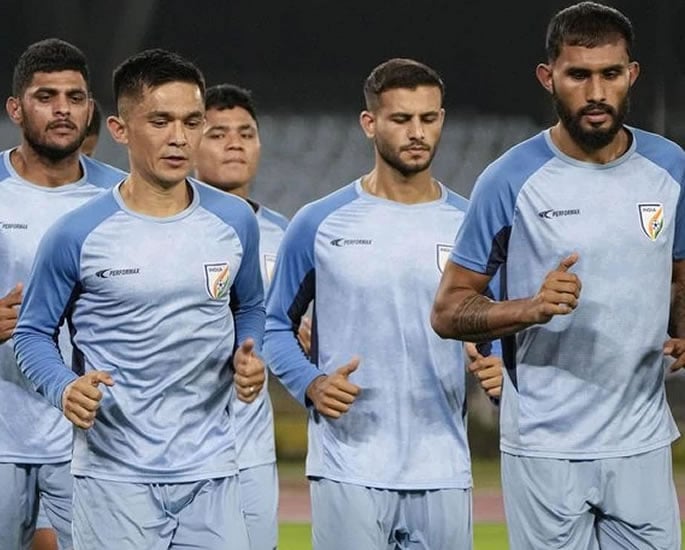
Indian football suffers from a lack of coordination between clubs and the national federation.
Administrators, clubs and coaches often operate on different timelines, with competing priorities undermining national planning.
Shaji Prabhakaran, former AIFF secretary-general, highlights the responsibility of leadership:
“The governing body must lead by example, projecting absolute transparency and an unwavering professional outlook.”
That standard has rarely translated into consistent alignment between stakeholders and this tension has persisted for decades.
In 2006, East Bengal and Mohun Bagan withdrew players from national duty for domestic commitments, leaving then-coach Bob Houghton frustrated. The same structural issue continues to surface in different forms.
In 2023, despite approval for participation in the Asian Games, several ISL clubs refused to release players for national duty.
More recently, Mohun Bagan Super Giant pulled players ahead of the Unity Cup trip to London, even after the domestic season had concluded.
Each episode disrupts preparation cycles and weakens continuity at the international level.
These repeated breakdowns interrupt tactical development, limit squad stability and prevent long-term planning.
Without shared priorities between clubs and the federation, India’s national team is forced into constant short-term adjustment.
What are the Problems in Grassroots Systems?
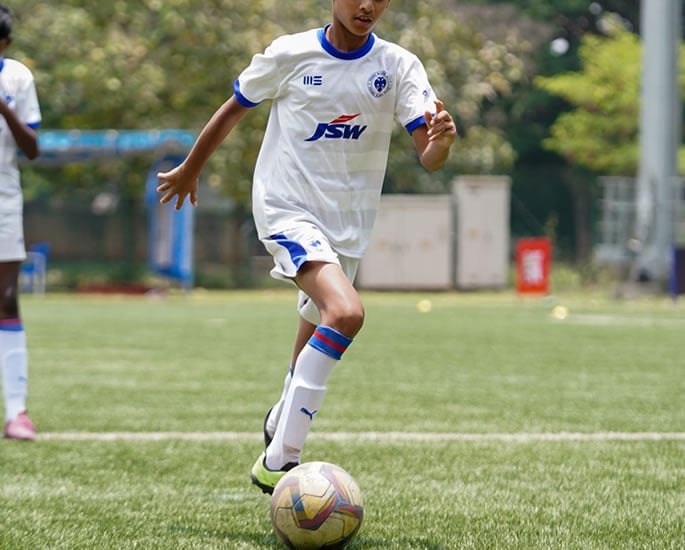
If governance explains instability at the top, grassroots structure explains the lack of depth beneath it.
India’s participation base is large, but the pathway from youth football to the senior international level remains inconsistent.
Former India international Mehtab Hossain told Telegraph India:
“What is required is proper talent scouting, bring them under one umbrella and get a coach to develop them as world-class players.”
Deep Dasgupta argues that change must begin at the earliest levels:
“Football administrators must take care of the U-16 or U-17 players once they join the big league.
“We do not need a top-down approach. We have to follow the bottom-up strategy and wait for the results.”
Despite over 388,311 registered players and more than 10,000 clubs, according to All India Football Federation data, the system struggles to convert participation into elite performance.
India is currently ranked 138th in the FIFA rankings.
The gap between grassroots activity and professional readiness remains wide.
Kalikesh Narayan Singh Deo, president of the National Rifle Association of India, draws parallels with other sports systems that have successfully built long-term success:
“One lesson from shooting’s rise is universal – sustained investment in grassroots and junior development is critical.”
The comparison highlights a broader issue of consistency.
India’s exposure to elite youth football has also failed to produce sustained senior impact.
The 2017 FIFA Under-17 World Cup provided rare global experience on home soil, but most participants have not progressed into established international careers.
The pipeline remains uneven, with limited transition from youth to senior level.
The Impact of the ISL
The Indian Super League has reshaped domestic football since its introduction in 2014.
It has increased visibility, improved salaries and brought international attention, but questions remain over competitiveness and long-term development outcomes.
Ex-India coach Igor Stimac previously described elements of the domestic game as “comfort football”, reflecting concerns over intensity and match readiness.
One of the key structural issues is the low number of competitive matches players experience across a season compared to global standards.
Gaps in competition affect rhythm, conditioning and tactical sharpness.
Mehtab Hossain has repeatedly stressed the importance of physical preparation from youth level onwards.
Without structured strength and conditioning, players struggle to meet the demands of international football.
Broader comparisons underline the same point.
Neeraj Chopra’s development under biomechanical expert Klaus Bartonietz is often cited as an example of how scientific support can transform performance outcomes in Indian sport.
Former AIFF official Shaji Prabhakaran links these issues to wider systemic consequences:
“When the senior national team struggles on the international pitch, it triggers a damaging domino effect.”
Poor international performance feeds back into development, investment and confidence across the system.
5 Facts about Indian Football
- India qualified for the 1950 World Cup but did not participate.
- India is currently ranked 138th in the FIFA rankings.
- Players in India can go as long as 7 months without playing competitive football.
- India’s most successful recent spell under Igor Stimac included three tournament wins in four months.
- India has over 388,311 registered players and 10,911 clubs.
The ISL has delivered positives in terms of exposure and professionalism, but it has not yet resolved deeper structural issues.
Match volume remains low, physical intensity remains inconsistent, and coordination between clubs and the national setup continues to fluctuate.
The result is a system that produces moments of promise but struggles to sustain progress.
Until governance, grassroots development and domestic structure operate in alignment, India’s World Cup absence is likely to remain a reflection of systems rather than isolated cycles of form.
India’s continued absence from the World Cup is the result of structural weaknesses rather than a single failure.
The evidence points to repeated issues in governance, inconsistent coordination between clubs and the national federation, and an underdeveloped grassroots system that struggles to produce sustained elite-level talent.
While India did qualify for the World Cup in 1950, the team ultimately withdrew. Since then, India has not qualified.
That historical moment now stands as an outlier rather than a foundation for progress.
Despite moments of promise in domestic and international football, the overall system has not delivered consistent improvement.
Without long-term alignment between development pathways, domestic competition and national planning, India’s absence from the World Cup is likely to continue.