















































The ISL’s future now hangs in the balance.
India’s football ecosystem is facing one of its worst-ever crises. The country was once called a “sleeping giant” of football but it is now at serious risk of slipping into irrelevance.
The men’s national team is without a head coach while the Indian Super League (ISL) is paralysed due to a contractual dispute between the All India Football Federation (AIFF) and its commercial partner, Football Sports Development Limited (FSDL).
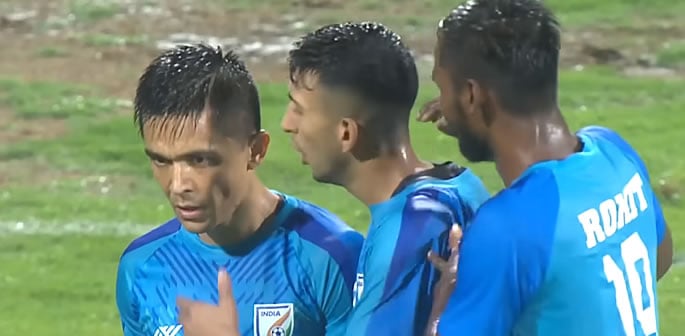
In a stark message on X, India’s most decorated footballer Sunil Chhetri said:
“Everybody in the Indian football ecosystem is worried, hurt, scared about the uncertainty we are faced with.”
His words echo the mood across the country’s footballing circles – confused, anxious, and directionless.
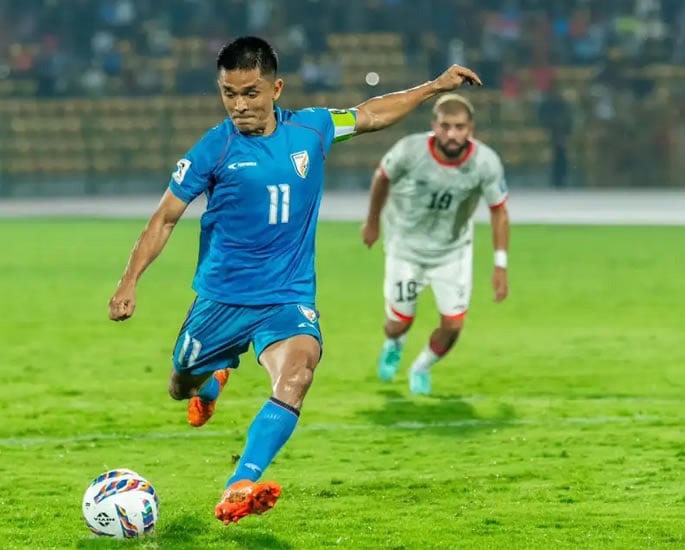
Chhetri’s unexpected international comeback in March, at the age of 40, underscored India’s deeper structural problems.
Despite scoring 95 goals for his country, only Cristiano Ronaldo, Lionel Messi and Ali Daei have more; his return was out of necessity.
India’s younger forwards have failed to step up, leaving the team reliant on an ageing star whose best years are behind him.
The result? A national team now ranked 133rd in the world, its worst FIFA ranking in nearly a decade.
The recent run of results paints a bleak picture.
India have won just one of their last 16 games. The team’s Asian Cup qualifying campaign ended with a 1-0 defeat to Hong Kong.
The ISL’s future now hangs in the balance.
Launched in 2014 with glitz, glamour and marquee international signings, the league aimed to rebrand Indian football for the modern era. Stars like Italy’s Alessandro Del Piero once graced its pitches.
But its momentum has stalled. The operating agreement between the AIFF and FSDL expires on December 8.
With no renewal confirmed, pre-season preparations for the 2025 campaign have been halted.
More than 5,000 players, coaches and support staff are directly affected by the freeze.
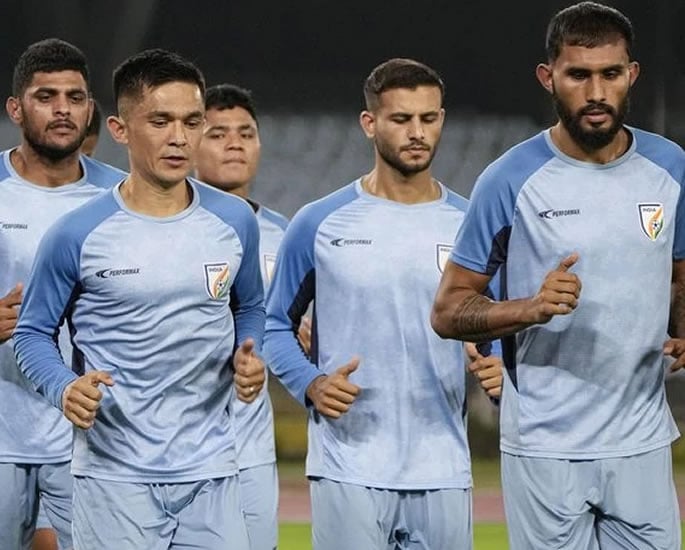
Chhetri’s post reflected their collective anxiety.
Behind the scenes, tensions between the AIFF and FSDL have reportedly worsened, and clubs are caught in the crossfire. TV ratings have dropped. Sponsor interest has faded. Even grassroots academies are pausing operations amid growing doubts about the sport’s immediate future.
Despite the turmoil, some within the system remain optimistic.
Subrata Paul, director of the national teams and former India captain, said:
“Indian football, like any growing ecosystem, will face its share of challenges and transitions.
“I see this as a time to pause, reflect and refocus.
“Yes, the recent results and the uncertainty around the ISL are difficult for all of us who love the game, but I see a silver lining as well.
“It’s an opportunity to strengthen our foundation by investing in youth development, infrastructure and quality coaching.”
Paul, widely regarded as one of India’s greatest-ever goalkeepers, is among those calling for long-term thinking over short-term gains.
The world’s footballing elite still believe in India’s potential.
FIFA’s global football development head, Arsène Wenger, visited India in 2023 to open a new academy.
In June 2025, AIFF President Kalyan Chaubey met Wenger again. Wenger emphasised the importance of starting football training by the age of eight, a far cry from India’s norm, where players typically begin at 13.
Chaubey, a BJP politician and former goalkeeper, has voiced support for reforms. But his leadership is under scrutiny.
Veteran sports journalist Jaydeep Basu says India’s decline in rankings reflects deeper failures:
“The fact that the team, which was ranked 99 in September 2023, has come down to 133 basically shows poor management.
“There is a caucus working in the AIFF of two or three people who are running the show for their own benefit.”
Such allegations have dogged Indian football for years. Critics argue that lack of transparency, internal politics, and poor planning have held back progress.
India’s football history offers glimpses of what might have been.
Between 1948 and 1960, India qualified for four Olympic Games. The team even finished fourth in 1956, narrowly missing out on a bronze medal in Melbourne.
But now, it remains in deep slumber.
Cricket dominates the national sporting landscape. Hockey still commands a loyal following.
Football struggles for relevance, with passionate pockets in cities like Kolkata and states like Kerala keeping the flame alive.
Yet those regional diehards are now disillusioned.
The current chaos presents both danger and opportunity. With the ISL at risk of collapse, India’s football authorities face a pivotal choice.
They can continue papering over cracks or use this moment to rebuild from the grassroots up.
As Paul noted: “It’s an opportunity to strengthen our foundation.”
If Indian football is to rise, it must address the systemic issues that have plagued it for decades, not just at the elite level, but throughout the pyramid.