















































“The Nikkah is important; that’s when married life begins"
Some British Asians are choosing to undertake a religious marriage ceremony but are not legally registering their marriage.
Those from Pakistani, Bangladeshi, Indian, and Sri Lankan backgrounds may choose to pursue this for various reasons, including emotional, socio-cultural, and financial factors.
The trend of unregistered marriages among British Asians is a complex issue with profound cultural, social, and legal implications.
Such a decision can have significant consequences.
Each couple and family can have different reasons for deciding not to register a marriage under British law. The decision can be collective, not just made by the couples.
Nevertheless, there are some British Asian individuals and couples choosing not to register their marriages.
DESIblitz explores the reasons behind this phenomenon within the British Asian community.
What is an Unregistered Marriage?
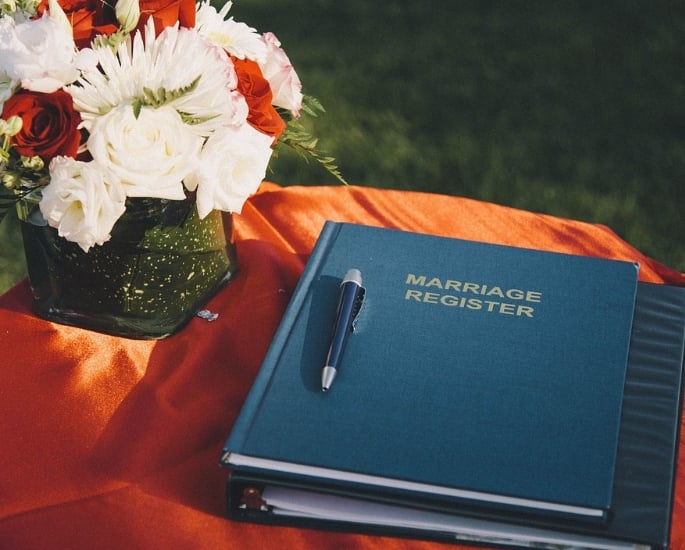
A union recognised by religious or cultural norms but not by UK civil law is an unregistered marriage.
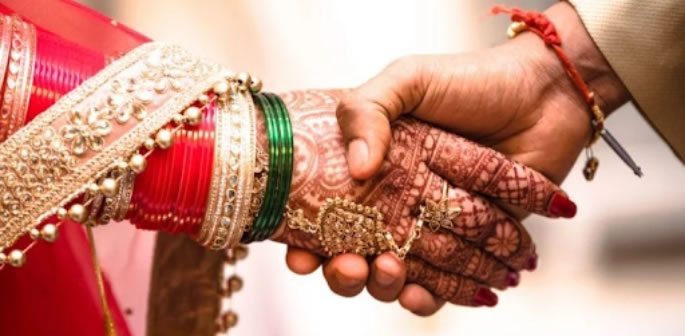
Therefore, a Nikkah and Walima (Islamic marriage contract and reception) or Anand Karaj (Sikh marriage ceremony) is unregistered when civil registration does not occur.
In the UK, a marriage not registered lacks legal standing, which affects rights like inheritance, property, and divorce settlements.
A 2017 survey found that six in 10 Muslim women in the UK were not in legally recognised marriages. Thus depriving them of rights and protection.
Aina Khan OBE is a London-based solicitor specialising in international and Islamic family law.
Khan’s Register Our Marriage campaign, established in 2014, advocates for the civil and legal registration of all religious marriages. In 2017, Khan said:
“In the last five years, the proportion of people under 40 having Nikkah-only marriages is as high as 80%.”
Sarah Khan-Bashir MBE heads a successful family law firm and raises awareness of marriage law in the Muslim community.
In 2023, reflecting on her work and what she has seen, she stated:
“I’m now trying to raise awareness within the community about registering marriages.
“In Islamic law, you have a Nikkah ceremony and a Nikkah contract.
“As Islamic law isn’t recognised in the UK, you can register a marriage at a registry office afterwards.
“I still have clients coming to me after marriages break down who have not registered their marriage or protected their interest in the family home.
“Some are elderly women who thought they were legally protected under the Nikkah. It breaks my heart.”
Yet the fact remains South Asians are choosing not to register their marriage ceremonies.
Cultural and Religious Traditions and Expectations
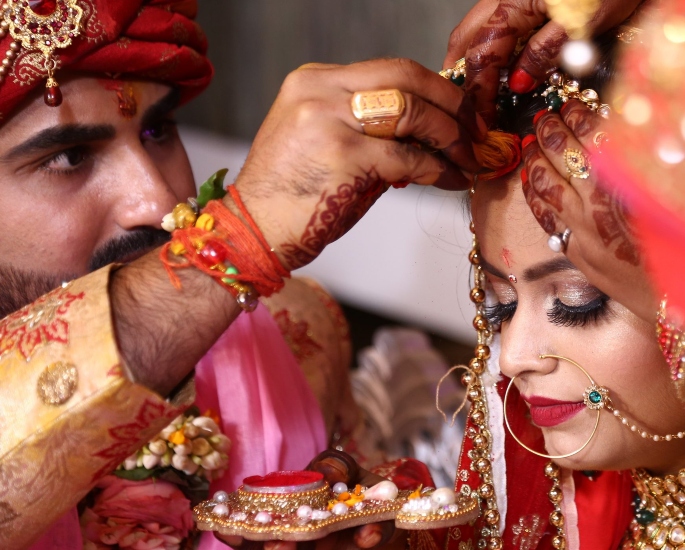
Some British Asians prioritise religious ceremonies over legal ones.
They believe these ceremonies hold greater cultural and spiritual significance and are more valid.
Aliyah*, a British Bengali who has not registered her three-year marriage, stated:
“The Nikkah is important; that’s when married life begins.
“Those who do the English registration and don’t do the Nikkah aren’t married under Islamic law. My family and community wouldn’t see the marriage as valid.
“If you moved in together without the Nikkah, it would be in sin.
“Without the Nikkah, we could not have acted as husband and wife.”
Some, like Aliyah, who follow the Islamic faith consider religious ceremonies like the Nikkah sufficient enough despite their lack of legal recognition under UK law.
This preference often stems from cultural traditions where religious ceremonies are the norm and are seen as binding in their communities.
Mohammed*, a British Pakistani, married his wife in 2020 and said:
“We did the Nikkah, that’s it, three kids later, and we haven’t done anything else.
“We’re married. If anything happened to me, my family would take care of my wife and kids.”
Similarly, Sonia, a British Indian, asserted:
“The Milni, other traditions, and Anand Karaj were key and important for us as a family and couple who practice our faith.
“Without it, we would not be married. We’ll do the civil registration at some point, but it’s not vital right now. Financially, it’s not impacting us.”
Is Being Divorced Impacting the Decision Not to Register?
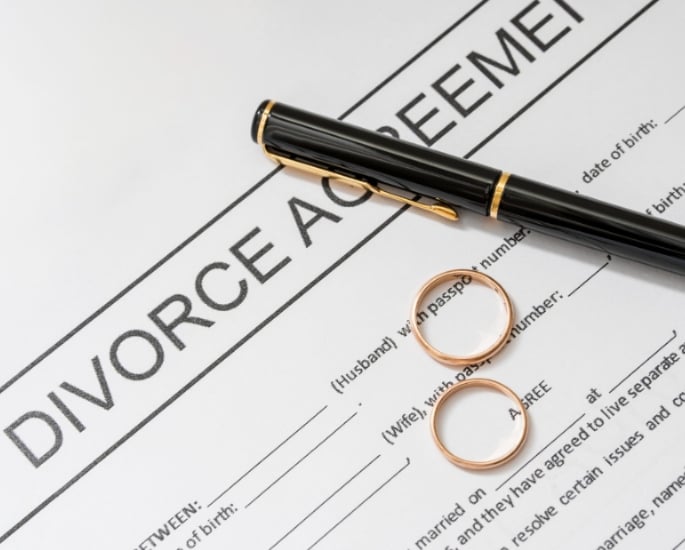
Previous experiences of marriage and divorce can also have some families and individuals hesitant to have the marriage registered under UK civil law.
Faisal*, a British Pakistani, first married at 24. He and his wife had both a civil and religious marriage. When he re-married at 25, he only had the Nikkah.
Faisal told DESIblitz:
“The English divorce is harder to get, especially if one side decides to be difficult. Too much headache. Entire life goes on hold.
“Before I remarried, my wife and I talked. The house is in both our names. We are married through a Nikkah.”
“The Nikkah is compulsory for any Muslim who wants to marry.
“My second marriage happened before the English divorce went through; I was able to do the Nikkah. That meant I could move on and rebuild.
“My wife is disinterested in registering until we have children; then, we’ll have another celebration.”
Faisal and his wife have undertaken actions to ensure a sense of security for both without yet registering their marriage.
Maya*, a British Bengali divorcee, reflected on her marriage not being registered:
“We only had the Nikkah, not intentionally. It was just getting around to booking the registration.
“I’m glad it never happened; towards the end, things with my husband were not good.
“If we had children, the English registration would have been important, but we didn’t have any.
“The fact I only needed to worry about the Islamic talaq [divorce] saved me so much stress, money, paperwork and time. Getting that wasn’t cheap.”
Broader Family Perspective on Registering and Not Registering

British Asian families can be collectivist, with a relationship and its success or breakdown having ripple effects throughout the family.
Indeed, this was the case for Mariam*, a 55-year-old British Kashmiri, when her son’s marriage broke down and led to divorce:
“We were all invested. The Nikkah, Walima and English marriages were all done big. We spent a lot and invested a lot into the relationship with my daughter-in-law.
“It was ugly at the end. She caused a lot of problems, headaches and gossip.
“When my son was ready to marry again, we all spoke, and it was decided that a Nikkah would be done, but he wanted to wait to register.
“He wasn’t planning on keeping one foot out the door. We made sure that our new daughter-in-law was protected in the Nikkah Nama contract, and her family did too.
“Thankfully, it’s all going well. But if it hadn’t, we would have had to keep to what was agreed upon in the contract. Anything else would have been a shame for the whole family.”
However, some feel that the civil registration of a marriage under UK law is essential.
Razia*, a 53-year-old British Pakistani, said: “It’s not a good idea.
“If they’re not registering it, if their partner dies tomorrow, there’s no protection legally. Imagine if the family threw the girl out.
“When my son married, I told him and Sabrina* to make sure they registered as soon as possible. Sabrina’s not my daughter but all should be protected. Everyone should register.
“Some people and families think the Nikkah is fine, they don’t think the marriage is going to break up.”
“But if you just get the Nikkah, the guy can go marry someone in English, and that’s his legal wife, and you don’t find out until it’s too late. I have heard this happening.”
For British South Asians from, for example, Sikh, Hindu and Muslim communities, a traditional religious marriage is often viewed as the “real marriage”.
It can be a means of maintaining and celebrating links with their culture and faith. The civil registration is thus considered insignificant.
For others, previous experiences can make them wary of registering their marriage.
However, in the UK, having a civil registration is essential. It offers protective mechanisms to the financially weaker party in case of a marriage breakdown.
Moreover, even where previous experiences have a couple or individual wary, should they not enter the new marriage with both feet leaping forward?
The matter is emotionally and socio-culturally multifaceted, yet civil registration provides important legal recognition and protection.