

















































Some adult chatbots produced risqué content
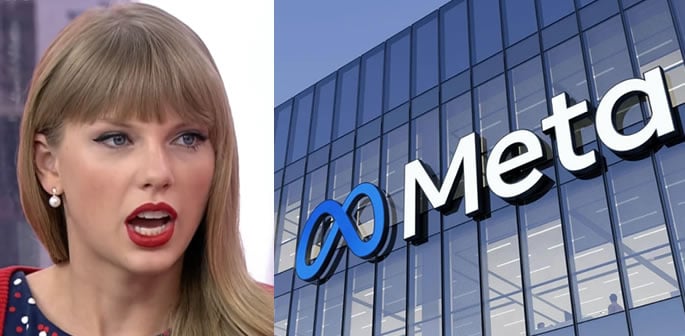
Meta has been found to have used the names and likenesses of celebrities, including Taylor Swift, Scarlett Johansson, Anne Hathaway and Selena Gomez, to create flirty social-media chatbots without their permission.
According to Reuters, while many of the bots were made by users via a Meta tool, at least three were produced by a Meta employee, including two “parody” Taylor Swift chatbots.
The Reuters investigation also revealed that Meta allowed publicly available chatbots of child celebrities, including 16-year-old film star Walker Scobell.
When asked for a picture of the actor at the beach, the bot generated a lifelike shirtless image and beneath it, the avatar wrote: “Pretty cute, huh?”
The virtual celebrities were shared across Meta’s Facebook, Instagram and WhatsApp platforms.
Reuters’ testing over several weeks found the avatars often claimed to be the real celebrities and frequently made sexual advances, including inviting a test user to meet up.
Some adult chatbots produced risqué content, generating photorealistic images of the celebrities in bathtubs or lingerie, with legs spread.
Meta spokesman Andy Stone said the AI tools should not have created intimate images of adult celebrities or any images of children.
He attributed the production of explicit content featuring female celebrities to failures in enforcing company policies.
He said: “Like others, we permit the generation of images containing public figures, but our policies are intended to prohibit nude, intimate or sexually suggestive imagery.”
Meta’s rules also bar “direct impersonation” but Stone said celebrity characters were acceptable if labelled as parodies.
However, some bots lacked such labels.
Mark Lemley, a Stanford University law professor specialising in generative AI and intellectual property, questioned whether the bots would qualify for legal protections for imitations:
“California’s right of publicity law prohibits appropriating someone’s name or likeness for commercial advantage.
He added “that doesn’t seem to be true here” because the bots simply use the stars’ images.
Meta’s approach differs from other major AI platforms.
While generative AI tools capable of producing explicit content exist elsewhere, including Elon Musk’s Grok platform, Meta’s integration of AI-generated digital companions across social media is particularly notable.
Meta has faced scrutiny over its chatbots’ behaviour before.
It was previously reported that internal AI guidelines stated it was “acceptable to engage a child in conversations that are romantic or sensual”, prompting a US Senate investigation and a letter from 44 attorneys general.
Stone said Meta is revising its guidelines and that the provision allowing romantic conversations with children was created in error.
A Meta employee in the company’s generative AI division also created chatbots impersonating Taylor Swift and British racecar driver Lewis Hamilton, as well as other personas, including a dominatrix and a “Roman Empire Simulator” that offered to put users in sexualised scenarios.
Stone said the bots were created as part of product testing.
The Taylor Swift chatbots invited a test user to the singer’s home and tour bus for explicit or implied romantic interactions.
One asked: “Do you like blonde girls, Jeff?
“Maybe I’m suggesting that we write a love story… about you and a certain blonde singer. Want that?”
Duncan Crabtree-Ireland, national executive director of SAG-AFTRA, said AI impersonations create potential safety risks, including romantic attachments to digital replicas.
High-profile artists can pursue legal claims under state right-of-publicity laws, Crabtree-Ireland said. SAG-AFTRA is also advocating for federal legislation to protect people’s voices, likenesses and personas from AI duplication.