


















































our enjoyment of a specific food peaks within these three mouthfuls.
TikTok is full of diet trends and the ‘three-bite rule’ is no exception, but is this viral sensation a clever hack for mindful eating or a recipe for an unhealthy relationship with food?
For many, the promise of enjoying indulgent treats without guilt is alluring, especially in a world of endless calorie-counting and diet plans.
The three-bite rule is largely credited to TikToker Angela Renee, who has said that it helped her to maintain a 40kg drop in weight.
The trend has rapidly gained traction, sparking a fierce debate among health experts and social media users alike.
For British South Asians, whose culture is so deeply intertwined with the hospitality and joy of sharing food, this new rule poses a particularly interesting and potentially problematic question.
Is it possible to reconcile a three-bite limit with a plate piled high with your mum’s homemade biryani?
What is the Three-Bite Rule?

The premise is incredibly simple: when you’re craving a high-calorie or indulgent food, you allow yourself just three bites and then stop.
The theory behind this, promoted by influencers on platforms like TikTok, is that the first bite is for taste, the second is for pleasure, and the third is for satisfaction.
Proponents argue that our enjoyment of a specific food peaks within these three mouthfuls.
After three bites, you are encouraged to put the food down.
Alternatively, some of the trend’s originators have controversially suggested throwing the rest away to eliminate temptation.
Naturally, this is a practice that sits uncomfortably with the widespread value of not wasting food.
What do Experts Say?

Despite its seemingly harmless approach to moderation, the three-bite rule has been widely criticised by doctors and nutritionists.
They warn that far from being a form of mindful eating, it is a restrictive practice that can foster dangerous habits.
GP Dr Nirusha Kumaran told Marie Claire: “True mindful eating is appreciating your food and eating consciously, rather than a restrictive approach.
“The behaviour promoted here is restriction and food wastage, not mindfulness.”
“These rules can become internalised and evolve into more serious disordered eating behaviours… There’s also the risk of normalising under-eating or food guilt.”
Nutritionist Ruth Taylor added: “Diet fads like the three-bite rule can lead to poor eating habits and an unhealthy relationship with food.
“There is a risk that people develop habits that unintentionally creep into healthy, nutrient-dense food, which could lead to poor nutrition.”
Meanwhile, Dr Bronwyn Holmes powerfully described the trend as “imbalance disguised as control”, stating that true balance comes from honouring hunger and enjoying food without shame, not from imposing arbitrary limits.
A Clash of Culture & Control
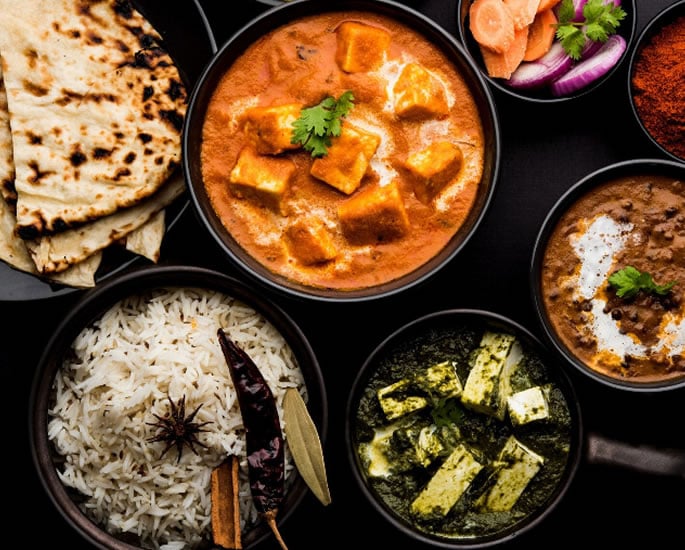
For many British South Asians, the three-bite rule presents a significant cultural clash.
Food is not just fuel; it’s a central part of family life, celebration, and community.
Imagine attending a wedding or Eid celebration and applying a three-bite limit to the feast.
In a culture where being a gracious host means insisting your guests eat well, and being a good guest means accepting that hospitality, refusing food or taking a token amount can be seen as impolite.
This trend simply doesn’t account for the social and emotional weight of food in our lives.
Furthermore, a traditional South Asian meal is often a balanced plate of various dishes, like daal, sabzi, roti, and rice.
Applying such a restrictive rule is impractical and overlooks the nutritional synergy of the meal.
A more sustainable approach might be to embrace the principles of moderation that already exist within our culture, enjoying a single samosa instead of three, or having a small bowl of kheer, savouring it fully rather than restricting it to a specific number of bites.
While the three-bite rule is packaged as a simple way to practice moderation, it is ultimately a restrictive fad that can promote an unhealthy and anxious relationship with food.
It is particularly ill-suited to cultures like the British South Asian community, where food is a profound expression of love, family, and tradition.
Instead of adopting fleeting social media trends, a more balanced and joyful path lies in mindful eating.
This means listening to our body’s cues, appreciating our rich culinary heritage, and allowing ourselves to enjoy food without guilt or complicated rules. True health is found in balance, not in counting bites.