
















































"I got to draw on how I see and experience the world."
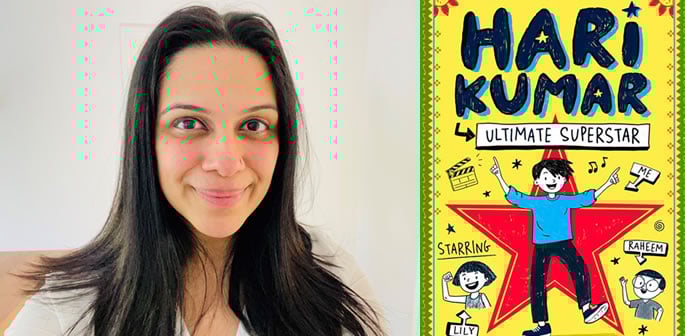
Hari Kumar: Ultimate Superstar marks Rashmi Sirdeshpande’s latest step in reshaping how British children’s fiction represents identity, ambition, and joy.
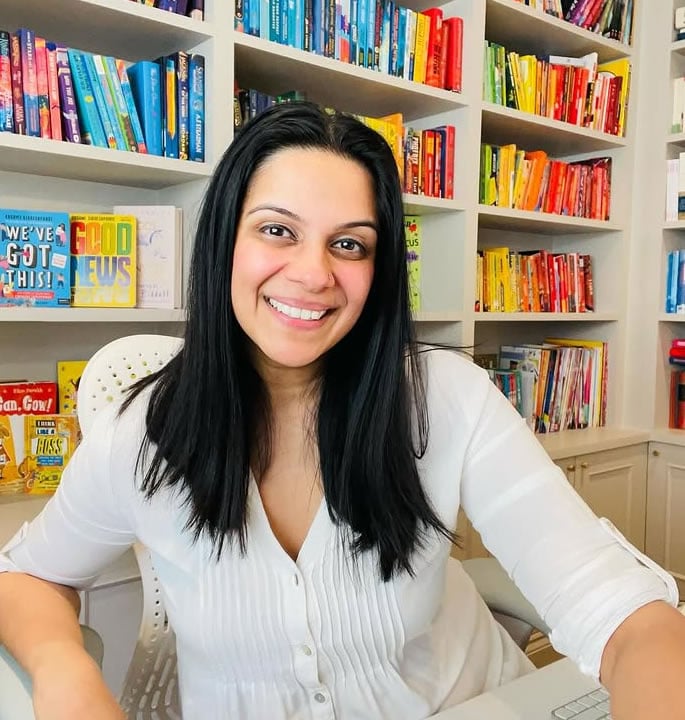
An autistic ADHDer and British Indian children’s author, Rashmi Sirdeshpande is also a prominent advocate for underrepresented voices in publishing.
She is a former World Book Day author and BookTrust Writer-in-Residence, with award wins including the Diverse Book Awards for Dadaji’s Paintbrush and the Society of Authors Queen’s Knickers Award for Never Show a T-Rex a Book.
Her work has also earned major shortlistings, including the Blue Peter Book Awards for Good News.
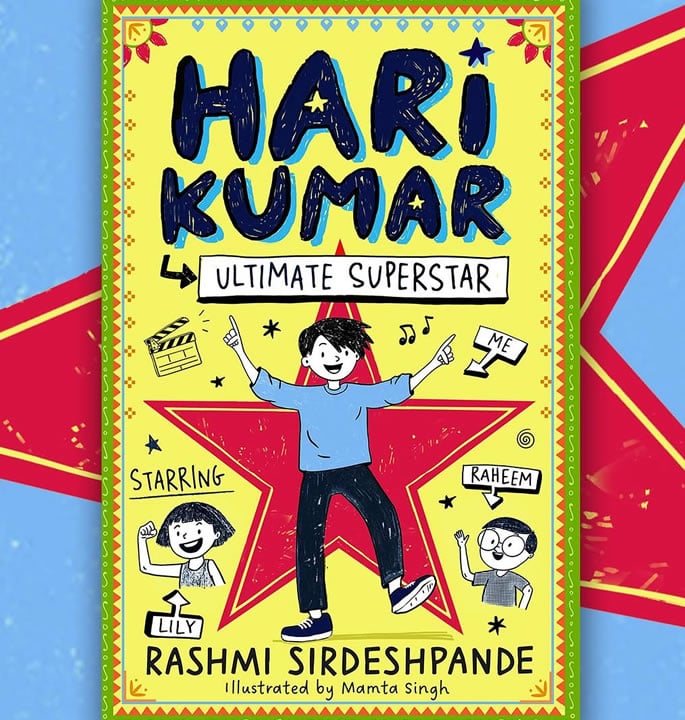
Hari Kumar: Ultimate Superstar is Rashmi Sirdeshpande’s new middle-grade series.
Set to release on February 12, 2026, the book introduces 10-year-old Hari Kumar, who chases fame through a school film festival competition that could change everything.
Rashmi Sirdeshpande spoke to DESIblitz about creating Hari, drawing on her own experiences, and why representation and joy sit at the heart of her storytelling.
Building Hari Kumar’s Voice
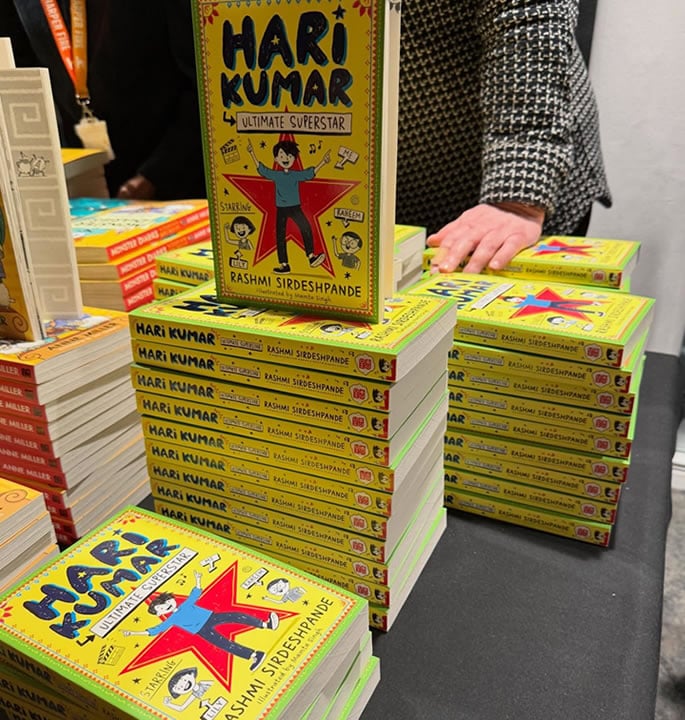
Hari Kumar’s drive, emotions, and outlook are rooted in both personal experience and neurodivergence, as Rashmi Sirdeshpande explains:
“I think it’s a mix of things. I’m ambitious and, like Hari, I have some big feelings and big dreams.
“We’re both autistic with ADHD so I got to draw on how I see and experience the world.
“But I also gave Hari the self-awareness and confidence of my kids – something I didn’t have at 10.”
That blend of ambition, emotional intensity, and self-awareness shapes Hari into a character who feels vivid and contemporary.
Drawing on how she experiences the world allows Sirdeshpande to construct a protagonist who expresses big dreams while remaining grounded in real childhood emotions and challenges.
Diary Storytelling and Real School Experiences
Hari Kumar: Ultimate Superstar has a diary format and it plays a central role in shaping the book’s voice and intimacy.
Sirdeshpande says: “I love the diary format because it lets the reader really get into the character’s head and it means that I get to play with the ‘voice’ (something I absolutely love doing when I’m writing).
“It also means we get to enjoy Mamta Singh’s fantastically funny doodles and comic strips.”
Her own schooling informs the environments and moments within the story:
“I moved schools a LOT (every couple of years, in fact) and I’ve visited lots of schools as an author, so the book pulls in experiences from all over the place.
“That includes everything from amazing, empathetic teachers to wildly overstimulating environments.”
These varied experiences shape a narrative that reflects the unpredictability of school life, combining humour, sensory overload, and warmth while keeping Hari’s voice at the centre.
Balancing Humour, Pressure and Joy
While the story acknowledges real-life pressures, humour remains a defining feature.
Rashmi Sirdeshpande says: “I knew I wanted this to be a funny book. I wanted to make children smile and laugh while connecting with Hari and his world.
“Life is full of challenges and pressures so this book is too.
“But all children deserve JOY. Finding those funny, joyful moments in everyday life was really important to me.
“And it was important to me to show a neurodivergent South Asian kid living his absolute best life on the page.”
Representation also shapes how Hari’s identity is portrayed, as Sirdeshpande elaborates:
“Whenever writers create characters, we want them to feel authentic and real and relatable. And we want to honour their heritage.
“I love that Hari is 100% proud of who he is. He isn’t conflicted about his identity (though those kinds of stories have their place too!).
“He loves every aspect of who he is. My hope is that he might inspire readers to feel that way too.”
The emphasis on joy, pride, and humour reframes narratives often dominated by struggle, presenting a character who embraces identity without apology or internal conflict.
Publishing Gaps and Neurodivergent Creativity
Rashmi Sirdeshpande situates the book within a wider conversation about representation in children’s publishing:
“I’m very happy that Hari Kumar: Ultimate Superstar adds to that growing body of books representing South Asian kids and neurodivergent kids.
“We have lots of fantastic British South Asian children’s writers today (Serena Patel, Farhana Islam, Bali Rai, Nizrana Farook, Chitra Soundar and Iqbal Hussain to name just a few) but research shows that there is still a significant gap between the percentage of children’s books with South Asian main characters and the percentage of South Asian children in UK schools.
“And neurodivergent representation (of all kinds) is on the literal floor. We need all the stories.”
She links underrepresentation to industry caution:
“I think it’s because publishers often feel like marginalised characters and stories are a risk.
“There’s this unspoken assumption about whose story is seen to be universal and relatable.
“And no, it’s not going to be a brown kid. And it’s even less likely to be a neurodivergent brown kid. But that’s rubbish, of course.
“All kids can read about and love and connect with a character like Hari.
“The human heart is big enough. Its capacity for empathy is huge. And for readers who share some aspects of a character’s background, that representation means so much.”
Sirdeshpande’s professional background also informs her storytelling:
“I think all our experiences shape the lens through which we see and experience the world and the stories we tell.
“I used to be a city lawyer and some of that intensity and ambition has found its way into my writing.”
“In my time as an author, I’ve had the pleasure of meeting so many readers through schools and festivals and they’ve had a huge impact on what I write.
“After all, these readers are at the heart of everything I do.”
When it comes to her creative process, neurodiversity plays a direct role:
“Being neurodivergent touches every single aspect of my life.
“For instance, my brain is often an explosion of ideas (that’s an ADHD trait). But I love and need routine (that’s an autistic trait).
“When I put those together and hit on an idea that really pulls at me, if I’m lucky, I’ll drop into that beautiful state of hyperfocus – that’s where I’m at my creative best (as long as I can avoid burnout).
“That self-awareness has made such a difference to my writing life.”
Rashmi Sirdeshpande’s work on Hari Kumar: Ultimate Superstar reflects a commitment to authenticity, humour, and meaningful representation in children’s literature.
Her insights reveal how personal experience, neurodivergence, and reader engagement shape both her creative process and the worlds she builds on the page.
By foregrounding ambition, cultural pride, and everyday joy, she continues to push back against narrow ideas of whose stories are considered universal.
The result is a series that speaks to young readers with warmth, honesty, and a strong sense of identity, while adding to the growing movement for broader representation in children’s publishing.