











































“Where is the accessibility?”
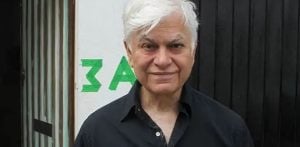
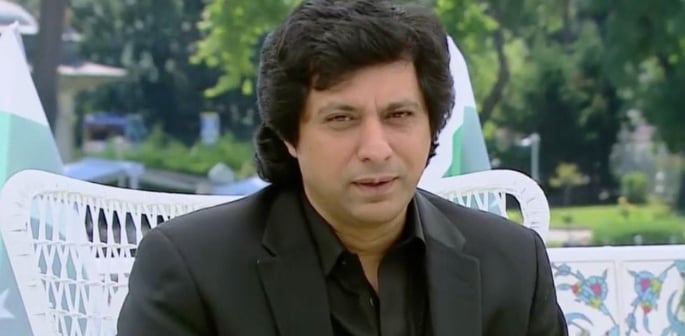
Veteran singer and politician Jawad Ahmed has raised pointed questions about money-driven priorities shaping Pakistan’s contemporary music industry.
Appearing on a recent RNN News podcast hosted by Naeem Hanif, Ahmed spoke candidly about performance fees and public disconnect.
The discussion began with Hanif citing the soaring costs of concerts by leading Pakistani singers domestically and internationally.
According to Hanif, Rahat Fateh Ali Khan reportedly charges around PKR 1.5 crore for shows in Lahore.
He added that Rahat’s international appearances are said to cost nearly PKR 3 crore per concert abroad.
Hanif further claimed Atif Aslam charges approximately PKR 3 crore for concerts in Lahore and nearly $200,000 dollars internationally.
Responding to these figures, Jawad Ahmed contrasted the present industry with his own journey as a musician.
Known for iconic tracks like ‘Mehndi’, ‘Yeh Dil Walay’, and ‘Dosti’, Ahmed said his priorities changed after entering politics.
He said: “I have left this work. I have sacrificed this work because of my political career, but I do not earn through music.
“I have no greed, but I do not know why artists become greedy.”
Ahmed explained that music, in his view, has always been rooted in public access and emotional connection.
“Music is a public facing industry that relies on accessibility and being connected to all kinds of fans.”
Reflecting on his peak years, Ahmed recalled how Pakistani pop artists once reached audiences across borders.
“We were hit artists; we have sold record-breaking cassettes, even Indians used to be shocked at our record sales.”
Despite commercial success, Ahmed said he and his contemporaries often performed without charging fees in rural areas.
“But we still used to sing in the villages for free because we wanted to be guided by purpose.”
He revealed that his only condition for such performances was meaningful lyrical content.
“I only demanded the event organisers produce lesson-oriented songs.”
Turning to current artists, he urged them to reassess their pricing structures and sense of responsibility.
“If they want me to perform free, I would like them to say to reduce their charges and make them available for the fans who made them stars.”
Ahmed criticised what he described as an industry increasingly shaped by elite interests rather than public outreach.
“It seems sometimes today’s industry only caters to the elite.”
He questioned whether music had become restricted to luxury weddings and corporate events driven solely by profit.
“Their market is expensive weddings and the corporate sector, which is inherently based on maximising profit.”
Asking pointedly, Ahmed added: “Where is the accessibility?”
He emphasised that genuine artistry requires humility and sustained engagement with audiences beyond privileged circles.
Ahmed also spoke about his musical influences, citing classical legends who shaped his artistic values.
He named figures such as Ustad Amanat Ali Khan, Mehdi Hassan, and Ustad Salamat Ali Khan as inspirations.
For Jawad Ahmed, their legacy represents discipline, sincerity, and a deep bond with listeners across social classes.