















































the lack of acknowledgement as the "elephant in the room”
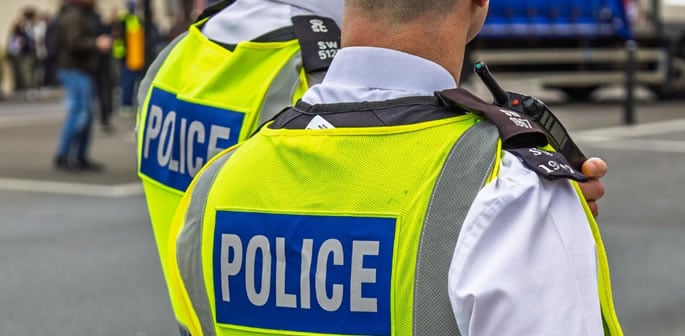
The majority of police forces have rejected a watchdog’s demands that they publicly acknowledge they are “institutionally racist”.
Only six out of 44 constabularies have publicly accepted the claim, according to findings from the Independent Scrutiny and Oversight Board (ISOB).
The watchdog argued that recognising institutional racism is essential to driving meaningful reform within policing.
The ISOB described the lack of acknowledgement as the “elephant in the room”, warning that it was a “significant limitation” to building an “anti-racist” police service.
The concept of institutional racism was first defined by Sir William Macpherson during his inquiry into the murder of Stephen Lawrence.
His report described it as the “collective failure of an organisation to provide an appropriate and professional service to people because of their colour, culture or ethnic origin”.
The ISOB said such failures remain visible in policing through processes, attitudes and behaviours.
It added these could amount to discrimination driven by “unwitting prejudice, ignorance, thoughtlessness and racist stereotyping which disadvantage minority ethnic people”.
The criticism follows a race action plan launched five years ago by the National Police Chiefs’ Council (NPCC).
The plan aimed to “improve outcomes for black people who worked within or interact with policing”.
However, the ISOB’s latest report concluded the programme had fallen short of its goals, saying the initiative was closing “without the foundational honesty that genuine reform requires”.
Tensions around the issue have been evident within policing.
When Avon and Somerset’s chief constable acknowledged institutional racism in 2023, the local police federation accused her of promoting a “false narrative”.
In Merseyside, the police and crime commissioner publicly accepted the force was institutionally racist.
Days later, the chief constable issued a statement rejecting that characterisation.
The ISOB said this inconsistency undermines progress:
“For a programme whose stated aim is to create an anti-racist police service rather than simply a more inclusive one, the absence of consistent acknowledgement of institutional racism represents a significant limitation.”
Only five other forces have publicly accepted institutional racism. These include Bedfordshire, British Transport Police, Dorset, Gloucestershire and South Wales.
A senior police insider told the watchdog that many leaders are reluctant to make such admissions:
“They don’t want to say there is racism. They don’t want to say there is institutional racism.
“I think only five or six have come out and said it, and they do it just before they retire, because they are so worried about being popular.
“They don’t want their people to not hold them in high regard. They don’t want to be seen as accusing their own officers of being racist.”
Abimbola Johnson, chairman of the ISOB, said progress on race equality has been inadequate:
“Five years ago, policing committed to improving outcomes for black communities. That commitment has not been met.
“Progress has been slow, uneven and too dependent on individual effort rather than institutional change.”
“Without properly enforced legal obligations, a robust inspection framework and clear consequences for failure, progress on race equity within policing will remain partial and reversible.”
The ISOB includes NGOs, charities, independent advisory groups and community organisations.
Responding to the findings, Gavin Stephens said: “I share their conclusion that there is still far more work to be done.
“Progress in this area has been inconsistent, too often dependent on committed individuals and not driven by the kind of systemic and deep-rooted cultural change I and many others envisaged at the outset of this plan.”
He added that police chiefs “remain committed to deliver a service that earns the trust and confidence of all our officers, staff and communities we serve”.