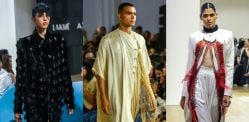































A collection rooted in outdoor serenity.
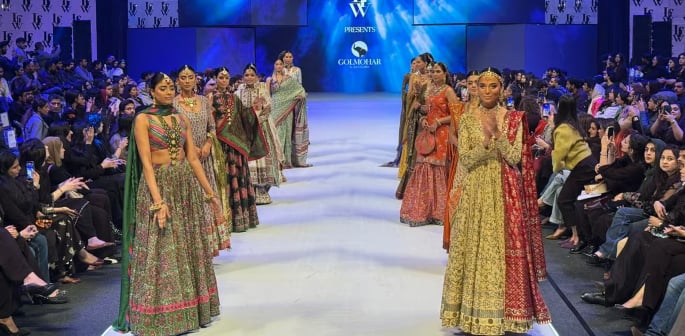
LAAM Fashion Week opened its latest showcase with colour, craft, and spectacle, setting an expansive tone for a multi-layered celebration of Pakistani fashion.
The runway began with Agha Noor’s Basant collection, which embraced renewal and optimism through silhouettes inspired by spring festivities.
The collection reflected the cultural pulse of Basant, translating motion and joy into designs intended for traditional celebrations.
Sunlit yellows, vivid fuchsia florals, and fresh green accents dominated the palette, evoking fields in bloom and seasonal warmth.
Airy organzas, fluid silks, and softly textured chiffons were layered thoughtfully, creating garments that felt light yet visually dimensional.
Designed for festive moments, Basant balanced heritage references with contemporary ease, making it adaptable for modern wardrobes.
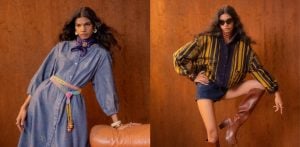
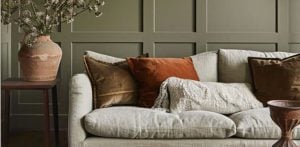
Nature-driven calm followed as Panache Apparel presented Mistfall, a collection rooted in outdoor serenity and relaxed summer living.
Softly printed fabrics and breathable textures defined the looks, emphasising comfort without sacrificing understated elegance or structure.
Urge Pret’s Gulrang shifted the mood towards composed strength, presenting wearable designs inspired by flowers that bloom quietly yet confidently.
The collection spoke to women with grounded presence, using refined cuts and subtle detailing to communicate timeless beauty.
Izna Hamza’s Sun at Noon by Allure introduced a cross-cultural conversation blending African heritage with Pakistani craftsmanship and precision.
Tribal geometry, ceremonial silhouettes, and earth-rich landscapes informed tailoring choices alongside intricate hand embroidery.
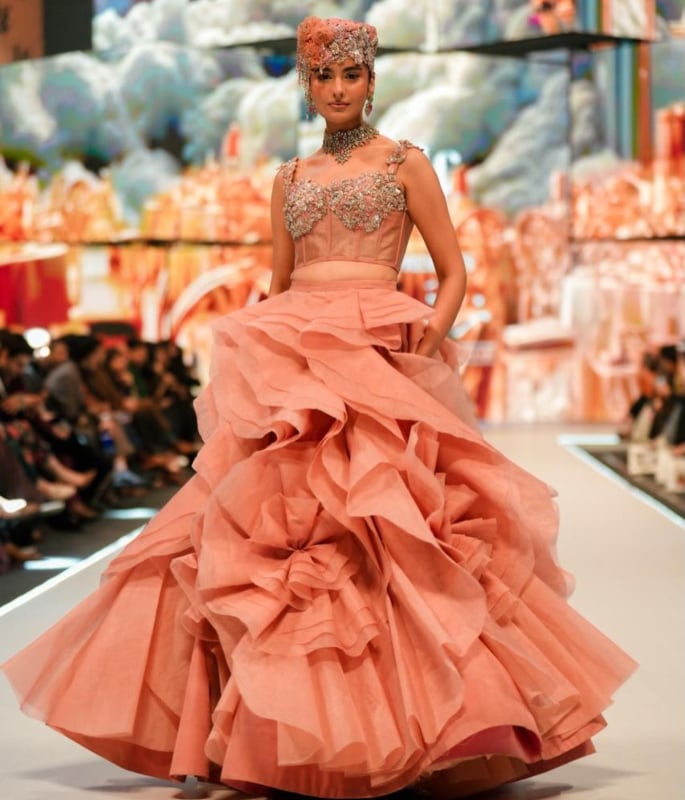
Bin Tayyab followed with a collection inspired by classical architecture, focusing on layered textures and intricate hand embellishments.
Muted jewel tones shaped the palette, enhancing the sophistication of each ensemble while celebrating traditional artistry.
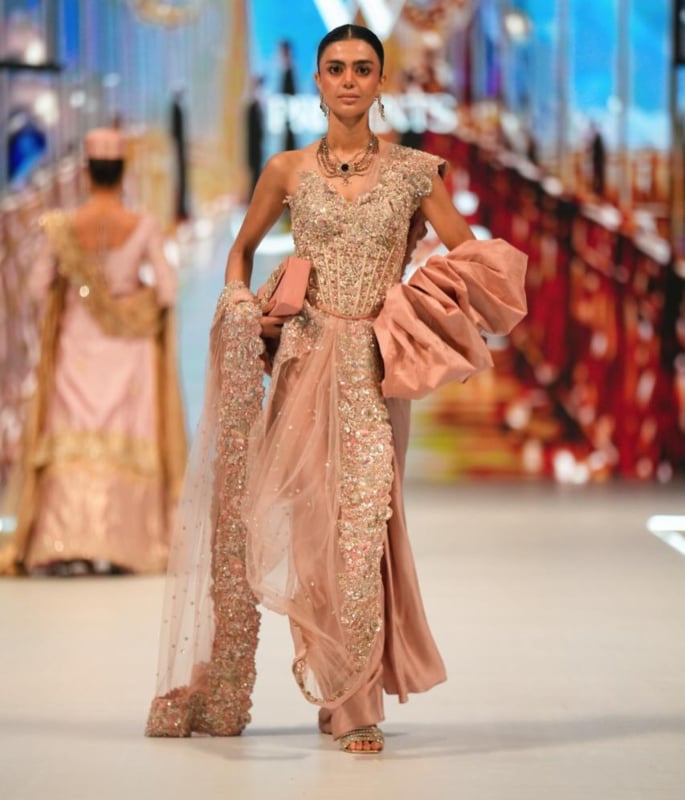
Pehnawa by Bin Akram’s Amarbail explored South Asian heritage through a softer, intimate lens rooted in Mughal artistry.
Rich tissue, raw silk, zari organza, and badlazari were selected for movement, light, and historical resonance.
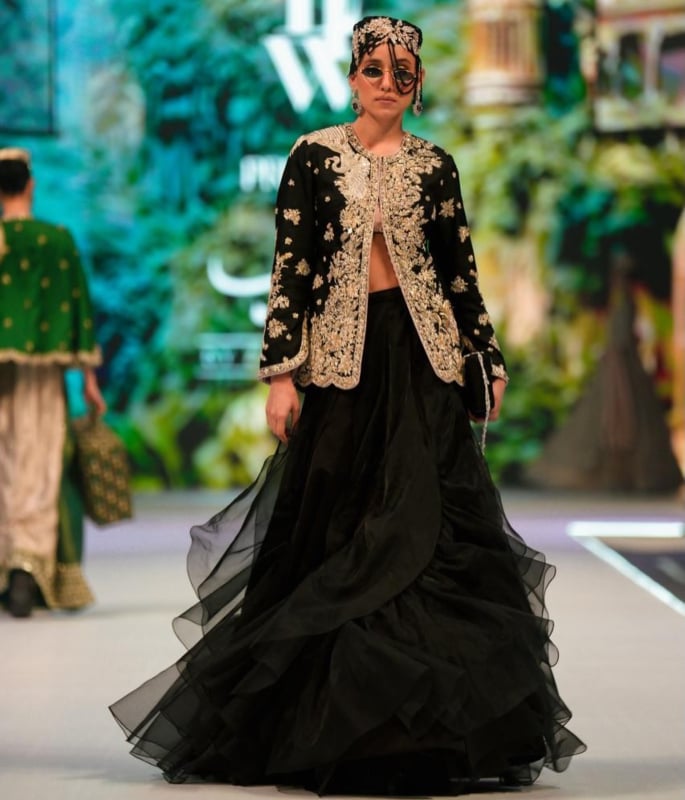
Tilla embroidery, chatapatti, goti, sitara, beads, sequins, and hand-finished tassels added deliberate depth to each garment.
A dramatic shift arrived with Karma’s Dilruba, marking Maheen Kardar’s return to the runway after ten years.
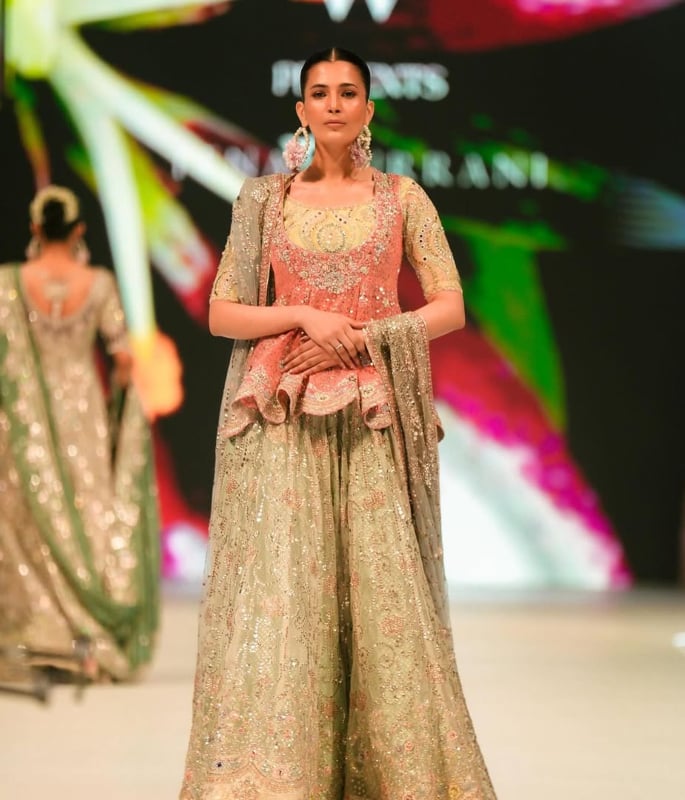
Rooted in Desi maximalism, Dilruba celebrated excess, emotion, and identity through saris, flares, short shirts, and flowing gowns.
Designed for Eid festivities and monsoon weddings, the collection felt joyful, expressive, and unapologetically bold.
Meraki by Deepak and Fahad revived traditional Ikkat weaving, presenting hand-woven cotton patterns paired with linen styling pieces.
The palette drew inspiration from Mark Rothko, with abstract colour moods translating into wearable artistic expressions.
Sadaf Fawad Khan’s Suroor unfolded as a dialogue between heritage and contemporary couture across two distinct collections.
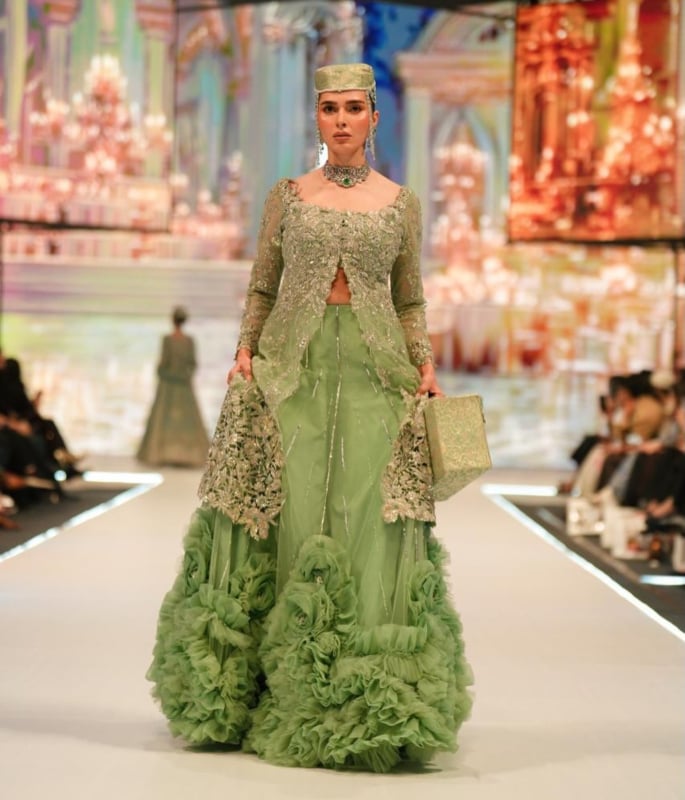
The first revisited old school aesthetics through restrained silhouettes, while the second embraced theatrical scale and bold embellishment.
Day two concluded with Fahad Hussayn’s The Conclave of Anti Fashion, presenting garments conceived as ideology rather than seasonal trends.
Developed under the Fahad Hussayn Academy Art Collective, the pieces existed as collectable works rooted in rebellion and permanence.
Music performances by Sheryar Rehman, Natasha Baig, and Nehal Nasim added sonic texture, completing an immersive fashion experience.
Across its presentations, LAAM Fashion Week reaffirmed fashion as craft, culture, and conviction, layered with artistry and evolving identity.