















































"Al-Hilal have just become Asia's first super club."
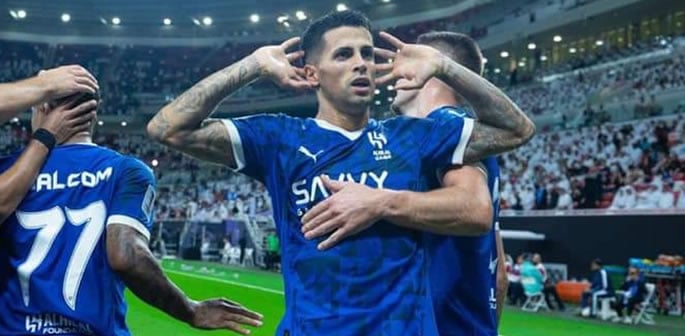
Al-Hilal caused a seismic shock at the FIFA Club World Cup, defeating Manchester City 4-3.
But this wasn’t just a one-off shock; it was a signal that Saudi clubs are no longer content with simply participating on the global stage.
With rising investment, elite signings, and a powerful vision, Saudi Arabia’s football ambitions are being spearheaded by a club that sees itself not as a regional power but as a global one.
Their success, however, isn’t happening in isolation.
Al-Hilal may be one of Saudi Arabia’s top clubs, but other clubs like newly promoted Neom SC are also making bold moves, signing former Premier League talents to boost the league’s credibility.
The Saudi Pro League, long considered a backwater in the footballing world, is transforming rapidly.
And with Saudi Arabia set to host the 2034 FIFA World Cup, these club-level achievements hint at something even bigger: a reshaping of football’s balance of power.
The question now is not if Saudi clubs can compete, but how far they can go and at the centre of this storm is Al-Hilal.
From Regional Contender to Global Super Club

Al-Hilal’s transformation has been swift and strategic.
Just two years after Saudi Arabia’s Public Investment Fund (PIF) took control, the club has added some of football’s biggest names to its roster.
From Manchester City’s João Cancelo and Chelsea’s Kalidou Koulibaly to PSG’s Neymar (now departed) and Benfica’s young forward Marcos Leonardo, the team is stacked with world-class talent.
But success hasn’t been purely down to star power.
Their Club World Cup campaign was tactically impressive.
After draws against Real Madrid and Red Bull Salzburg, they beat Pachuca to progress from the group stage.
They then secured a historic win over Manchester City, which marked the first time an Asian side has defeated European opposition at the tournament.
Simon Chadwick, Professor of AfroEurasian sport at the Emlyon Business School in Paris, said:
“It is now safe to say that Al-Hilal have just become Asia’s first super club.
“The stability and discipline that PIF ownership has brought, allied to revenues the club is now generating, have clearly elevated Al-Hilal to a new level.”
A League on the Rise

While Al-Hilal is leading the charge, the Saudi Pro League (SPL) as a whole is seeing exponential growth.
It all started in December 2022 when Cristiano Ronaldo signed for Al-Nassr, drawing global attention.
Since then, the league has recruited a who’s who of footballing talent: Karim Benzema, Riyad Mahrez, Sadio Mane, N’Golo Kante and Roberto Firmino, among others.
In the summer of 2023 alone, SPL clubs spent around £700 million.
A year later, more stars came, including Ivan Toney, Moussa Diaby and Steven Bergwijn. January saw Al-Nassr shell out £65 million for Aston Villa’s Jhon Duran, a clear sign the focus is shifting towards younger players.
Former Al-Hilal midfielder Tarik El-Taib said:
“When we look at the league, we talk about João Cancelo, Riyad Mahrez, Cristiano Ronaldo, Karim Benzema.”
“If you look at the Spanish league, excluding Real Madrid, Barcelona and Atletico Madrid, the foreign players in the Saudi League are at a higher level.
“There are clubs like Chelsea that have a lot of professional players, but they are not like the big names in the Saudi League.”
The PIF Project

The Public Investment Fund’s influence extends beyond Al-Hilal.
In 2023, PIF took control of Al-Nassr, Al-Ittihad and Al-Ahli, clubs with massive followings and serious ambitions.
Al-Ahli lifted the Asian Champions League in May, while newly promoted Al-Qadsiah surged into fourth place, powered by Pierre-Emerick Aubameyang and Julian Quinones, scoring 37 goals between them.
The financial muscle of these clubs is staggering. Six of the 18 SPL teams rank among the world’s richest.
With Saudi oil giant Aramco backing eastern side Al-Qadsiah and new entrants like Neom SC already spending big, the league is only getting stronger.
Neom SC, which represents a futuristic city that hasn’t even been built yet, has already signed former Arsenal and Lyon striker Alexandre Lacazette.
Backed by PIF and set to relocate to the Red Sea coast, the club will eventually play in stadiums hosting 2034 World Cup games.
It’s a long-term play rooted in vision and vast resources.
What is the Missing Piece?

While Saudi clubs grow stronger, the national team is struggling to keep pace.
Despite qualifying for the last two World Cups, Saudi Arabia failed to secure an automatic place at the 2026 tournament.
They finished third in their group, behind Japan and Australia, scoring just seven goals in 10 games, none from a recognised striker.
Much of the issue stems from a lack of opportunities for local players. With top clubs filling attacking roles with foreign talent, even prolific domestic players are sidelined.
Former manager Roberto Mancini voiced his frustrations in September 2024:
“Saudi Arabia’s international players must participate as core players with their clubs. I have 20 players sitting on the bench in local matches.”
His successor, Herve Renard, has echoed those concerns.
Take Firas Al-Buraikan, for example. After scoring 17 goals in the 2023-24 season, his momentum stalled when Al-Ahli signed England’s Ivan Toney.
Forced out wide or onto the bench, Al-Buraikan managed just three goals the following year.
For now, Saudi club football is flourishing while the national team lags behind. The challenge will be balancing star-studded squads with genuine pathways for homegrown talent.
Al-Hilal’s rise is not just a triumph for one club; it’s a blueprint for a nation’s footballing future.
With shrewd investment, smart recruitment and world-class infrastructure, they’ve shown how Saudi clubs can go toe-to-toe with Europe’s elite.
And although they were eliminated by Brazilian side Fluminense in the Club World Cup quarter-final, Al-Hilal has already cemented their place in global football’s upper echelon.
Simon Chadwick summed it up best: “As in the cases of Real Madrid, Barcelona, Bayern Munich and others, Hilal will be able to buy better players, further build team success and ultimately strengthen their position as part of world football’s elite.”
As Saudi Arabia gears up to host the 2034 World Cup and rumours swirl about a bid for the 2033 Club World Cup, Al-Hilal’s success may be just the start of something much bigger.
The road to global football dominance might just run through Riyadh.