

















































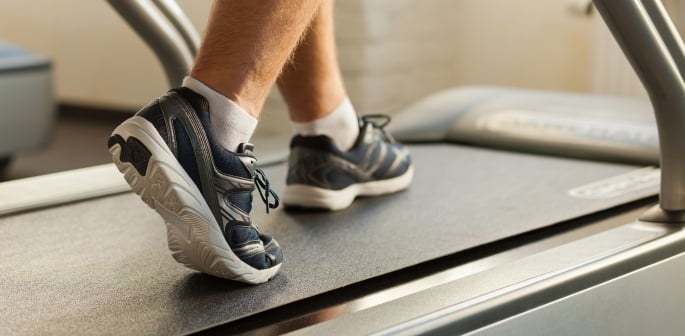
Consistency is key when it comes to fat loss.
Losing fat efficiently without straining your joints is a priority for many fitness enthusiasts.
High-impact workouts like running can be hard on the body, making sustainable alternatives essential.
Incline walking emerges as the perfect solution, combining fat-burning benefits with joint-friendly movement.
Incline walking is a form of cardio that increases intensity by elevating the walking surface.
Whether performed on a treadmill or outdoors, it engages multiple muscle groups and boosts metabolism.
This simple yet effective workout burns calories, builds endurance, and enhances overall fitness levels.
Unlike high-intensity training, incline walking offers a sustainable way to achieve fat loss.
Its adaptability makes it accessible to beginners while still challenging seasoned athletes.
By adjusting speed and incline, individuals can tailor their workouts to match their fitness levels and goals.
Scientific research supports the effectiveness of incline walking in fat loss.
The added resistance forces the body to work harder, leading to a higher calorie burn than flat-surface walking.
It also strengthens the lower body, improving muscular endurance over time.
DESIblitz explores why incline walking is one of the best low-impact workouts for fat loss.
Increased Calorie Burn
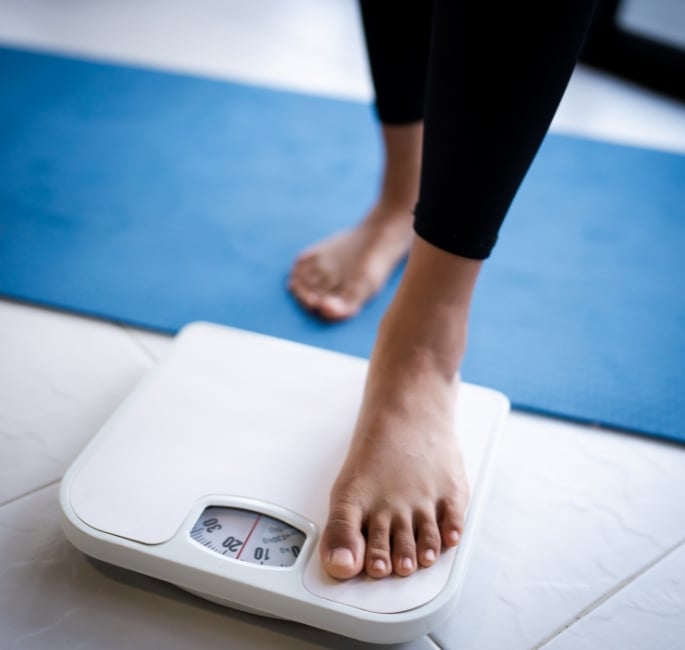 Walking on an incline requires more effort than walking on a flat surface.
The increased resistance forces the body to expend more energy, resulting in a higher calorie burn per session.
A study found that walking on a 10% incline burns nearly twice as many calories as walking on level ground.
The steeper the incline, the greater the energy expenditure.
This makes incline walking an effective way to create a calorie deficit, which is essential for fat loss.
Since calorie burn plays a crucial role in weight loss, incline walking offers an efficient way to shed fat.
Consistent sessions help individuals burn more calories without the impact stress of running.
Muscle Activation
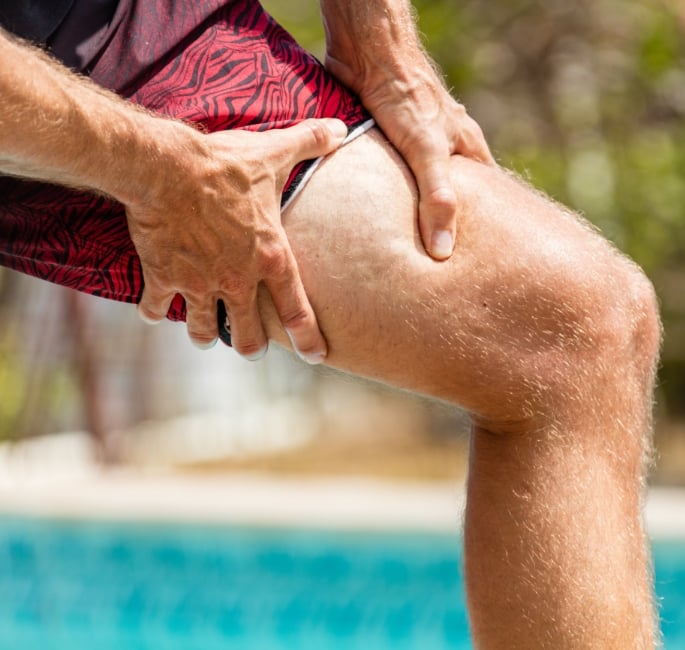 Incline walking targets multiple muscle groups, unlike regular walking.
The uphill motion activates the quads, hamstrings, glutes, and calves more intensely.
This leads to greater muscle engagement and improved lower body strength.
The core also plays a stabilising role, working to maintain balance and posture.
This additional muscle activation leads to greater energy expenditure, even after the workout.
The more muscle engagement, the more calories burned, making incline walking highly effective for fat loss.
Over time, building lean muscle mass can improve metabolism.
Since muscle burns more calories than fat, having stronger lower-body muscles contributes to long-term fat loss.
Cardiovascular Benefits
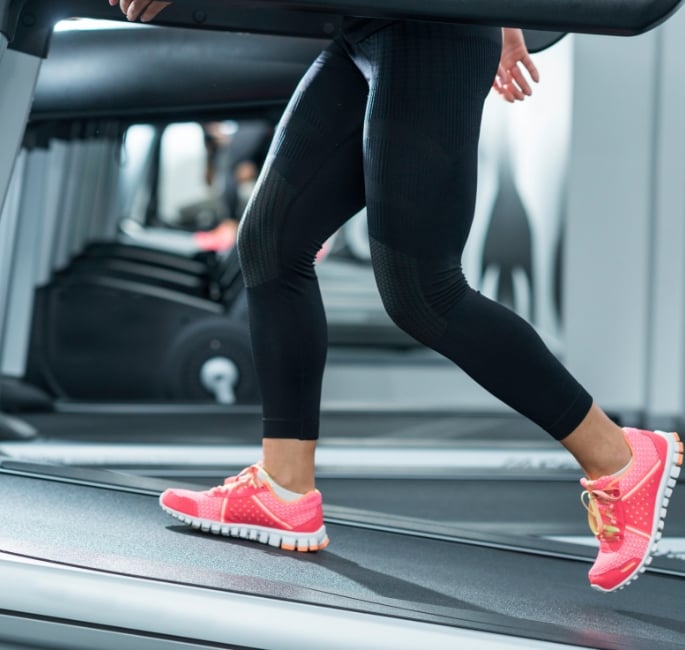 Incline walking elevates heart rate, promoting cardiovascular endurance.
As the heart works harder to pump oxygen-rich blood throughout the body, cardiovascular fitness improves.
This is essential for heart health and overall well-being.
Walking on an incline mimics the intensity of hiking or stair climbing, making it an excellent aerobic workout.
It increases lung capacity, boosts stamina, and enhances circulation.
These factors collectively support fat loss by improving the body’s ability to utilise oxygen efficiently.
A strong cardiovascular system aids in prolonged fat burning.
The more efficiently the heart and lungs function, the longer individuals can sustain physical activity, leading to greater fat oxidation over time.
Low-Impact Nature
 One of the key advantages of incline walking is its joint-friendly nature.
Unlike running, which places significant stress on the knees and ankles, incline walking reduces impact while still providing an intense workout.
This makes it an excellent option for individuals recovering from injuries or those with arthritis or joint pain.
The smooth and controlled motion minimises strain while still allowing for high-calorie burn.
Since low-impact workouts are sustainable long-term, incline walking can be integrated into daily routines without the risk of overuse injuries.
This ensures consistency, which is crucial for long-term fat loss and fitness progress.
Versatility and Accessibility
 Incline walking can be performed both indoors and outdoors.
Treadmills offer adjustable incline settings, while outdoor environments provide natural inclines like hills or staircases.
This versatility makes it an accessible workout for individuals of all fitness levels.
The intensity can be modified by increasing or decreasing the incline.
Beginners can start with a slight elevation and gradually progress as their endurance improves.
More advanced individuals can incorporate intervals by alternating between different incline levels.
Since it does not require expensive equipment or a gym membership, it remains an affordable and effective fitness solution.
It fits seamlessly into various lifestyles, ensuring that individuals stay consistent with their exercise routines.
Improved Muscle Strength and Endurance
 Regular incline walking enhances lower body strength by engaging key muscles.
The increased resistance challenges the legs and glutes, leading to stronger, more toned muscles over time.
Studies show that walking on an incline activates the peroneal muscles more than flat walking.
This can be beneficial for strengthening weak ankles and improving stability.
Building endurance through incline walking allows individuals to sustain physical activity for longer periods.
Enhanced endurance supports better overall performance in other exercises and daily movements.
Incline walking stands out as one of the most effective low-impact workouts for fat loss.
It combines cardiovascular benefits, increased calorie burn, and muscle engagement while being gentle on the joints.
This makes it a sustainable option for long-term fitness goals.
Unlike traditional running, incline walking reduces the risk of injury while still providing a high-intensity workout.
It strengthens lower body muscles, improves endurance, and enhances heart health—all crucial factors for effective fat loss.
The accessibility of incline walking ensures that individuals at all fitness levels can incorporate it into their routines.
Whether performed on a treadmill or outdoors, it offers a versatile and cost-effective approach to fitness.
Consistency is key when it comes to fat loss.
By making incline walking a regular part of a workout routine, individuals can experience significant improvements in body composition and overall health.
The combination of higher calorie burn, muscle activation, and cardiovascular benefits makes this workout a game-changer.
If you’re looking for a fat-loss workout that delivers results without high-impact stress, incline walking is the ideal choice.
It proves that achieving fitness goals does not require extreme workouts—just an incline and a steady pace.