














































They turned Detroit's ghetto blues into something deeply Indian.
Long before Indian hip-hop became a staple of streaming playlists and global stages, it lived in bedrooms, backstreets and basements.
Young fans searched for meaning beyond Bollywood’s glossy escapism and found it in the unfiltered rage and pain of a white rapper from Detroit.
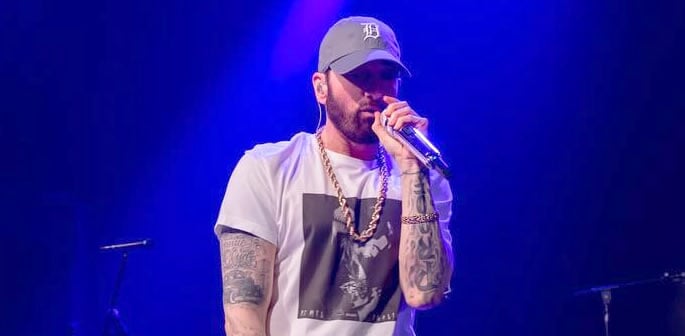
For many Indians, Eminem was not just an international star; he was the first real introduction to the raw potential of hip-hop.
His lyrics didn’t just rhyme; they told stories. Stories of abandonment, addiction, poverty, and defiance.
These weren’t the usual themes dominating Indian media, but they struck a chord with a generation navigating its own crises: academic pressure, broken families, cultural silences, and a deep hunger for authenticity.
Eminem became more than a rapper; he became a mirror. And for India’s hip-hop hopefuls, that mirror helped shape an entire movement.
The evolution of Indian hip-hop owes much to Eminem’s influence, not just musically, but culturally. His legacy lives in the cadences, confessions, and controversies of India’s most fearless MCs.
A Voice for the Voiceless
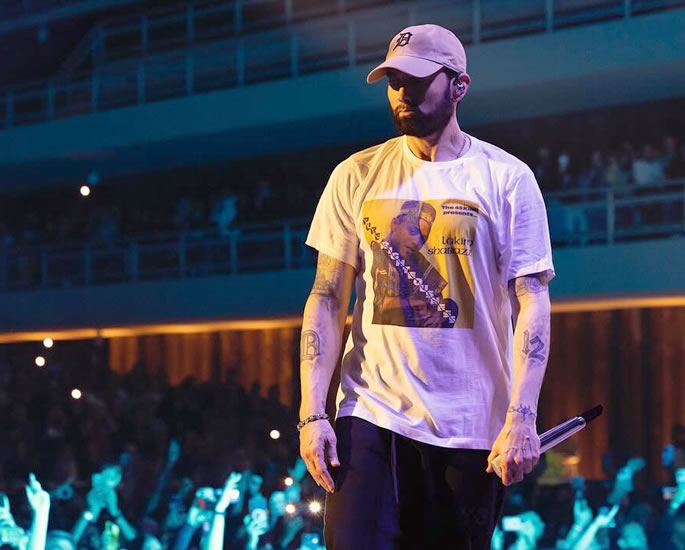
Eminem didn’t offer easy listening. His early work, especially albums like The Slim Shady LP and The Marshall Mathers LP, was loud, abrasive, and emotionally loaded.
But beneath the shock value was a lyrical intelligence that resonated.
Eminem could talk about pain without self-pity, and anger without apology.
For many young Indians, his music became a form of self-recognition.
His openness about broken homes, personal trauma, and mental health felt almost revolutionary.
In a country where such topics were often taboo, Eminem’s honesty offered a way to express the inexpressible.
Songs like ‘Cleanin’ Out My Closet’, ‘Mockingbird’, and ‘The Way I Am’ offered emotional vocabulary to those who had none.
And then there was the humour: the biting satire, the unapologetic roasts, the theatrical personas.
Slim Shady wasn’t just an alter ego; it was a form of resistance. That duality, between hurt and humour, vulnerability and violence, is something many Indian rappers would later adopt in their own journeys.
Bohemia to Gully Rap
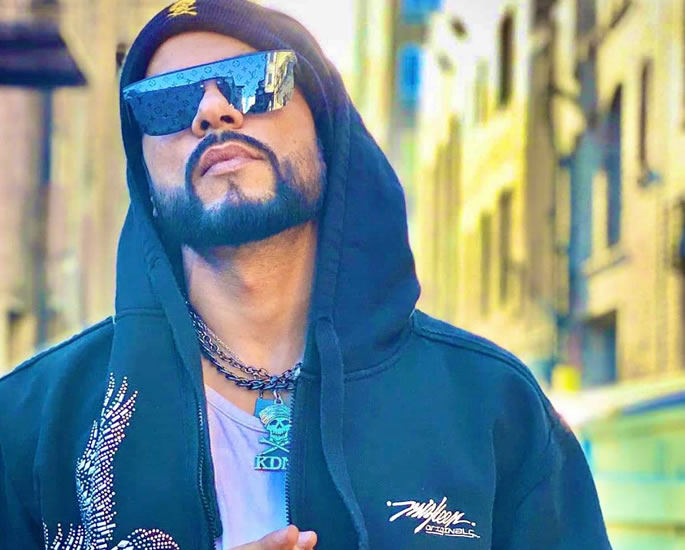
Eminem’s influence in India became a foundation.
One of the earliest and most prominent examples is Bohemia, widely regarded as the pioneer of Punjabi rap. Though stylistically different, Bohemia’s fusion of Desi sensibilities with Western flows reflects the kind of cross-cultural translation Eminem made possible.
By the 2010s, Indian hip-hop had begun finding its voice in its own languages.
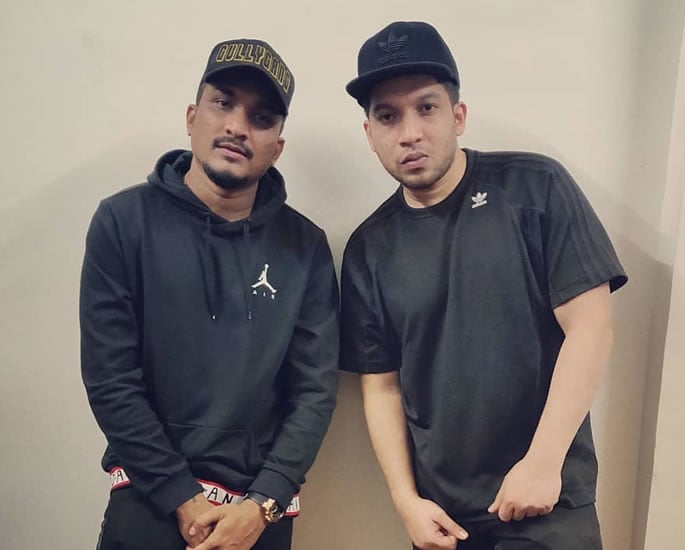
Artists like DIVINE, Naezy, Emiway Bantai, and later MC Stan helped lead what became known as the gully rap movement.
Their rhymes were rooted in their realities: poverty, police harassment, aspiration, and cultural pride.
But their delivery, structure, and persona-building echoed Eminem’s approach.
DIVINE once credited Eminem as the artist who showed him the power of storytelling in rap.
The Indian MCs channelled Eminem’s spirit. They created bars laced with autobiographical detail, biting social commentary, and the grit of survival.
Eminem didn’t hand them a blueprint, but he proved that rap could be both art and armour. That lesson stuck.
Why Eminem Resonates in India
Hip-hop was born in the Bronx, rooted in the African-American experience.
Eminem’s success in that context was controversial, but also a testament to how the genre had grown.
His ascent opened questions about race, authenticity, and the commercialisation of rebellion. But it also proved that hip-hop, at its core, is a medium for the marginalised.
This truth translated across continents.
Eminem was not Indian. He didn’t understand caste, communalism, or regional tensions. But he understood isolation, rage, and survival.
These emotions crossed borders, echoing in India’s urban youth, particularly those cut off from elite spaces but hungry for expression.
Rappers like Raftaar, MC Altaf and others built on that emotional grammar.
They turned Detroit’s ghetto blues into something deeply Indian.
They spoke of social inequality, corrupt systems, and personal demons, just like Eminem, but in Bhojpuri, Hindi, Tamil, and Marathi. The issues were different, but the rage was the same.
In this way, Eminem served as a bridge. He helped Indian artists understand that rap didn’t require approval. It required truth.
Indian Hip-Hop’s New Identity
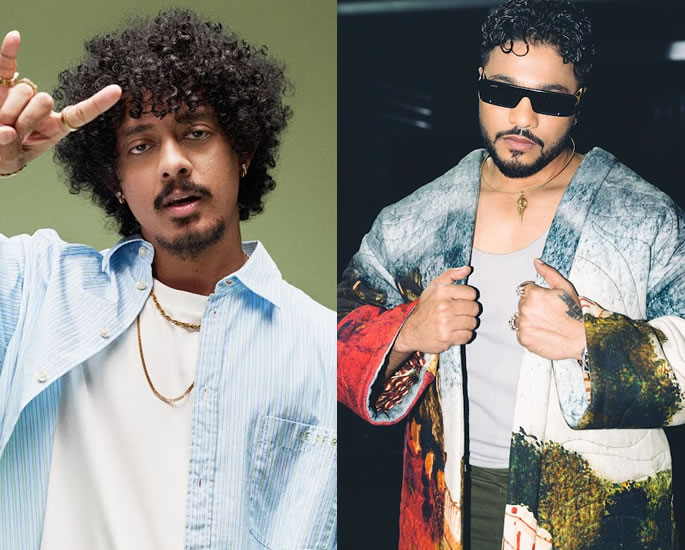
What started as mimicry has matured into mastery.
Today’s Indian hip-hop is confident, experimental, and rooted in lived experience.
Artists blend global hip-hop structures with Indian folk rhythms, film melodies, and classical sampling. Lyrical themes have widened too; rappers now tackle caste, gender, queer identity, and political dissent.
Yet, Eminem’s imprint remains. Not in sound, but in attitude.
His willingness to say the unsayable, to weaponise personal trauma, to mix intellect with chaos. That template continues to inspire.
Even Eminem’s controversial side, often condemned for its misogyny and violence, finds echoes in the ongoing debate about responsibility in Indian hip-hop.
Many Indian artists have also been called out for problematic lyrics. And just like Eminem, they’ve had to reckon with what it means to tell the truth without turning it into harm.
In this, Eminem doesn’t just serve as a hero; he’s also a case study. A reminder that influence comes with responsibility. That reach and rage must be balanced with reflection.
Eminem’s presence in Indian music culture is about formation.
He didn’t just introduce Indians to rap; he showed them what rap could do. How it could tell stories that mainstream media ignored. How it could express rage that society suppressed. How it could turn survival into spectacle.
India’s hip-hop scene today is expansive, multilingual, and original. But it still owes a debt to the man who proved that you could be flawed and fearless, brutal and brilliant, all in the same verse.
Eminem’s real legacy lies in the confidence he gave to a generation of Indian rappers: to speak louder, dig deeper, and rhyme without apology.
From Detroit’s trailer parks to Mumbai’s gullies, the beat continues. And it still echoes with Eminem’s influence.