

















































"X is actually benefiting from this hate."
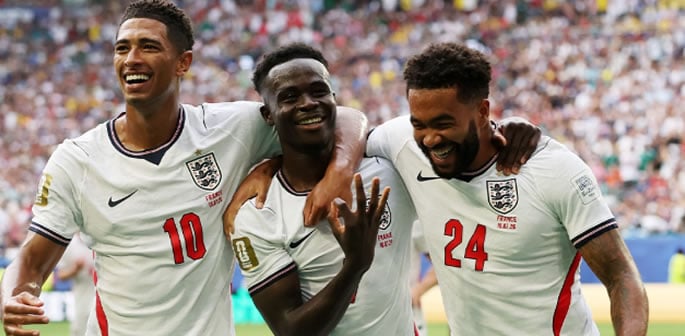
Racist abuse aimed at England footballers on social media was amplified during the World Cup by algorithms designed to maximise engagement and profit, according to new research.
Hope Not Hate analysed more than 300,000 posts on X and identified over 5,500 explicitly racist posts targeting England players.
The organisation found that X’s recommendation system helped push hateful content into millions of users’ feeds.
Posts that provoke anger and outrage can generate more interactions, increasing engagement and potentially benefiting the platform commercially.
The findings put renewed focus on how social media algorithms can turn racist abuse into highly visible content rather than leaving it in obscure corners of the internet.
Which England Players faced the Most Racist Abuse?
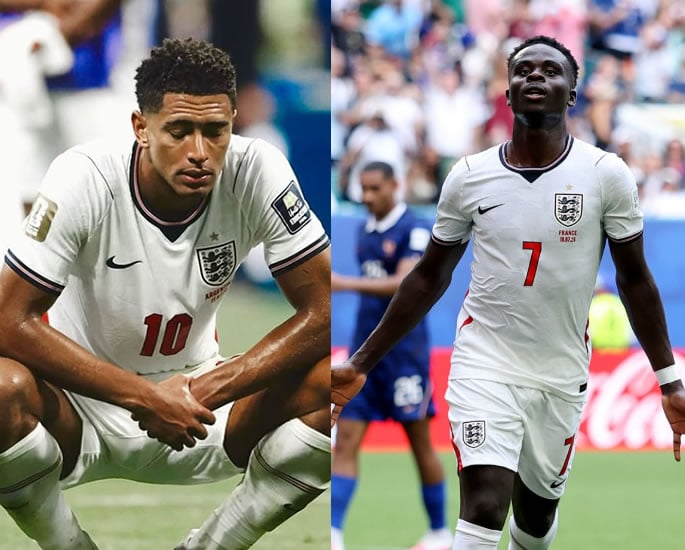
According to the research, Jude Bellingham was the player targeted most by racist abuse.
Bukayo Saka and Kobbie Mainoo experienced the highest proportion of racist posts compared with the total number of posts mentioning them.
Djed Spence, who converted to Islam, also faced a distinct stream of anti-Muslim abuse, Hope Not Hate said.
The organisation also looked at how abuse spread through replies to posts from high-profile players and football accounts.
Patrik Hermansson, senior researcher at Hope Not Hate, said X was benefiting from the attention generated by hateful content.
He told BBC Sport: “X is actually benefiting from this hate.
“It drives engagement on its platform and it effectively uses its algorithm to elevate and show it to more of its users.
“They show up in the recommendation feed – they are not obscure corners of this website, they are front and centre.”
“That’s a choice it doesn’t have to make and yet it does”.
The Football Association also stressed that players should not have to face hateful material simply because they play for England.
An FA spokesperson said: “All players have the right to play without being exposed to hateful, discriminatory and distressing content online.”
It added: “We want service providers to take all of the necessary steps to create a safer life online for everyone.”
Why are Social Media Algorithms being Blamed?
According to Hope Not Hate, removing individual racist posts is only part of the problem.
Users can block accounts and report abusive messages, while platforms can suspend accounts. However, the organisation says these measures do little if harmful content has already been recommended to thousands or millions of people.
Hermansson said X could do more to prevent abusive posts from gaining momentum:
“X doesn’t take racism seriously enough. We’ve seen it for a number of years now. There is no change or improvement.
“It’s actually a relatively small number of accounts and originating tweets that then get tons of replies.
“I think it’s entirely feasible to stop this, or a vast amount of it.”
Hope Not Hate believes one way to reduce the problem would be to downrank posts attracting large amounts of abuse.
In simple terms, this would mean showing those posts to fewer people instead of allowing them to gain even greater visibility through recommendations.
The organisation has called on UK media regulator Ofcom to take stronger action ahead of major sporting events. It wants major tournaments to be treated as “high risk” periods for online hate.
Under its proposal, platforms would need stronger safety measures when abuse begins escalating. This could include proactively removing abusive material and reducing the visibility of posts attracting rapidly increasing levels of hate.
Ofcom said it was already working with technology companies, police and football organisations to tackle online abuse.
An Ofcom spokesperson said: “We’re pushing tech firms hard to make their services safer, and we’ll be holding them to account if they don’t.”
The regulator also highlighted a new partnership with police and football bodies ahead of the World Cup.
How were Racist Posts Identified?
Hope Not Hate collected posts mentioning England players by name or X handle, alongside replies to player and team accounts.
Researchers also searched for posts mentioning Team England and other relevant keywords. Irrelevant posts were then removed from the dataset.
Artificial intelligence was used to analyse the remaining posts after researchers had manually labelled examples. The system looked for different forms of racism, far-right narratives and hateful slogans.
Researchers also manually checked samples to assess the accuracy of the results.
Posts were counted simply as either abuse or not abuse. The research did not attempt to rank posts according to how severe the abuse was.
The findings come as another report warns that online abuse is becoming a much wider problem across football.
Football think tank Fair Game described online abuse as a “systemic safeguarding issue” affecting people across the sport. Its Online Harms in Football report said abuse can affect wellbeing, discourage participation and cause harm beyond the players themselves.
Supported by the All-Party Parliamentary Group for football, the report called for a “coordinated, preventative strategy”.
It also argued that digital abuse should be treated in the same way as abuse in physical spaces.
For England’s players, the issue is therefore not simply about seeing racist comments on social media. It is also about how quickly those comments can reach a much larger audience.
The research puts the spotlight on a difficult question for platforms such as X: if their algorithms can help make content go viral, should they also be doing more to stop racist abuse from becoming the next thing everyone sees?