







































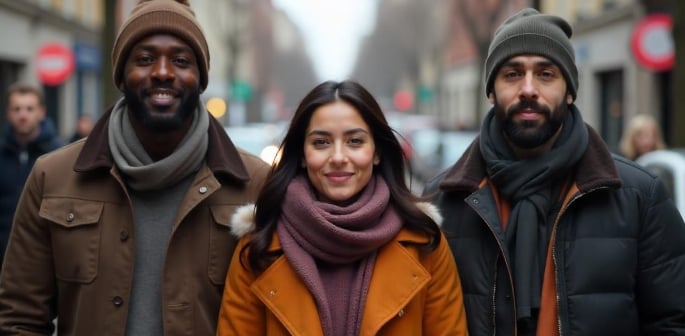
"I feel guilty for my Black side"
Ever wondered what the biracial experience of being Black and Indian is truly like?
Today, it has become more common for people to be born biracial.
Yet the lived experiences of those who are specifically Black and Indian in Britain are not widely explored.
Research and stories about mixed heritage are often centred around the Black and White biracial experience.
Moreover, biracial experiences are also predominantly researched and framed within the context of the USA.
The experience of being Black and Indian in the UK is drastically different to that in the USA.
Such difference is partly due to divergent historical legacies and race issues manifesting differently in the UK.
DESIblitz delves into the Black and Indian biracial experience in Britain.
The Importance of British History in Shaping the Present
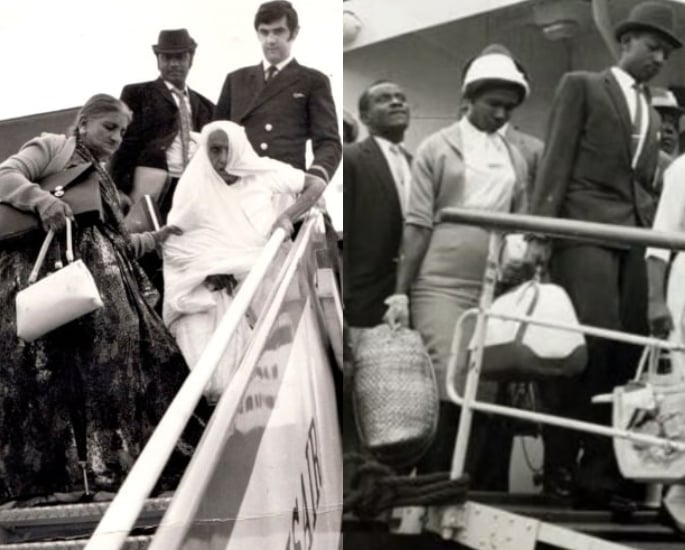
It was the UK’s heavy involvement in slavery, colonisation and migration post-WW2 that inevitably brought an influx of African, Caribbean and Indian people to the island’s shores.
The presence of African people in the UK dates back to the Roman Empire in the third century AD.
Since the founding of the British East India Trading Company and British colonisation of India, Indians have been settling in the UK. They, for example, worked on ships as nannies, soldiers, and domestic servants.
The Caribbean is a significant geographical intersection between Black and Indian histories linked to the UK.
It was a key location in the African slave trade and was also a place where indentured Indians were sent.
The Indian indenture system was where workers from British India entered into a formal contract of work, which substituted slave labour in European colonies.
After the abolition of slavery, indentured Indians were crucial to maintaining a labour system for the British Empire.
By the mid-19th century, around 40,000 Indians had moved to Britain as part of the workforce.
Waves of immigration began during the World Wars as Afro-Caribbeans and Indians joined Britain’s armed forces, significantly contributing to the war.
Mass chain migration occurred after WW2 in efforts to rebuild Britain.
After the British Nationality Act of 1948, people from Commonwealth countries were allowed to migrate to the UK with limited restrictions. The act enabled an increase in migration, strengthening both Black and Indian communities in the UK.
The UK’s Biracial Landscape
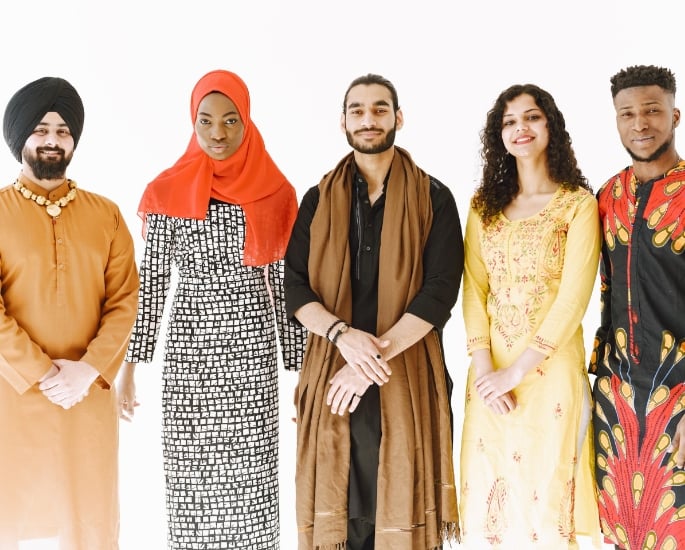
The UK is an ever-growing, diverse country. Home to around 68 million people, it is a melting pot of cultures and ethnicities.
The 2021 Census found that 2.9% of the population was recognised as mixed or from multiple ethnic groups. A substantial increase from 2011.
The majority of Black and Indian diaspora are living in London, the multicultural hotspot of the UK, with 46% of Londoners identifying as Black, Asian or Minority Ethnic in 2021.
It is no surprise that London also happens to be the centre of the biracial population in the UK.
People who identify as biracial are also referred to as mixed-race and of dual heritage.
The Migration Museum highlighted that in Southeast London, Lewisham has the highest percentage of biracial people in London at 8.2%.
After London, Nottingham, Oxford, and Wolverhampton are the areas with the highest percentage of biracial individuals.
Over 420,000 people identified as mixed others. This category excludes people who are White and Asian, White and Black Caribbean, and White and Black African.
Navigating Two Cultures and Issues of Identity
Being mixed-race means navigating two cultures, but the experience of this and the impact on identity is not uniform.
Leah is a 20-year-old woman who identifies as British Black and Indian. Her mum is Indian, and her dad is from the Caribbean island of Saint Vincent.
Leah feels a lot closer to her Indian side when it comes to identity and feelings of belonging.
Cultural celebrations are a big part of forming identity and feeling a sense of belonging, which is true for Leah:
“When I was younger, my whole family would go to Diwali celebrations.”
Leah’s British hometown has a strong Indian community; “they all know each other”, and “everyone here is Indian”.
When it comes to the challenges of being biracial, Leah asserted she has not experienced many cultural prejudices based on her race and dual heritage.
However, Leah admits that “if my parents were first generation, I would have been more into the culture.”
This indicates that cultural identity can shift across generations.
Third-generation children of immigrants can be seen as less culturally engaged with their country or countries of origin as Western cultural influences become integrated into their identity.
Cultural change increases across generations alongside immersion into British society, resulting in identities continuously evolving.
Despite Black and Indian communities stating feelings of belonging, according to UK government findings, those identifying as mixed ethnic backgrounds have the least amount of people saying they belong in Britain.
Although more and more people identify as biracial, this does not necessarily correlate to having a mixed cultural identity and a sense of belonging across cultures and spaces.
Issues of Belonging and Racism
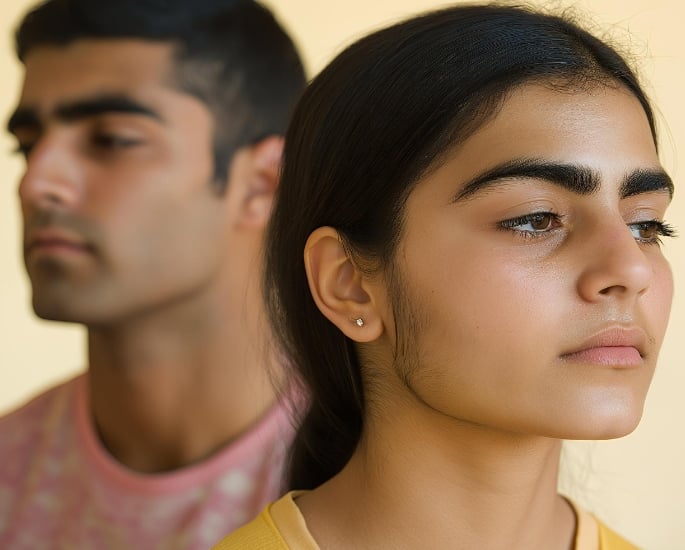
The biracial experience is not always a picture of harmony. There can be challenges in navigating identity and belonging across cultures and communities and internal prejudices from both sides.
Saffron is half Punjabi (her father) and half Jamaican (her mother). She revealed: “I always feel there is an imbalance.
“For example, when I’m at Punjabi events, I tend to straighten my hair to fit in, and I feel guilty for my Black side.
“But when I’m at Black events, I’m always thinking about my Brown side.”
For Saffron, this pressure to “fit in” stems from Punjabi people not accepting her:
“Because I’m more Black passing than a lot of Punjabis, people didn’t accept me as one of them.”
This highlights the issue of anti-blackness that can manifest in South Asian communities. Darker complexions and what are seen as black features are deemed less attractive and are a visible marker of difference.
Being a part of two culturally rich sides, Saffron was immersed in both.
For example, she went through phases of only listening to Punjabi music despite not being raised speaking it. Saffron also fluently understands Patois, a dialect associated with Caribbean social groups.
However, as Saffron got older, she became more involved in her Punjabi culture:
“I got a tutor and started to learn the language a lot more.
“Growing up, I went to many Punjabi weddings, so I was always aware I was Indian, but I didn’t really claim it.
“Jamaican culture was big in our family, so I definitely identified with that side more.”
Cultural identity and feelings of belonging are linked to people’s upbringing and experiences as they grow up.
What becomes clear from Saffron’s experiences is that there can be constant juggling between cultures.
Both cultures complement each other, with many commonalities in music and a strong community feel. However, being biracial involves challenges and hyper-awareness of differences.
Visibility and Representation Matter
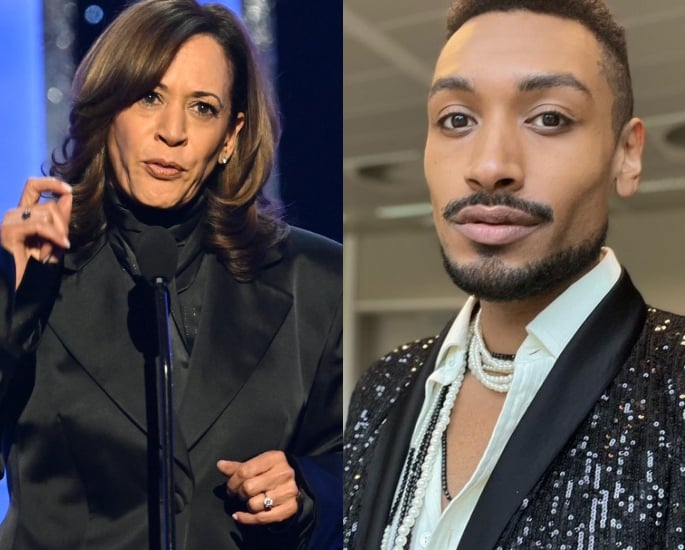
Visibility and representation of biracial individuals in the media and wider society are important.
Such visibility and representation can promote inclusion and raise awareness of diversity and the complexity of belonging and identity.
More figures have publicly emerged in recent years as having Black and Indian dual heritage.
Kamala Harris, the first female Vice President of the USA, is biracial, specifically Black and Indian. Her global fame and media attention have made her crucial in spotlighting biracial identity outside Black and White.
British actor Arun Blair-Mangat, most commonly recognised for his role in the 2023 drama Spellbound, is biracial and identifies as Black and Indian.
His mother was born in Jamaica, and his father is Indian; both were raised in Britain.
Speaking to the media, he is open about being biracial and has stated:
“‘I do feel that there is societal pressure to identify with one race more than the others.
“Being part-Black means that people often label me as a Black man, but my Jamaican and Indian roots have both shaped and continue to shape me.
“I often have to fight to be considered for ‘Black roles’ and never get seen for ‘Indian roles’ despite being half-Punjabi.
“So sometimes I’m not Black enough and other times, not Indian enough. I’ve heard other mixed-race actors of various backgrounds say the same.”
Being “accused of inauthenticity” is a sad truth in the reality of mixed-race people like Arun. Being accused of being not enough of one thing or too much of another.
At times, this can lead to feeling the need to choose one racial and cultural side over the other.
It can lead to neglect of one culture, a loss of connection to heritage, and personal feelings of alienation and not belonging.
For those identifying as mixed-race, straddling that line between two communities and cultures can be particularly difficult. Blessed with the richness of both cultures, they are also susceptible to internal prejudices from either side.
Understanding biracial experiences enables us to deconstruct the idea of singular, isolated cultures and borders of belonging.
The experiences of biracial individuals highlight the ongoing complexities of navigating identity, belonging, discrimination and racism.
Judgements of how people belong to a group and racism can create tensions, resulting in biracial individuals facing identity and emotional struggles.
This is not to say that all Black and Indian biracial experiences are the same. Leah and Saffron show this is not the case.
Generational differences, family relations, geographical locations and upbringing all factor into the lived experience of being of dual heritage.
The gift of being biracial is experiencing the richness of two cultures and communities.
Nevertheless, being biracial can bring challenges and raise questions and tensions around identity and belonging.