













































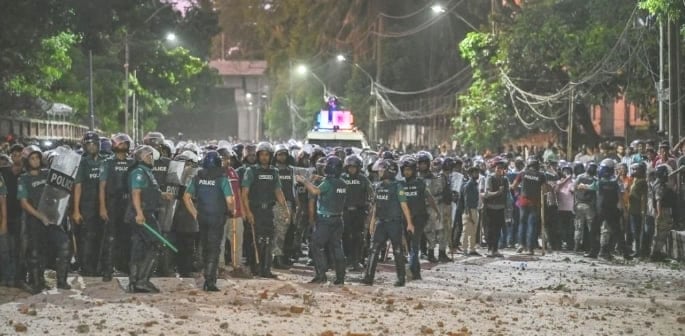
Bangladeshi authorities used unlawful force against student protesters
Tensions between police and student protestors in Bangladesh have intensified as students refuse to stand down.
After six people were killed and unrest mounted, authorities ordered schools and universities to be shut until further notice.
Deaths occurred after clashes between opposing student groups and police firing bullets and tear gas at protestors. The goal, they say, was to disperse them.
Violence has been reported in the capital, Dhaka, the southeastern city of Chattogram, and the northern city of Rangpur.
The ongoing clashes between pro-student protesters and pro-government student supporters have fanned the flames of unrest and violence.
Police officers have faced criticism for using force and lack of action that may have led to the killing of protestors.
On July 17, Prime Minister Sheikh Hasina promised her government would set up a judicial panel to investigate the deaths.
However, students are not stopping and have refused to vacate campuses across Bangladesh.
Student Mohammad Shohagh Mia said he wouldn’t move until protesters’ demands were met.
Mia asserted demands include reforms to the quota system and freedom on campus from “the ruling party’s toxic politics”.
Since July 17, there has been a tense standoff between student protestors and the police across universities.
Authorities sent riot police and the Border Guard paramilitary force to university campuses.
Protesters announced they would enforce “a complete shutdown” across the country on Thursday, July 18.
The shutdown is in response to security officials’ continued attacks on the campus demonstrators and a demand for change.
Protest coordinator Nahid Islam said: “We will go ahead with our plans for complete shutdown… All establishments will remain closed.
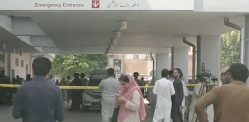
“Only hospitals and emergency services will remain operational, with ambulance services being the sole permitted transport.”
This is an escalation from weeks of widespread protests across Bangladesh.
On July 17, social media reporting showed Dhaka’s Kazla-Shanir Akhra residents taking to the streets. They support the student protesters who want reform.
In Dhaka, the Indian Embassy has advised members of the Indian community and students to refrain from leaving their homes.
Amnesty International spoke to eyewitnesses who said the protests were entirely peaceful before individuals from the Bangladeshi Chhatra League (BCL) started attacking protestors on July 15.
The BCL is affiliated with the ruling party.
Students have been protesting the existing quota system, stating it is discriminatory and unfair. The system gives 30% of civil service jobs to the descendants of freedom fighters.
Moreover, the system is also meant to benefit women, minorities, and people from socio-economically lagging districts.
However, there has been criticism that the system is discriminatory and unjust. Protestors strongly feel that it favours supporters of the ruling party.
Amnesty International stated that Bangladeshi authorities used unlawful force against student protesters. In addition to failing to ensure their protection during the ongoing ‘Bangla-Blockade’ quota-reform protests.
Taqbir Huda, Regional Researcher for South Asia at Amnesty International, has said:
“We urgently call on the Government of Bangladesh to rehabilitate all those injured and ensure they receive proper medical treatment.
Huda maintained that “the authorities must also ensure that all those engaged in the attacks on peaceful protesters are held to account”.
He also stressed the need to investigate the attacks and the role of the police officers “who have directly perpetrated or failed to prevent such breaches of the law”.
Dhaka police raided the headquarters of the opposition Bangladesh Nationalist Party (BNP), accusing it of playing a role in the violence.
Detective Chief Harun-or-Rashid told reporters that police arrested seven members of the party’s student wing. The arrests were in connection with two buses set on fire on June 16.
Reports have revealed that Ruhul Kabir Rizvi, a senior BNP leader, accused the government of “staging” the raid.
Government officials have stated that student protests are being co-opted to harm the state.
The conflict and tension between authorities and student protestors continue to build.
The protests matter beyond the quota system and demands for its reform.
The protests and the response ignited within communities and authorities in Bangladesh raise questions. Questions around the role of the government and the need for vital structural reform.