











































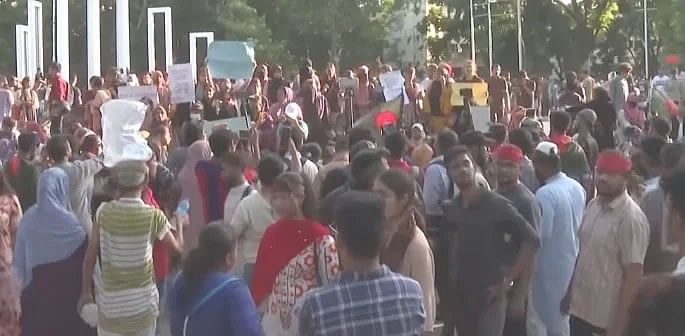
University students feel the quota system is unfair and discriminatory
Students have been protesting against the Bangladeshi government’s quota system for weeks. Protests have now turned deadly.
Several cities, including the capital Dhaka, witnessed clashes between supporters of the anti-quota movement and their opponents.
The clashes have resulted in hundreds being injured.
Amid rising unemployment in Bangladesh, tensions and unrest have boiled.
Across Bangladesh, authorities have shut schools until further notice after protests over the quota system led to the death of six people.
The University Grants Commission asked all public and private universities to pause classes and close dormitories until further notice.
On July 16, 2024, protestors mobilised across several cities, defying Prime Minister Sheikh Hasina and the Supreme Court’s calls to return to class.
Reports state that three died in Chittagong and had signs of bullet wounds.
Further reports stated two people died in the capital. Rival student groups threw bricks at one another and blocked roads that ground traffic to a halt.
Rangpur Metropolitan Police Commissioner Mohammad Moniruzzaman said a student was killed in clashes in the north-western city.
The quota system involves reserving a third of well-paid public sector jobs for specific groups, including the children of war heroes who fought in the country’s 1971 war of independence from Pakistan.
Presently, the government reserves approximately 56% of jobs for specific groups. The largest share (30%) is for the descendants of freedom fighters.
Others meant to benefit from the quota include women, minorities and people from socio-economically lagging districts.
University students feel the quota system is unfair and discriminatory.
Students want requirements for civil service jobs to be based on merit. Thus they continue to protest for change.
On July 15, at least a hundred students were injured during protests.
Students had been protesting outside the residence of the Jahangirnagar University (JU) Vice-Chancellor on the outskirts of the country’s capital.
Members of the Bangladesh Chhatra League (BCL), the student wing of the governing Awami League party, had attacked students.
This is one of a series of clashes that have heightened tensions and unrest, further fanning the flames of violence and unease.
There is a stark contrast in how the Bangladeshi government and student protestors view the rallies and protests.
Foreign Minister Hasan Mahmud asserted an “attempt is being made to transform the anti-quota movement into an anti-state one using the emotions of young students”.
However, student protestors stress they are protesting to demand reform; they want a fairer system.
The protests and tensions between students and the government in Bangladesh strike deeper than the quota issue.
The protests reflect questions about the government’s representation of the people they serve, issues that will resonate with individuals worldwide, including within Britain.