

















































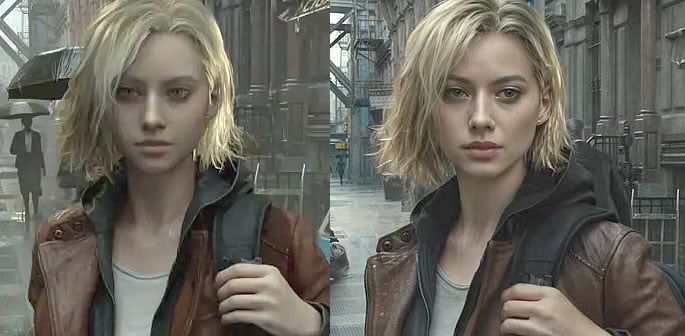
"We are reinventing computer graphics once again."
Nvidia is once again driving the conversation around the future of gaming, with its latest innovation, DLSS 5, which promises cinematic-quality graphics using AI.
Set to be rolled out in autumn, the company claims it can deliver graphics once only seen in Hollywood visual effects.
The tech was shown radically changing the appearance of characters and environments in games such as Resident Evil Requiem and Hogwarts Legacy.
However, the reaction has not been universally positive.
Developers, artists and players are now debating whether this push towards AI-driven visuals enhances gaming or risks stripping away its identity.
The Push for Photorealism in Gaming

DLSS 5 builds on Nvidia’s long-standing focus on graphical innovation. The company first reshaped modern visuals with real-time ray tracing in 2018.
That technology improved how light, shadows and reflections behave in games.
DLSS 5 takes the next step by using AI to generate finer details in real time.
According to Nvidia, the tool can create more realistic hair, skin and fabric.
It also improves environmental lighting, making worlds feel more natural and dynamic.
The goal is clear. Games should look closer to real life without sacrificing performance.
Nvidia CEO Jensen Huang framed DLSS 5 as a defining moment:
“We are reinventing computer graphics once again.”
He added that it would deliver “a dramatic leap in visual realism while preserving the control artists need for creative expression”.
The company also confirmed strong industry backing.
Major publishers, including Bethesda, CAPCOM and Warner Bros. Games are supporting the technology. Their involvement suggests DLSS 5 could become widely adopted once it launches in autumn.
AI-assisted rendering can speed up development and reduce workload, allowing teams to create detailed worlds more efficiently.
That combination of scale and efficiency is difficult to ignore in an industry where production costs continue to rise.
Concerns Over Creativity
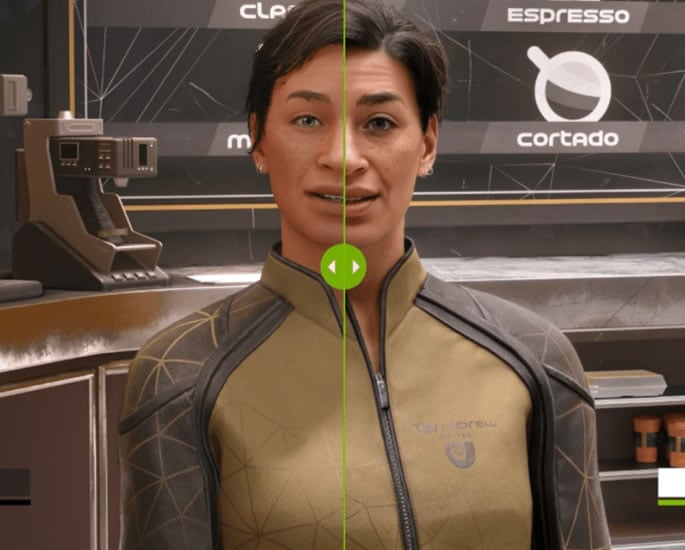
Despite its promise, DLSS 5 has triggered backlash, with critics arguing that the technology risks pushing games towards a uniform, overly polished look.
The concern is not about realism itself, but what might be lost in the process.
Video game critic Alex Donaldson said:
“Clearly this is a massive glow-up for environments.
“The character stuff is uncanny and weird though, and it feels like artistic expression risks being squeezed out.”
Concept artist Jeff Talbot was more direct:
“This is not the direction games should be going in. Each DLSS 5 shot looked worse and had less character than the original.”
Developers fear that AI tools could dilute the individuality that defines great games.
Visual style has always been a key part of storytelling and if AI begins to standardise how games look, that identity could fade.
The debate also links to broader tensions around AI-generated content.
In recent months, several incidents have highlighted growing resistance. Running With Scissors pulled a forthcoming title after criticism over AI-generated graphics. The controversy showed how quickly players can push back.
Similarly, Clair Obscur: Expedition 33 initially won Game of the Year at the Indie Game Awards but was later disqualified after it emerged the developer had experimented with AI-generated images, despite not using them in the final product.
Still, there is strong support for AI within parts of the industry.
Charlie Guillemot, joint CEO of Vantage Studios, said:
“The way it renders lighting, materials and characters changes what we can promise to players.
“On Assassin’s Creed Shadows, it’s letting us build the kind of worlds we’ve always wanted to.”
Supporters argue that gaming has always evolved through new technology. From 3D graphics to motion capture, each shift has changed how games are made.
In that context, DLSS 5 is another step forward rather than a threat.
DLSS 5 places Nvidia at the centre of a defining moment for gaming.
The technology offers clear advantages in visual quality and development efficiency but it also raises important questions about creativity and artistic control.
What happens next will depend on how developers choose to use these tools.
AI can enhance creativity or overshadow it. That balance will shape the next generation of games.
For now, DLSS 5 has done more than impress with visuals. It has forced the industry to decide what it wants gaming to look like in the years ahead.