

















































no longer be able to apply for additional end-to-end encryption
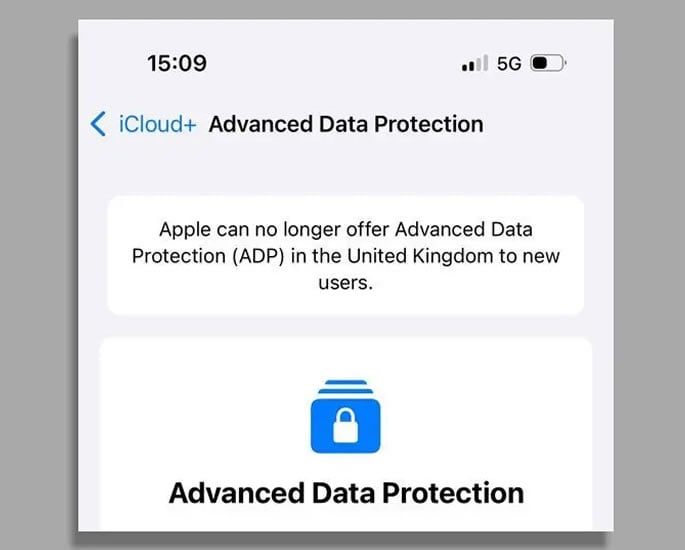
Apple caused a stir by pulling its Advanced Data Protection (ADP) for UK users.
The move follows a request from the Home Office, seeking the right to access data encrypted by ADP—something even Apple cannot currently do.
Rather than comply, Apple announced it would halt new sign-ups for ADP in the UK and remove access for existing users at a later date.
The decision has sparked criticism of the UK government’s actions and raised questions about the future of data protection for Apple users in the country.
It has also left many Apple customers confused. So what does the removal of the data security tool mean for you?
What is Apple’s Advanced Data Protection?
ADP is an opt-in feature that enhances data security for users with devices like iPhones.
It provides an additional layer of protection for data stored in iCloud, including backups, photos, notes, and voice memos.
While data is encrypted by default, ADP offers end-to-end encryption, ensuring that only the user, not Apple, can access the data.
Apple does not hold a key to this encrypted data. Losing access to an account could result in losing the data entirely.
Furthermore, law enforcement cannot access data protected by ADP, even with a warrant.
ADP operates separately from the protections already in place for iMessages, iCloud Keychain passwords, Health app data, and FaceTime, which are all end-to-end encrypted by default.
What Does This Mean for My iCloud Data?
If you are in the UK and have not enabled ADP, there will be no change to your iCloud data protection.
Your data will continue to be protected by standard encryption, which Apple can still access if required.
However, the removal of ADP means you will no longer be able to apply for additional end-to-end encryption on your iCloud data, even if you wish to.
For those who had ADP enabled before the change, Apple has not yet specified when access will be removed, nor how many users will be impacted.
Experts have expressed concern, warning that the loss of this protection could leave users more vulnerable and have wider, global implications.
Cybersecurity expert Graeme Stewart from Check Point noted that while law enforcement still needs a warrant to access iCloud data, the UK’s request could inspire other governments to demand similar “backdoors” to encrypted data.
Experts have likened this idea to leaving a key under a doormat, effectively creating a vulnerability that could be exploited by bad actors.
Digital rights group the Electronic Frontier Foundation added that allowing a backdoor would not only impact UK users but could affect people worldwide.
Apple said: “We have never built a backdoor or master key to any of our products, and we never will.”
What Protections Do Google & Android Offer?
Google offers similar encryption protections for its services, securing data as it moves between devices and data centres.
For Android users, Google has provided enhanced protection for system backups since 2018, using a random security key that is encrypted by the user’s lock-screen passcode. Google cannot access this key.
However, Google Photos and content stored in Google Drive are not end-to-end encrypted.
Google also offers an Advanced Protection Program for additional security, which uses passkeys for account verification.
Samsung Galaxy smartphones provide “enhanced data protection,” ensuring that backups of messages, call logs, apps, and settings are encrypted end-to-end.
The announcement has certainly caused shockwaves and it could spark an iPhone exodus in favour of Android devices.