












































"That was my reality - period poverty, before I even had a word for it."
Ruby Raut has built WUKA, the UK’s first reusable period underwear brand, after turning her lived experience of menstrual stigma and period poverty in Nepal into a business rooted in social change.
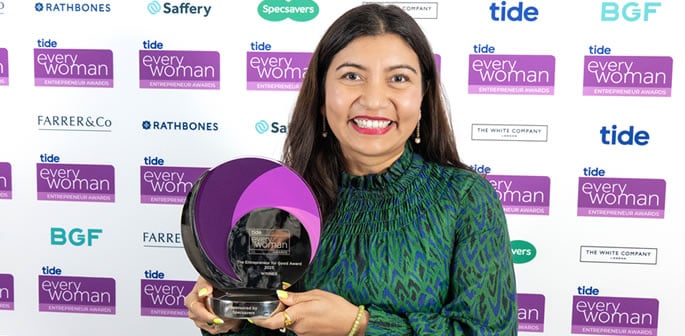
Her work has been recognised at the Tide Everywoman Entrepreneur Awards, where she won Entrepreneur For Good, which spotlights female founders driving impact alongside growth.
The awards have supported women whose businesses go on to scale, secure investment and expand visibility, even as female entrepreneurs continue to face rising pressure.
Against this backdrop, Raut has grown WUKA into a widely recognised brand challenging how periods are experienced, accessed and discussed.
In an interview with DESIblitz, Ruby Raut reflects on building the business through cultural silence, funding barriers and a mission to normalise menstruation.
Turning Lived Experience into a Movement
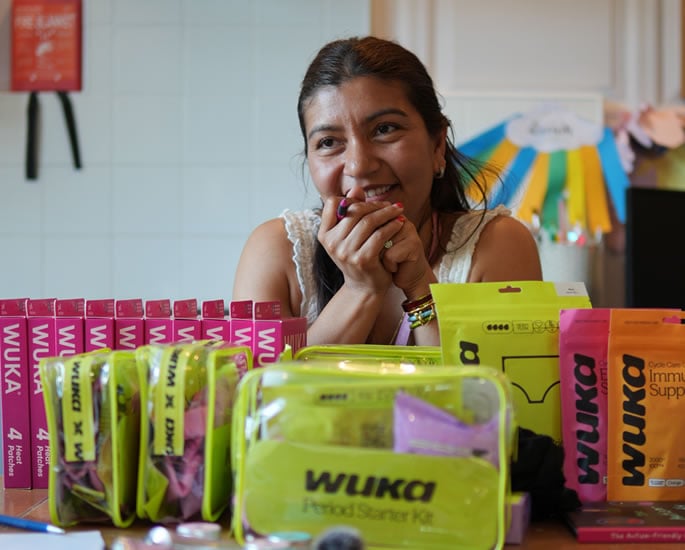
Ruby Raut built WUKA from lived experience.
Growing up in Nepal, she experienced period poverty firsthand while living in a household where every penny counted.
Those early experiences shaped not only her understanding of menstruation but also the mission that continues to drive WUKA today.
She explains: “I grew up in Nepal, in a family of three daughters, and we were quite poor.
“My father earned less than three dollars a day, and that money had to do everything – feed us, send us to school and keep the whole family going.
“With three girls, it stretched even thinner. So when I got my first period, there was no question of buying pads; we simply couldn’t afford them, and honestly they weren’t easily available where we lived anyway.
“My mother took her oldest cotton saree and made my period products by hand. That was my reality – period poverty, before I even had a word for it.
“And the word we did have wasn’t a kind one, as in Nepali, the term for periods, Nachune, means ‘untouchable’.
“During that first period I was sent away to my aunt’s house and kept apart from my family.
“I carried all of it quietly for years. It is the whole reason WUKA (Wake Up Kick Ass) exists.
“I never want another girl, whether she’s in Kathmandu or anywhere else in the world, to feel less, or to go without something as basic as a period product, simply because of where or how she was born.”
Rather than focusing solely on creating an alternative period product, WUKA was built around tackling the stigma, inequality and lack of access that still affect millions of people worldwide.
That mission remains central to the brand, with affordability, education and sustainability positioned as interconnected goals rather than separate priorities.
Launching reusable period underwear in Britain brought another set of obstacles. Raut was introducing an entirely new product category while challenging long-held attitudes around menstruation.
Raut says: “I always say we faced a triple whammy.
“The first was that period pants were a completely new innovation and people simply didn’t know what they were.
“When you bring something brand new into the world, your first job isn’t selling, it’s educating and explaining what the product is and how it even works. That’s still our biggest challenge today.
“The second was the silence around periods. This was ten years ago. The very first leaflet I ever handed to a girl, she dropped it straight on the floor.
“Things have moved on so much since then, but back then the stigma was huge.
“Growing up in Nepal, periods were at least visible. I watched my mother stay out of the kitchen, away from prayers, weddings and funerals.
“In the UK it’s the opposite and periods are invisible. People hide their products so carefully, wrapped up even in the bathroom bin, tucked up a sleeve on the way to the toilet. That invisibility made it so much harder.
“And the third was that this is a habit-change product. People had used the same thing for decades, and here I was, asking them to try something completely different.
“On top of all three, I was doing it as an immigrant, as a brown girl in the UK. It really did feel like a defying-gravity moment.”
The challenge was convincing consumers to switch products as well as encouraging people to discuss menstruation openly at a time when conversations around periods were far less visible than they are today.
Building Confidence while Challenging the System

As an Asian woman building a business in an unfamiliar market, Ruby Raut says confidence developed through action rather than certainty:
“For me, confidence came from being brave and not being afraid to ask, and not being afraid to say what this is, with a straight face.
“Honestly, a lot of the time I was quite naive, and not fully knowing how hard it would be actually helped me.
“I often tell my friends that if I’d had to launch this brand in Nepal, I might never have done it, because the stigma around periods there is still so strong.
“But in the UK I found something quite embracing. When you’re bold and brave enough to go out and speak openly, you’re celebrated for it. I really champion that.
“And I’ve always, very deliberately, surrounded myself with the smartest people, people who truly get me, so that any negativity from elsewhere never had the chance to take root.
“I still choose my circle that way with people who embrace what I’m saying. That has made all the difference.”
Her experience also reflects wider challenges facing Asian women in business.
The State of Asian Funding UK Report 2025 found that just 0.2% of overall investment went to all-Asian female founding teams. For Raut, the figure reinforces what she has experienced throughout her entrepreneurial journey.
She admits: “When I first saw that number, 0.2%, I felt sad, but not surprised, because I have lived it.
“I’m a female founder, an immigrant and a self-funded businesswoman. WUKA wasn’t built on venture capital; it was built on a £70 second-hand sewing machine, 116 Kickstarter backers, and profit I poured straight back in.
“Not because I didn’t try those rooms, but because the rooms weren’t built for someone like me, talking about something like periods.
“To put it in context, all-female founding teams already get under 2% of UK venture funding; for Asian women it collapses to a fraction of that.
“When less than half a per cent of funding reaches founders who look like me, I don’t believe that’s a talent problem; it’s a recognition problem.
“The talent has always been there. The capital simply hasn’t found its way to us yet and I really hope that’s beginning to change.”
While conversations around diversity in entrepreneurship have increased, Raut believes meaningful progress depends on investment reaching founders who have historically been overlooked rather than relying solely on mentoring programmes.
Refusing to Stay Quiet
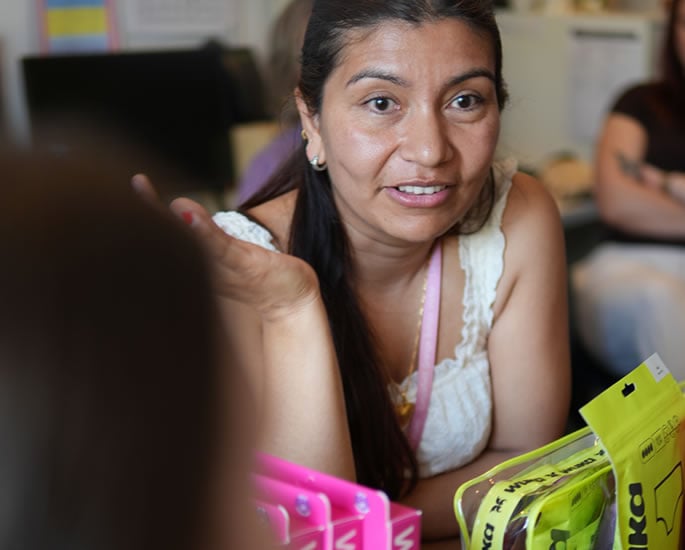
For Ruby Raut, commercial success has never been separated from WUKA’s wider purpose.
She says: “I don’t see them as three things to balance; for us they’re the same thing.
“We’re a certified B Corp, which means we’re legally committed to putting people and planet alongside profit, not after it.
“Purpose is our business model: every pair of WUKA replaces around 200 disposables, so doing good and growing are the same action.
“Of course there are hard commercial decisions; we’re a real business, not a charity, and to keep the mission alive the business has to be healthy.
“But I’ve never had to choose between making money and doing the right thing, because our customers buy us precisely because we do the right thing.
“Profit is simply what lets purpose scale.
“I always say sustainability and periods should never be a luxury, and a profitable business is exactly how we keep them affordable for everyone.”
That same philosophy extends to how Raut believes Asian women entrepreneurs should be supported:
“First, capital that actually reaches us, not just mentorship and ‘networking’, but real cheques, from investors willing to back markets and founders who don’t look like their usual bets.
“Second, visibility. When a young Asian girl sees someone who looks like her, sounds like her, running a successful company, it rewrites what she believes is possible for herself.
“Representation isn’t a nice-to-have; it’s a pipeline.
“And third, community. I wouldn’t be here without the women, and a few good men, who lifted me up; we need honest networks where we can name the barriers without being labelled ‘difficult’.
“But if I had to choose one, it would be this – let the funding find the talent.
“The talent is already here, in abundance; it simply deserves to be seen and believed in.”
Alongside investment and representation, Raut believes cultural attitudes around menstruation still require sustained change, particularly within South Asian communities.
She adds: “In a lot of South Asian communities, periods still come with restrictions, such as not entering the kitchen or the temple, not touching certain foods and being kept apart.
“In parts of Nepal, girls are still sent to menstrual huts and some die there.
“What’s striking is that in South Asia the taboo is visible, the restrictions are public, sometimes harsh, but at least no one pretends periods don’t exist.
“In the West it’s the opposite, where it’s invisible, hidden behind discreet packaging and adverts that whisper. Different masks, same shame. And shame never leads to progress.”
Raut states that no one should be made to “feel guilty for the traditions they grew up with”.
On how things should change, she adds: “It’s open conversation, and educating the elders, not only the daughters.”
Success beyond Business Growth

Many of WUKA’s defining moments came from deliberately rejecting the conventions that had shaped the menstrual products industry for decades.
Some of the moments felt “risky”, as Ruby Raut details:
“First, we used the actual word ‘period’ and put it on the London Underground and we were the first to do that.
“Secondly, we refused the blue liquid and put real red period blood on screen.
“Third, we made it for everybody, multiple sizes, real women with stretch marks in the supermarket aisle, not airbrushed models.
“And four, perhaps the most important, getting onto the shelves at Sainsbury’s, sitting right next to the billion-dollar disposable brands.”
These were “humbling” and “exhilarating” but those decisions helped position WUKA as more than a product brand, using visibility and representation to challenge how periods are portrayed in mainstream advertising and retail.
Looking back, Raut says her definition of success has evolved alongside the company’s growth.
“At the start, success was survival: one more order, one more month.
“Now I get messages every single day from people around the world telling me WUKA has changed their lives; sometimes I cry, they’re so kind.
“Over a million people have switched away from disposables with us – that’s success.
“We campaigned against the government for nearly five years and won. From 2024, period pants are no longer taxed as a ‘luxury’.
“But honestly, the deepest measure for me is personal.
“If a 12-year-old somewhere gets her first period and feels excited instead of ashamed, if she’s handed knowledge instead of a rag and a closed door, then I’ve done my job.
“Success isn’t the revenue. It’s the shame we’ve managed to remove.”
For aspiring entrepreneurs, particularly young Asian women, her advice centres on taking action rather than waiting for the perfect moment.
Raut concludes: “Don’t wait until you feel ‘ready’ because that day never quite arrives. Build the confidence on the way.
“Don’t try to fit a mould that wasn’t made for you; being unapologetically yourself is your greatest asset.
“Validate your idea with real customers before you chase perfection: done is better than perfect.
“Keep your ego in check and stay humble, but never shrink. And solve a problem you genuinely care about, because there will be hard days, and purpose is what gets you out of bed on those days.
“And to the young Asian women especially, the rooms may not have been built for us but that is exactly why we have to walk into them.
“Because if we don’t take up space, who will?”
Ruby Raut’s journey reflects a consistent focus on changing both access to menstrual products and the cultural silence that has long surrounded them.
From her early experiences of period poverty in Nepal to bringing reusable period underwear into mainstream UK retail, WUKA has grown through practical innovation backed by a clear social mission.
Her recognition at platforms such as the Tide Everywoman Entrepreneur Awards sits alongside wider efforts to elevate female founders, even as she highlights the structural gaps that continue to shape funding and visibility.
What defines her work is not just product innovation, but a steady challenge to how menstruation is spoken about, experienced and normalised.
For female founders who would like to follow in Ruby Raut’s footsteps, they can do so by nominating themselves or a female founder they know for the 2026 Tide Everywoman Entrepreneur Awards.