







































"It was a hostile world"
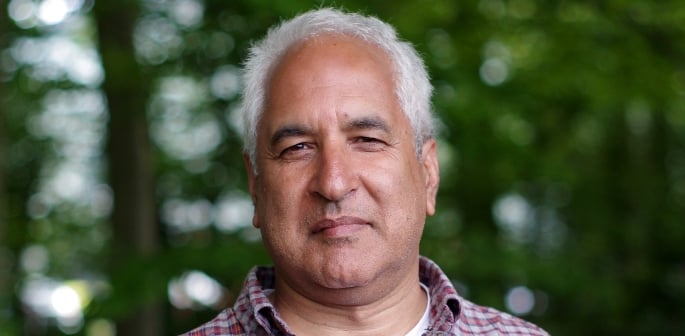
Dr Karamat Iqbal experienced the trauma and opportunities that came with being a first-generation South Asian migrant.
Migrants from Pakistan and elsewhere were needed for their labour to help rebuild Britain after World War II. Yet, they faced discrimination and prejudice.
The government opened Britain’s borders, but those seeking opportunities did not find a warm welcome in the decades after the war.
In 1970, Karamat’s father sent him from Azad Kashmir in Pakistan to live with his sister in Britain so that he could achieve a better life and further his education.
However, those who came to Britain, like Karamat, entered a “hostile environment”.
Karamat stresses that he has “multiple identities”. Like each of us, he cannot be defined and identified by one identity and label.
To name just a few things, he is British Pakistani and Kashmiri, an educator, student, scholar, and advocate of diversity and equality.
From a young age, he has had a passion for education and a strong sense of justice and fairness.
Dr Karamat Iqbal offers an inspiring narrative of perseverance, adaptation, and self-determination.
In our exclusive chat, Karamat discusses the racism he faced in Britain, navigating socio-cultural expectations and more.
When did you come to Britain, and was it with family?
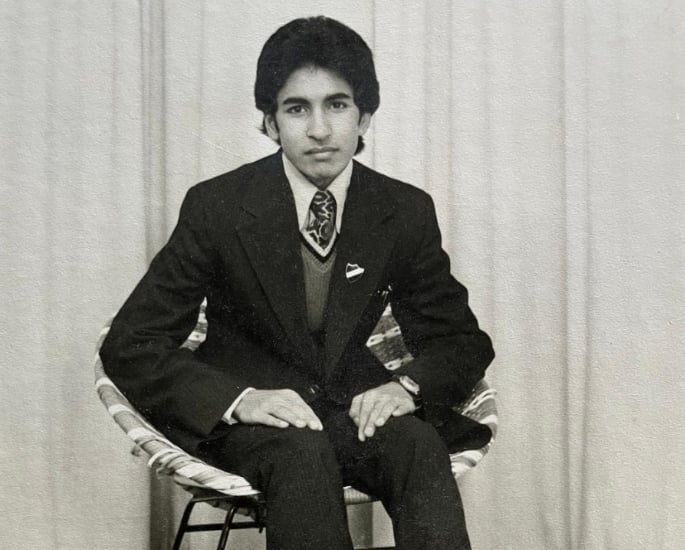
I came to Birmingham as a 12-year-old. Although I always tell people where I came from, my age is approximate. They didn’t record dates of birth.
I was excited; there was a build-up of excitement.
I didn’t know what I was going to do or how I was going to cope. I especially didn’t know how I would cope without my mum and dad.
I was only 12, and this was the first time I had left my village to go to a foreign country.
I was on my own. My father said goodbye to me at the airport in Islamabad.
He told somebody from our area, “You’re going to England; my son is going. Can you keep an eye on him?”
I stayed as near to that man as possible, as he was the only one I knew on the flight. But I didn’t really know him, we met at the airport.
The plane did stop somewhere, and I got off when I shouldn’t have. Luckily, the man my dad spoke to noticed, and they sent someone out looking for me.
I was found sitting in a cubicle. Had they left without me, I would still be sitting in that cubicle.
Before you arrived in England, were you conscious of your Pakistani-Kashmiri identity?
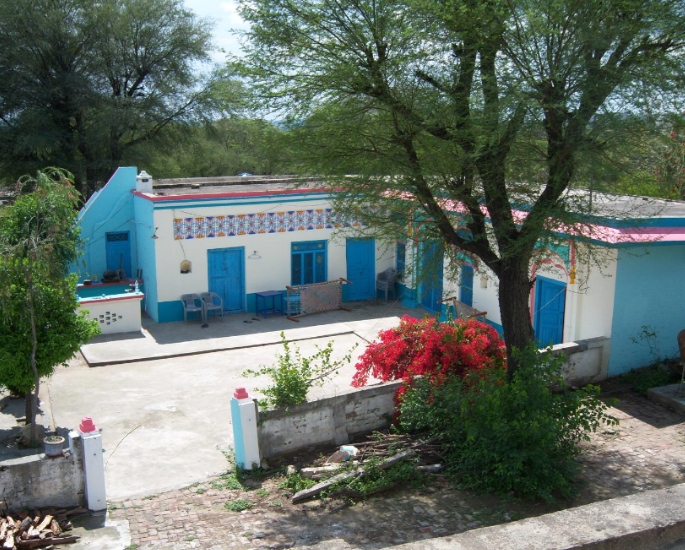
No. I never thought about it.
I knew what my name was, and in that culture, if you were away from your village, you always gave your father’s name.
My identity was that I was my father’s son, and my family defined me.
Our family was sufaid poash family. It’s an Urdu word that means respectable.
We had slightly more resources. I went to school. I had food to eat. I had clothes to wear.
I also lived in a Pukka house, which was the first brick house in our village.
So I was special, and within my family, I was special as I was the only boy within a family of five girls. I was the prince and had anything I needed.
I knew which village I was from only because I went to school outside my village.
It’s only when you leave your space that you become aware of your identity and how those outside see you.
Secondary boys who were nearer the big town thought they were very sophisticated. They thought people like me from the village were jungali [from the jungle, backwards].
Similarly, when I came to England, I became aware of my Asian-Pakistani identity.
Did this feeling of being a prince change when you came to Birmingham?
Yes, it quickly changed.
In Birmingham, I discovered I was just another P**i.
And I use that word because that was what I was told I was by White people.
It was not a nice word, and they didn’t see me as a special boy from a special family.
I was just one of the many immigrants and was not wanted.
It was a shock to the system.
Were there any moments that made you aware that you were different in Birmingham as a child?
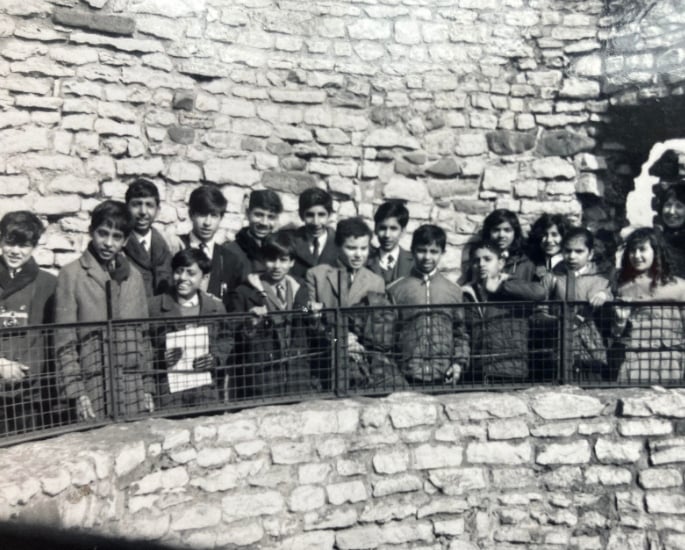
Yes, on the first day of secondary school, when I arrived.
The teacher wasn’t in the classroom, and a tall White boy lifted me up by my clothes and pushed me against the wall and said, “We don’t want anymore f*****g P**is in our school.”
That was the start of my life in school in Birmingham.
It told me I was different; I was not wanted.
This was a hostile world, a hostile environment, and I better survive it.
That was the start of me being different.
Nobody did anything; the teacher wasn’t there, and there was no system to report it. I didn’t tell anybody and just got on with life.
This happened to me in 1971, and I wrote about it in 1988 or 1989, and I’ve been writing about it ever since.
What do you remember most vividly about the South Asian community in Birmingham while you were growing up?
It was very small compared to now. The infrastructure wasn’t there.
There were very few shops that were Asian, and there were no mosques, and quite a lot of the people were White.
There weren’t many Asian spaces.
The home was a refuge, and I think slowly, I began to venture out.
I would walk from Nechells to Saltley, Alum Rock and visit people. On one or two occasions, I was beaten up, but most of the time, it was safe.
Slowly, I began to go further, taking the number eight bus route.
Saltley, Alum Rock, Small Heath, Bordesley Green, Sparkhill, and Aston became more multicultural.
More of our people lived there, so they became safer.
We stayed away from many areas in Birmingham because they were hostile.
Council estates were seen as hostile, so we didn’t venture out to them.
Slowly, I became more courageous and ventured out to more spaces; with time, more and more became safer.
Then, when I was working as a youth worker in Small Heath in the late 1970s, I also lived there.
So I said to my boss, “Look, I don’t want to be a Pakistani who lives in Small Heath and only works with Pakistanis. I want to venture out. Can you give me a placement away from a Pakistani area?”
I was sent to a youth club in Sutton Coldfield, and that was very different. There were no Asians or Black people. It was 100% White.
What was that experience like working in Sutton Coldfield?
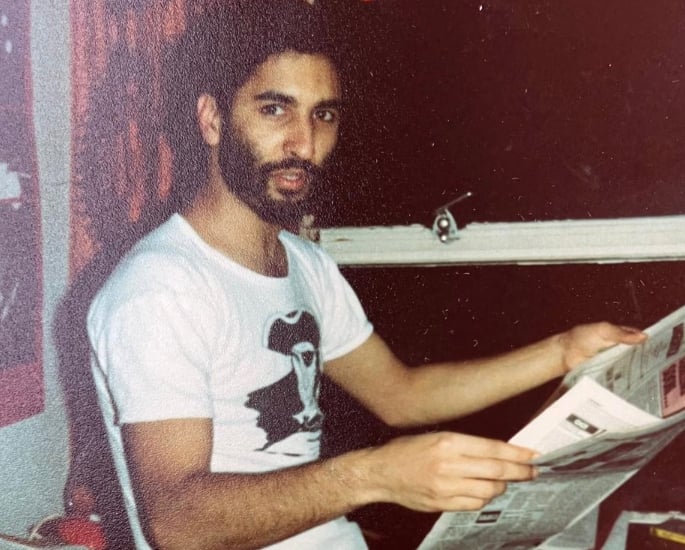
It was interesting and a bit hostile. I was told to be careful and that I might get beaten up.
I was told to be careful when walking from the youth club to the train station.
I was careful, and thankfully, I wasn’t abused.
I think on one occasion, someone verbally abused me, but I wasn’t attacked or anything.
I vaguely remember some kids saying, “Why was I in their country?” I had to then explain it to them.
I was there for a few months. It was a positive experience.
You’ve mentioned the risk of being beaten as a Pakistani just being on the streets. Was this a common risk back then?
The brief answer is yes. It was a hostile world.
If you saw a group of young White people coming towards you, it was safer to cross the road.
Or on football match days, when they were probably drunk or boisterous, they were in a group, they were hostile.
You saw them as hostile. It wasn’t necessarily that they were hostile.
You thought they would be hostile; they would be scary because you associated young White people, groups of them as hostile.
You certainly saw skinheads who were dressed in a particular way as hostile if they were coming towards you.
Not that they were going to be hostile, not that they were going to beat you up, but you thought they might.
Was that something you learnt to be scared of due to personal experience or warnings from family?
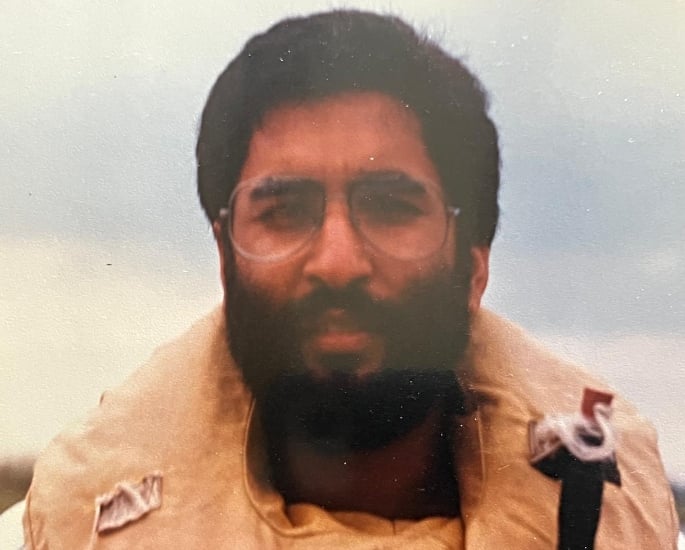
The fear was based on personal experience. You only need to be beaten up once.
I remember living in Nechells, and I walked down to Saltley Junction, Washwood Heath road, turned left, and first right. I was just walking up.
Halfway up, there were three White young people.
One of them slapped me, and I can almost still feel how it felt then.
You just need one thing to happen, like something happened to me at school. It stays with you.
Did the incident stop you from going out?
Up to a point, but as a younger person, you are taking risks, and you are also, in my case, trying to get away from your community.
If I were seeing a girl, it would be better to see her in a White area because I might be spotted with a girl in my own area.
It might be talked about in my family.
Someone could tell my parents in Pakistan that “he was seen with a girl; he’s obviously up to no good.”
It was better to see someone in a White area. It was hostile but better than the prying eyes of relatives and the community.
You said most young Asian people wanted to leave school and go to work. What did your family in Pakistan think of your focus on education?
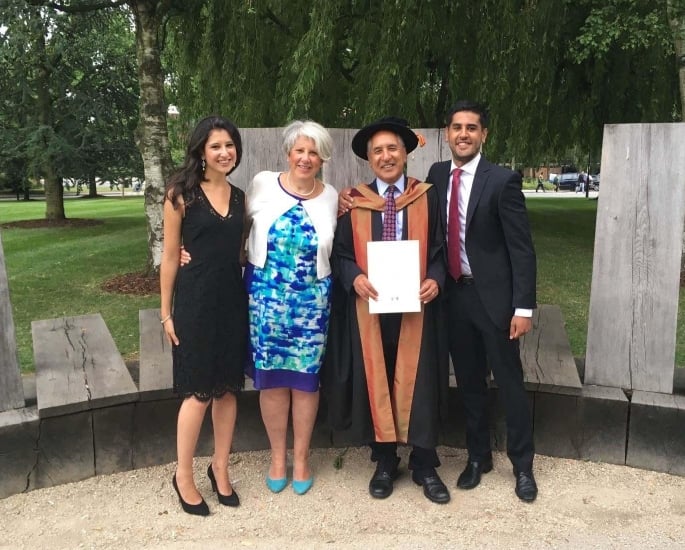
I think they were pleased with my education. My [school and graduation] photos were on the mantle when I went back to visit my parents.
I first went to university in 1980, after six years of attending evening classes.
Then I got my Masters, and decades later, my PhD.
No one else was going to evening classes in my community like that, not for six years and sticking with it. And then going to university—this is still being a first-generation immigrant.
So, I have continued to be a first-generation immigrant and will remain so until my dying days. But I have continued to live life as a second, third-generation [British Asian].
I think some of the cultural choices I was making, they [family] were not happy with.
For example, I refused to have an arranged marriage at the age of 20. That was very counter-cultural.
And then, finding a White English wife did not endear me to my family.
In those days, it was rare for Pakistani men to marry English women. It was rare but not impossible.
But what happened was that when the Pakistani man would marry a White woman, the White woman was expected to become a Muslim.
Change her name, wear salwar kameez, and try and become as Pakistani as possible.
I had no such expectations of my wife. She remained with the name she had at birth, continued to be herself, and continued to practice her faith.
Did you find yourself having to choose between your Asian heritage and British culture?
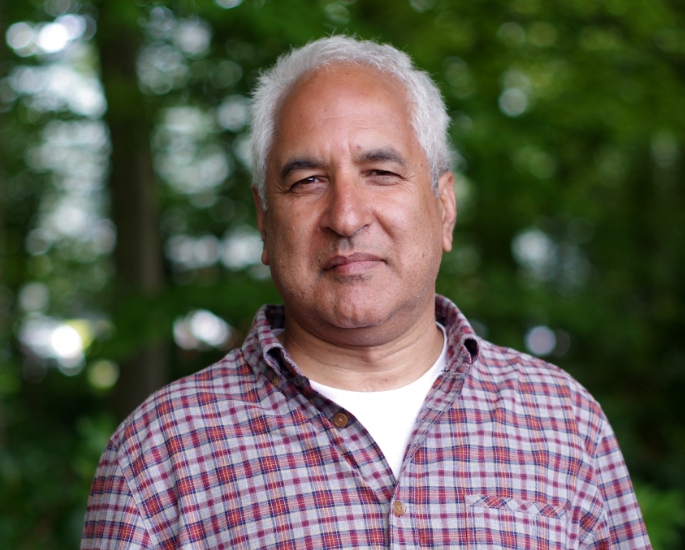
Some people might have seen that, but the way I saw it, my [Asian] heritage and British heritage became merged.
They weren’t two different heritages. They became integrated within me.
I was born in Kashmir but made in Birmingham.
Not wholly. My foundations started in Kashmir, but if I were a building, the foundations you don’t normally see would have to do with Kashmir.
The building you see was made in Birmingham and is unique to me.
Do you think there has been a change in the challenges and opportunities British Asians face?
Opportunities have always existed. I think what has changed is that Asians have started to take advantage of them more and benefit from them.
Less constrained by cultural taboos and cultural barriers that the community can create.
Like saying, “No one has done this particular job in our culture; why would you do it?” or “You’re a girl, no.”
There are internal barriers that communities create for themselves.
But also external barriers of racism and Islamophobia.
The wider world creates barriers; some existed when I came here, and others are new and different.
I think we’ve changed. I’ve been here for 54 years. More of our girls are going into education, and more of our boys are going into non-traditional jobs.
Non-traditional jobs include art, acting, music, and photography.
When I grew up, music was something low-status people like Meraasi and Baazighar did.
Anyone respectable would be doctors, engineers, and those kinds of roles.
You didn’t grow up and choose to dabble in things like music.
You talked about cultural barriers in the British South Asian community and external obstacles of racism. How did you navigate these barriers?
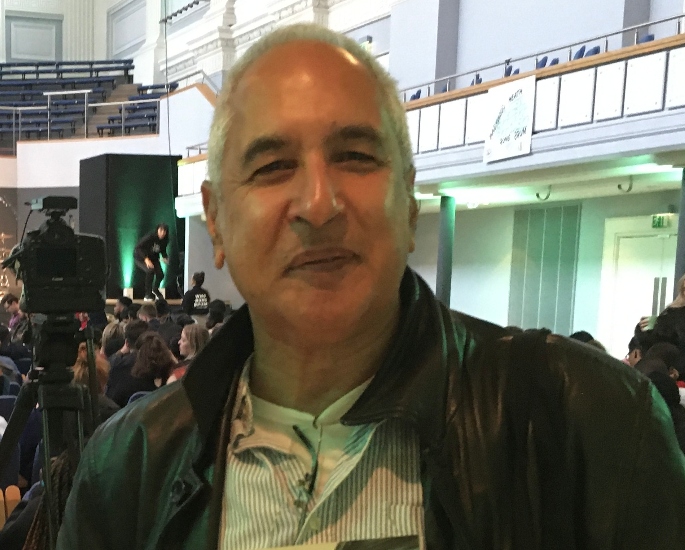
I had a mindset that said: “If you place a barrier in front of me, I will give 100% of my energy to knocking that barrier down.
“Please don’t put it in front of me.”
And that would be my advice to younger generations: knock them down.
There are two things you do. First, take advantage of the obvious opportunities that are there.
The other thing you do is the opportunities that are not there explicitly; you can do something to create those opportunities.
As an immigrant, you know the external world is hostile. The external world is trying to place barriers in your way.
You have to fight, face those barriers.
There will be different barriers in different generations. But there will probably always be some barriers that are internally imposed and created and some that are externally imposed.
There continues to be racial discrimination and structural and systemic discrimination. Sometimes discrimination might be complex; it can be ok with some ethnic minorities and not like others.
I think some things continue to be better today than before. We recently had an Asian Prime Minister, regardless of his politics; he was Asian.
There are several top jobs held by Black and Asian people. Which was not possible, which was not conceivable in the 50s when my father was in this country or when Asians first came here.
Karamat’s words offer insight into the complexities of being a first-generation Asian in Britain and navigating challenges, trauma, and opportunities.
Karamat grasped opportunities to enhance his education and go outside his comfort zone despite barriers.
He has also endeavoured to help create opportunities for himself and others to be heard and thrive.
Like many who arrived in Britain, he found a need for spaces of belonging and unity and helped create them.
For example, Karamat was involved in creating the Birmingham Asian Youth Association.
He also promoted kabaddi for young people, bringing Sikh, Muslim and Hindu communities together.
The racism and exclusion faced by first-generation migrants was a sharp strand of daily life.
As a teen and young man, Karamat lived with knowing that simply walking certain streets could lead to a beating.
His success as an Asian individual and professional highlights resilience in overcoming cultural, structural and societal barriers.
Karamat’s actions underscore how, despite enduring a “hostile environment”, it is possible to carve out a space for oneself.
He was fiercely resolute in knocking down any obstacles that blocked his progress toward achieving his goals.
Dr Karamat Iqbal’s words highlight the determination and resolve of first-generation British Asians as they faced inequalities, racism, and challenges.
Their resolve and hard work enabled them to carve out lives and helped shape the foundations of the Britain we know today.