
















































"you can appear healthy on the outside"
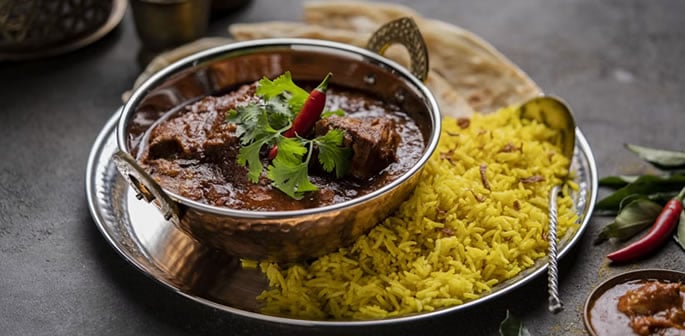
For millions of British South Asians, curry is more than a meal. It is family, celebration, tradition and a connection to cultural identity.
Yet South Asian food is increasingly caught up in a difficult conversation about type 2 diabetes, heart disease and fatty liver disease.
The assumption is easy to make: if these conditions are more common among South Asians, could the food eaten for generations be part of the problem?
The reality is far more complicated.
South Asian people have a higher risk of type 2 diabetes and cardiovascular disease than White European populations, and this risk can emerge at younger ages and lower BMI levels.
That does not mean curry causes chronic disease. Instead, it points to a complex interaction between genetics, body composition, family history, lifestyle, physical activity, diet and wider social and environmental factors.
For leading metabolic, regenerative and longevity medicine expert Dr Saima Ajaz, one of the biggest problems is that conventional ideas about weight can hide what is happening inside the body.
Chef Mehak Kansal offers another important perspective: healthier eating does not have to mean abandoning the food that connects South Asian families to their heritage.
Together, their insights challenge one of the most persistent misconceptions around South Asian health: that people must choose between cultural food and a healthy lifestyle.
Why South Asians can be at Risk at a Lower BMI
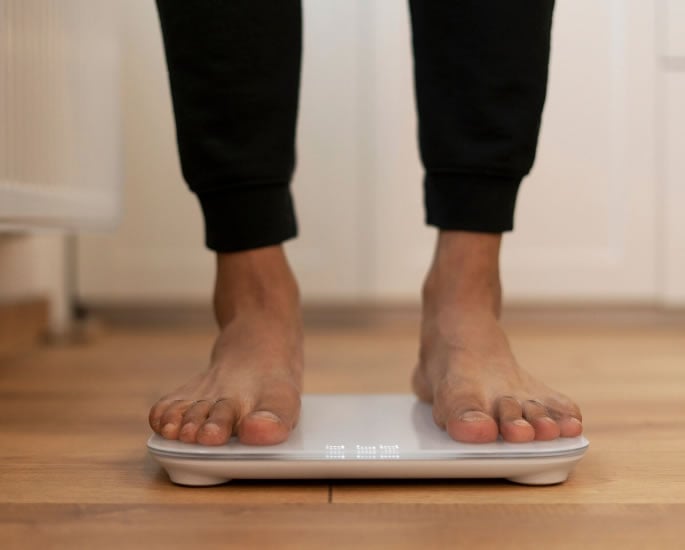
One of the biggest clues to the South Asian health paradox is what cannot always be seen.
BMI is useful for assessing weight at the population level, but it does not show where someone stores fat.
That distinction matters because South Asian people are more prone to central adiposity, meaning fat stored around the abdomen and internal organs.
Diabetes UK says people from South Asian backgrounds are more likely to store visceral fat around organs including the liver and pancreas. This can contribute to insulin resistance and increase the risk of type 2 diabetes.
NICE therefore recommends lower BMI thresholds when assessing South Asian adults.
For South Asian, Chinese, other Asian, Middle Eastern, Black African and African-Caribbean adults, NICE defines a BMI of 23 to 27.4 as overweight and 27.5 or above as obesity for clinical assessment.
These thresholds do not mean that someone with a BMI of 23 automatically has a disease. Instead, they recognise that cardiometabolic risk can occur at a lower BMI in these populations.
Diabetes UK also states that South Asian people have an increased risk of type 2 diabetes from age 25, compared with age 40 for White European people. It says type 2 diabetes is two to four times more likely among people of South Asian, African-Caribbean and Black African descent.
The difference is not simply about weight.
Family history, physical activity and other environmental factors can all influence an individual’s risk.
Diabetes UK says the precise reasons why ethnicity affects diabetes risk are still not fully understood, although South Asian people are more likely to experience insulin resistance at a younger age.
Dr Ajaz describes one consequence of this difference as TOFI, or Thin On the Outside, Fat On the Inside:
“The important message is that you can appear healthy on the outside whilst significant metabolic changes are occurring silently inside the body.”
That makes appearance an unreliable measure of metabolic health.
A person can look slim while carrying more visceral fat than their BMI suggests, particularly around the abdomen.
For this reason, waist circumference can provide useful additional information.
Diabetes UK advises South Asian men to keep their waist below 90cm, while the recommended threshold for women is below 80cm.
The wider lesson is that weight should be considered alongside blood pressure, blood glucose, cholesterol, waist measurement and family history rather than treated as a complete picture of health.
Is Curry really to Blame?
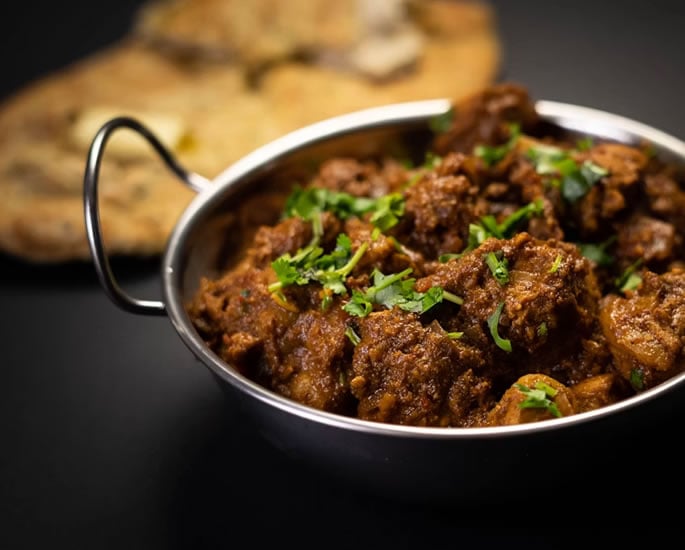
If the problem is not simply weight, it is tempting to look for a culprit on the dinner plate.
But blaming “curry” misses how diverse South Asian cuisine actually is.
Indian, Pakistani, Bangladeshi and Sri Lankan food traditions encompass vegetables, pulses, whole spices, fermented foods, fish, meat, dairy, grains and countless regional cooking methods.
Many of these foods fit comfortably within healthy eating guidance.
NICE recommends diets that include high-fibre, lower-glycaemic-index sources of carbohydrate, including vegetables, fruit, wholegrains and pulses. It also says dietary advice for people with diabetes should be sensitive to their culture and beliefs.
That is significant for South Asian communities because a healthy diet does not need to look “Western” to be healthy.
Mehak Kansal believes the perception that South Asians must abandon their traditional food is based on a false choice:
“I think a lot of British South Asians feel this false choice.”
“Either eat salads and grilled chicken to be healthy, or eat their cultural foods and feel guilty about it. But actually, a classic South Asian meal can be incredibly balanced if we lean into the traditional principles: fibre, protein, healthy fats. It’s a mindset shift.”
The more important question is how traditional foods fit into modern lifestyles.
Recipes can change across generations. Portions can become larger, while meals may contain more refined carbohydrates, sugary drinks, fried foods or ultra-processed products.
At the same time, many people now have more sedentary working patterns and less incidental physical activity.
None of those changes makes South Asian cuisine inherently unhealthy.
Instead, they can alter the overall balance of a diet and the amount of energy consumed.
This is why a vegetable-rich dal served with a sensible portion of rice is nutritionally different from a meal dominated by refined carbohydrates, fried foods and sugary drinks.
It also explains why individual ingredients should not be treated as either universally “good” or “bad”.
Kansal points to foods that have long been part of South Asian diets:
“Lentils and pulses, for example, are packed with protein and fibre and have been the foundation of our diets for generations.
“Spices like turmeric, ginger, cumin and fennel have long been valued not just for flavour but for their anti-inflammatory and digestive benefits.”
The evidence does support the nutritional value of pulses and high-fibre foods, but spices should not be presented as treatments for diabetes or heart disease.
Their greatest value is as part of a varied dietary pattern that makes healthy food enjoyable and sustainable.
That distinction matters because cultural food does not need to be removed from the equation. It may simply need to be balanced differently.
The Silent Disease hiding Beyond Weight

Type 2 diabetes is not the only chronic disease raising concern.
Metabolic dysfunction-associated steatotic liver disease, or MASLD, is another condition closely linked to metabolic health.
MASLD is the current medical term for liver disease associated with excess fat accumulation and metabolic dysfunction. It replaces the older term non-alcoholic fatty liver disease, or NAFLD.
The condition can be difficult to identify because people may have few or no symptoms, particularly during its earlier stages.
That means someone can feel completely well while metabolic changes are taking place in the liver.
In some people, MASLD can progress to more serious liver damage, including fibrosis and cirrhosis.
It also sits within a much wider network of metabolic disease. Type 2 diabetes, high blood pressure, abnormal cholesterol and excess visceral fat can all occur alongside metabolic liver disease.
For South Asians, the issue is particularly relevant because a relatively low body weight does not necessarily mean low metabolic risk.
Dr Ajaz highlights another challenge: “Another major challenge is awareness.
“In my published South London study of people with type 2 diabetes, awareness of fatty liver disease was alarmingly low.
“We found marked differences between ethnic groups, with South Asians having one of the lowest levels of awareness in our cohort.”
“This demonstrates that lack of awareness remains one of the biggest barriers to early diagnosis and prevention in the UK.”
The terminology surrounding fatty liver disease has changed, but the underlying message has not: metabolic health and liver health are closely connected.
The British Liver Trust says around 90% of liver disease is preventable, underlining the importance of prevention and earlier intervention.
South Asians also face a substantial cardiovascular burden.
British Heart Foundation-backed research found that South Asian men in the UK had almost twice the risk of coronary heart disease compared with White European men in a large, long-term study. Even after accounting for established risk factors, South Asians retained a higher risk.
This helps explain why the conversation cannot be reduced to whether someone is overweight.
Metabolic health involves interconnected systems, including blood sugar regulation, blood pressure, cholesterol, fat distribution and liver function.
How South Asians can Eat for Better Health

The solution is not to replace dal with salad or curry with grilled chicken.
It is to make familiar meals work within a healthier overall pattern.
Kansal’s approach centres on making small changes without stripping food of its cultural meaning.
She told DESIblitz: “Most importantly, it’s about shifting the mindset that healthy eating means eating Western food or following restrictive diets.
“Our cultural foods can absolutely be part of a healthy lifestyle.
“The goal is to make small, realistic adjustments that families can stick to, so they can continue celebrating their food and heritage while improving their long-term health.”
That philosophy is consistent with current NICE guidance.
NICE recommends flexible, individualised dietary approaches that consider food preferences and cultural preferences. It also says dietary improvements can provide health benefits even when they do not lead to weight loss.
For a South Asian household, practical changes could include increasing vegetables and pulses, choosing higher-fibre carbohydrates, moderating portions and reducing foods high in saturated fat, added sugar and excess calories.
It can also mean changing how often certain foods are eaten rather than banning them.
A rich dish enjoyed occasionally is different from an energy-dense meal forming the basis of every day.
Physical activity is another important part of prevention.
NICE identifies physical inactivity as a risk factor for type 2 diabetes and recommends lifestyle interventions that combine dietary changes with increased physical activity.
For people at increased risk, prevention should also involve appropriate health checks.
South Asian adults should not wait for obvious symptoms before discussing their risk with a GP.
Blood glucose testing can identify prediabetes or diabetes, while blood pressure and cholesterol assessments can help identify cardiovascular risk.
A GP can also consider whether liver investigations are appropriate based on an individual’s medical history and risk factors.
People with a family history of type 2 diabetes should be particularly alert. Diabetes UK says having a parent, brother, sister or child with type 2 diabetes makes someone two to six times more likely to develop the condition.
This does not mean that having a family history makes diabetes inevitable.
It means risk can be recognised earlier, creating an opportunity to act.
The hidden link between curry, culture and chronic disease is not that South Asian food is inherently unhealthy.
It is that an inherited susceptibility to metabolic disease can intersect with changing diets, sedentary lifestyles, family history and other environmental factors.
For some South Asians, that risk can emerge at a lower BMI than conventional health messaging suggests.
That is why TOFI is such an important concept.
Someone can look healthy, eat relatively modestly and still carry metabolic risk that cannot be seen in the mirror.
But the answer is not fear, guilt or abandoning cultural food. It is better awareness, earlier risk assessment and practical changes that make traditional meals work within a balanced diet.
South Asian cuisine already contains many of the building blocks of healthy eating, from pulses and vegetables to herbs and spices.
The challenge is adapting those traditions to modern lifestyles without losing the culture that gives them meaning.
For British South Asians, that could be the most important shift of all: health does not have to mean choosing between the food you love and the future you want.