
















































“These findings are very alarming"
School lunches are supposed to give children the fuel they need to learn, but a new report suggests many are being served unhealthy food far too often.
Three-quarters of secondary schools in England were found to be breaking government food standards in a review of almost 400 schools.
Crisps, chocolate, pastries and processed meats were among the foods being offered more frequently than the rules allow.
Some schools were also serving burgers, sausages and hash browns too often, while unhealthy snacks were reportedly available as early as breakfast time.
The findings have sparked concern among health campaigners and put fresh scrutiny on what children are being offered during the school day.
What are Schools in England Getting Wrong?
An analysis of menus from 391 state secondary schools in England found that three in four had at least one breach of the government’s school food standards.
The research was carried out by Bite Back, a food charity founded by chef Jamie Oliver.
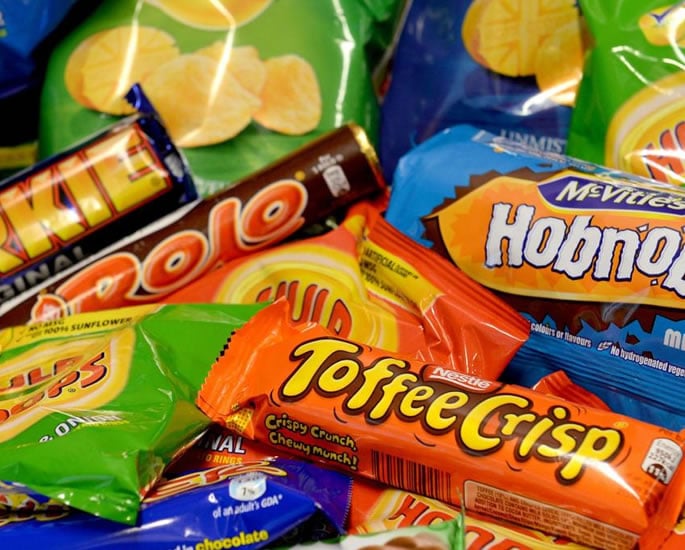
The most common breaches involved schools offering foods high in fat, sugar or salt more often than the rules allow. At 206 schools, or 53%, banned snack products were available for pupils to buy.
These included crisps, Oreos, Mini Cheddars, chocolate bars and pastries. School food standards state that snacks should be limited to nuts, seeds, plain vegetables and plain fruit.
Meat products were also a major concern. At 224 schools, or 57%, burgers, nuggets, sausages and goujons were served more than the permitted twice a week.
Fried starchy foods were another issue, with hash browns being served too frequently at 144 schools, representing 37% of those analysed.
A further 123 schools, or 31%, used solid chocolate in desserts or baked goods despite this being prohibited.
D’Arcy Williams, Bite Back’s chief executive, said: “These findings are very alarming and expose a system that is fundamentally failing our children.
“It is shocking to find crisps and chocolate being pushed at breakfast time or processed meats like sausage rolls and bacon baps being served far more frequently than the rules allow.
“Young people have been telling us for years that their school food is ‘beige, bland and boring’ and now we have more evidence that they are being surrounded by unhealthy food throughout the school day.
“Schools should be a sanctuary for health and learning, yet the current postcode lottery of food quality is undermining that mission.”
However, the analysis also found that most schools were complying with some of the stricter restrictions.
Only eight schools (2%) were found to be selling confectionery such as KitKats, Haribo sweets and Maltesers as standalone items.
Just three schools, equivalent to 1%, were found to be selling banned sugary drinks, including Coca-Cola, Pepsi, Fanta and Sprite.
Why are School Food Standards under Scrutiny?
Health campaigners have warned that the findings highlight wider concerns about children’s exposure to unhealthy food.
Katharine Jenner, executive director of the Obesity Health Alliance, said:
“Schools should be one of the places where we can be confident children are being given nutritious food.
“Yet this research suggests too many are still being routinely exposed to processed meat, fried foods, pastries and confectionery beyond what the standards allow.
“Children are already growing up surrounded by unhealthy food across the wider food system, from what is marketed to them to what is promoted in shops.
“If we can’t even get the food environment right in schools, where children spend such a large part of their lives, then we have a serious problem.”
The findings come as ministers prepare to overhaul school food standards in England. Child health and anti-obesity organisations have been calling for changes to the rules for several years.
The government is also expanding access to free school meals from the start of the new academic year.
Under the changes, all pupils in households receiving Universal Credit will qualify for free school meals in England.
The Department for Education acknowledged that some schools were not following the existing standards.
A spokesperson said:
“We want every child to be healthy, happy and ready to learn, and nutritious food plays a vital role in helping them achieve that.”
“That’s why we are delivering the most ambitious overhaul of school food in a generation, making sure children have access to healthy, balanced meals, get more of their five a day and are protected from the harms of eating too much ultra-processed food.
“We know not every school is following these standards, which is exactly why we will introduce a strengthened enforcement regime, alongside requiring every school to publish their food policy and menus online to improve transparency for parents.”
For parents, the issue is not simply what appears on a school menu, but how often children are being offered foods that are supposed to be limited or excluded.
With ministers preparing to overhaul the rules, the findings put renewed pressure on the government to ensure those standards are more than guidelines on paper.
Schools should be places where healthy choices are accessible and normal, rather than another setting where children are surrounded by unhealthy options.
The coming changes will show whether England can close the gap between the food standards it sets and the food children actually eat at school.