

















































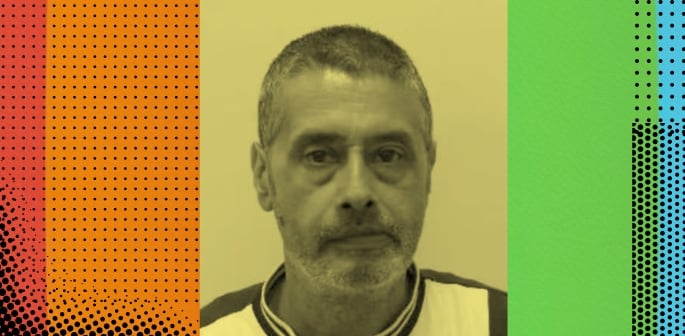
"Dhillon abused a position of trust in the most serious way."
A serving magistrate has been jailed as part of a Metropolitan Police investigation that dismantled an organised crime network responsible for supplying heroin and crack cocaine across the capital.
Four members of the network were jailed for a combined total of 25 years after detectives uncovered a sophisticated operation that distributed Class A drugs worth more than £100,000 between October 2024 and July 2025.
The investigation identified 59-year-old Purshotam Dhillon, a serving magistrate at the time of his arrest, as a trusted associate within the network led by Hardeep Thind.
Dhillon, of Hounslow, was jailed for seven years.
Thind, also known as Harry Singh, was jailed for 12 years and six months.
Bikramjit Brar, of Hayes, was jailed for three years and four months, while Leandrea Lynch received a suspended sentence of two years and six months.
Detective Inspector Mark Gavin, from the Met’s Specialist Crime unit, said:
“This was a complex and far-reaching investigation that uncovered a well-established organised crime network responsible for supplying significant quantities of Class A drugs across London.
“The team’s extensive work enabled us to identify, disrupt and dismantle a group whose actions would have been causing serious harm to communities.
“As a serving magistrate, Dhillon abused a position of trust in the most serious way.
“This case demonstrates that no one is above the law, and those who engage in criminality will be held accountable.
“County lines are far more than drug dealing – they exploit the vulnerable and fuel violence. We remain committed to relentlessly pursuing those responsible.”
Inside the Criminal Network
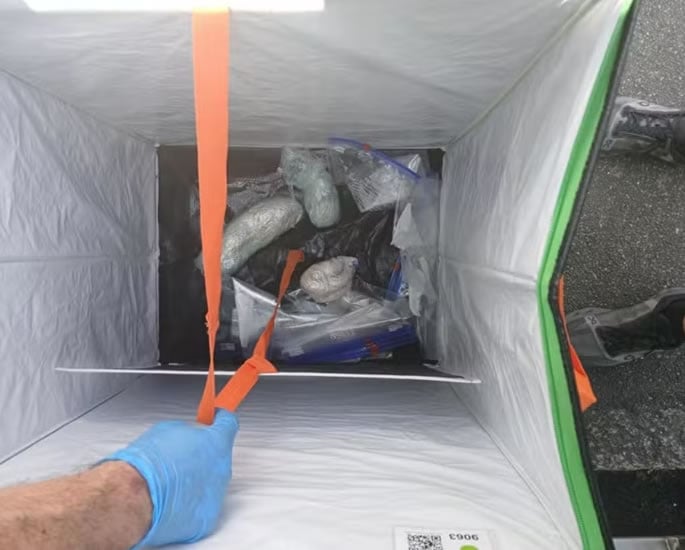
The investigation began in January 2024 when Met Police officers targeting London’s drug supply networks identified a prolific drugs line known as “Hadi”, which was supplying heroin and crack cocaine across west London.
Through extensive analysis of phone records, detectives identified Hardeep Thind as the central figure within the operation.
At the time, Thind was already serving a 17-year prison sentence for conspiracy to supply heroin and cocaine, as well as possession of a prohibited automatic weapon, namely a Skorpion submachine gun.
Despite being incarcerated in an open prison, where he had access to a mobile phone, investigators found that Thind continued directing the operation through a burner phone.
After his release in October 2024, Thind quickly resumed criminal activity, expanding the network and recruiting dealers across Hayes and Southall.
Investigators discovered that he maintained contact with all key members and coordinated multiple drugs lines simultaneously.
Police identified a clearly defined hierarchy within the organisation.
Thind operated as the leader, directing supply routes and managing associates.
Dhillon, who described himself as a drug addict, stored drugs, cash and equipment for the group.
Bikramjit Brar distributed drugs on behalf of the network, while Leandrea Lynch acted as a runner, facilitating supply and communications.
Several other members of the wider criminal enterprise had already been arrested and convicted during the investigation, highlighting the scale and organisation of the operation.
How Forensic Evidence exposed the Crime
Detectives built their case through a combination of call data analysis, surveillance operations, forensic examinations and mobile phone downloads.
Investigators established that all members of the network communicated regularly, with Thind consistently emerging as the central contact.
Mobile phone location data also showed members frequently gathering at the same locations.
Forensic evidence directly linked Thind to substantial quantities of heroin recovered from one of the vehicles under his control.
Officers also identified the same rare drug-cutting tool across multiple seizures connected to the operation.
Phone downloads provided further evidence of the network’s activities.
Investigators recovered voice notes in which Thind discussed controlling drug lines and was referred to as “the plug”, a term commonly used to describe a high-level drug supplier.
On July 1, 2025, officers carried out coordinated raids across west London, executing multiple warrants and arresting all four defendants at their homes.
Searches of addresses and vehicles uncovered significant quantities of heroin and crack cocaine, alongside drug packaging equipment, digital scales, large sums of cash, mobile phones and drug transaction records.
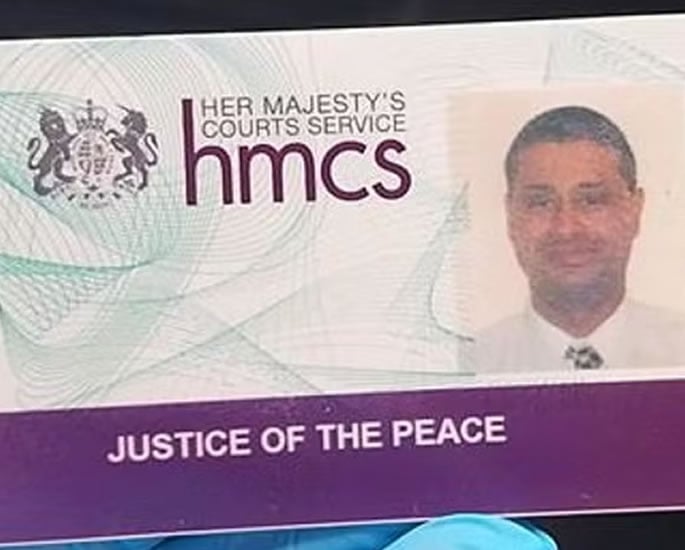
Investigators found that Dhillon had used his position as a serving magistrate to provide an appearance of legitimacy to the criminal operation.
Officers discovered he had allowed a van linked to Thind, which contained substantial quantities of heroin, to be parked outside his home and permitted drugs to be weighed and packaged inside the property.
The total street value of drugs seized during the investigation was estimated at around £174,000.
All four defendants were charged on July 3, 2025, with offences relating to the supply of Class A drugs, alongside additional charges including possession with intent to supply and possession of an offensive weapon.
Thind and Brar pleaded guilty to two counts of being concerned in the supply of heroin and cocaine.
Dhillon and Lynch were convicted by unanimous jury verdicts at Croydon Crown Court on May 8, with Thind also receiving an additional sentence for dangerous driving.
Two further members of the network who pleaded guilty to drugs offences were sentenced separately in July 2025.
The Metropolitan Police said dismantling organised drug networks remains a priority because of their links to violence, exploitation and wider criminality.
In 2025, officers disrupted serious and organised crime groups on 21,231 occasions, representing a 63 per cent increase compared with 2024.