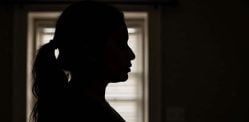















































“What happened to me has changed every part of my life."
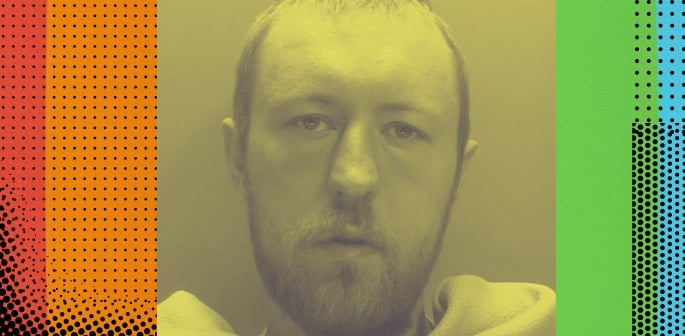
John Ashby has received a life sentence for raping a Sikh woman in her own home in a religiously aggravated attack.
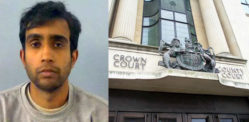
The 32-year-old was sentenced at Birmingham Crown Court after admitting rape, robbery, intentional strangulation and religiously aggravated assault following a brutal attack in Walsall, West Midlands, in October 2025.
Ashby followed the woman home after spotting her on a bus from Walsall town centre before breaking into her house armed with a metre-long stick.
He wrongly believed she was Muslim and subjected her to a 24-minute ordeal involving rape, strangulation, physical assault and repeated racist abuse.
Prosecutors said there is no other case on record in England and Wales of someone being convicted for a religiously motivated rape.
Mr Justice Pepperall said Ashby attacked the woman because she was Asian, wrongly believing she was Muslim, and described him as a “deeply unpleasant racist and Islamophobe”.
He added the attack involved “additional degradation and humiliation” and said the life sentence, which is rare for a single rape, was justified because Ashby was so dangerous, particularly to women.
Ashby must serve a minimum term of 13 and a half years before he can be considered for release.
After his arrest, Ashby, who had been staying in Perry Barr, Birmingham, told officers:
“You never see any Englishmen in Perry Barr anymore.”
He changed his plea to guilty on April 21, the day after his trial began, after being told to “sort your s**t out” by a member of the public who approached the dock.
The judge also praised the victim, who returned to court after suffering a panic attack during sentencing.
He told her: “I have nothing but admiration for your bravery.”
The woman said: “I wanted him to explain why he did this to me.”
A 24-Minute Ordeal
Birmingham Crown Court heard the woman arrived home just before 6:30 pm on October 25, 2025, and was in the bathroom when Ashby broke in.
He forced her to undress and repeatedly called her a “f***ing Muslim b***h”, even after she told him she was Sikh.
The court heard he made reference to his Britishness during the assault, slapping and punching her while saying: “I am the master.”
He also forced her to repeat the abuse back to him, made her sit in a bath while pouring water over her, and ordered her to say the word “hallelujah”.
When she tried to escape, he dragged her back and continued the attack.
The woman called 999 during the assault, with her “howls of anguish” heard on the emergency call.
Rav Dhillon, the senior crown prosecutor who oversaw the case, said:
“He was clearly filled with so much hatred that that’s what seems to have motivated him.”
The Guardian also reported Ashby had watched anti-women material on social media, including content from influencer Andrew Tate, before the rape.
Weeks before the attack, Ashby had allegedly racially abused hospital staff while being treated for psychosis caused by drug use.
He had also recently been released from prison after being detained for a violent offence.
The judge heard he was discharged from hospital without the required care being put in place.
In her victim impact statement, the woman said:
“What happened to me has changed every part of my life.
“I feel lost and I struggle to recognise myself. I feel like my sense of safety, in myself and my surroundings, has been taken away from me.”
She said she suffered flashbacks, anxiety and fear at every noise.
When alone in the house, she locked herself in her room and said she had not told her family in India because she feared they would blame themselves for allowing her to move to the UK two years ago.
She has since quit her job and now stays at home.
Despite the trauma, she said she wanted to face Ashby in court.
“Despite the distress I was feeling … I knew I had to be brave and strong. It took everything in my being to come to court.”
“I knew I would have to relive and go through the horrendous incident again, but I was willing to do it, to show that I would no longer let this person and incident control my life.
“I wanted to face the person who had done this to me, see him eye to eye.”
Dabinderjit Singh, of the Sikh Federation (UK), said: “The severe racist element of the attack has been highlighted in the court proceedings and sends a strong signal to all racists that carry out violent attacks.”
Sikh Women’s Aid, which supported the victim throughout the case, also welcomed the sentence.
Its chair, Sukhvinder Kaur, said: “At the centre of this case is an exceptionally brave survivor whose strength, dignity and resilience have been extraordinary.”