

















































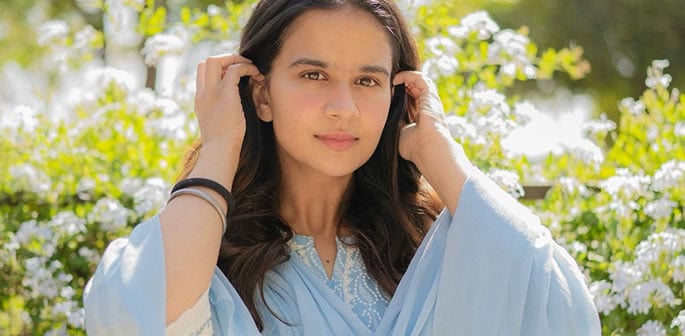
Her performance stood out because it felt natural
Roopi Gill’s rise has not followed the usual path of overnight fame.
Her journey has been built through gradual growth, from appearing in Punjabi music videos to taking on leading film roles and eventually bringing Punjabi storytelling to an international audience.
Born in Punjab, Roopi spent much of her early childhood with her grandparents while her parents settled in Canada.
Moving abroad meant adapting to a new culture and environment at a young age, an experience that shaped her confidence and resilience.
Before acting became her career, Roopi had imagined a very different future and dreamed of becoming a police officer.
However, her creative journey began when she entered the Punjabi entertainment industry through music videos, where her expressive performances quickly caught attention.
That early exposure helped her develop a connection with audiences, but Roopi knew that moving into films would require more than recognition.
She focused on building herself as an actor, eventually making the transition from music videos to Punjabi cinema.
Entering the Film Industry
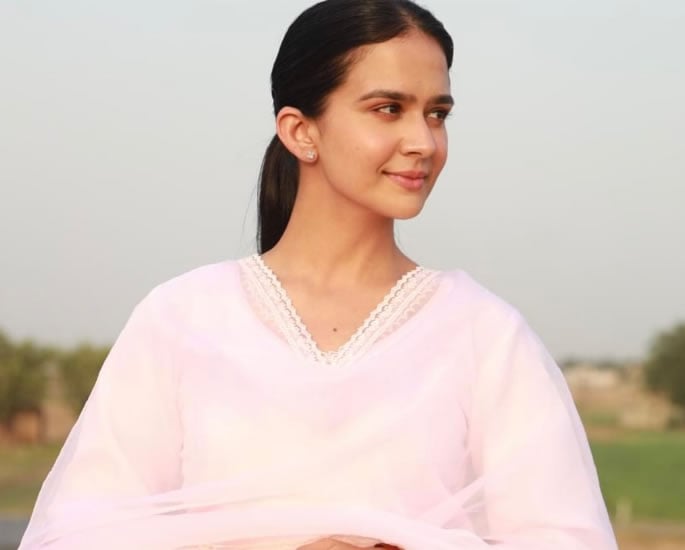
Roopi Gill’s breakthrough arrived in 2018 with Ashke, her first Punjabi film.
Starring opposite Amrinder Gill, she played Noor, a young woman whose confidence and warmth made her instantly memorable.
The film became a major success, but its importance for Roopi went beyond box office numbers. It proved that she could move beyond music videos and hold her own in a feature film.
Her performance stood out because it felt natural rather than manufactured.
Noor was not simply written as a supporting character; Roopi brought personality and emotional honesty to the role, helping audiences connect with her journey.
Following Ashke, she continued to explore different sides of herself as an actress.
In Laiye Je Yaarian (2019), she played Raunak, a character navigating love, friendship, and ambition.
The role showed a more mature side of Roopi’s acting and reinforced her ability to portray women with their own goals and personalities.
She later stepped into different genres with films including Shava Ni Girdhari Lal and Beautiful Billo, demonstrating that she was not limited to one type of character.
Why was Bibi Rajni an Important Moment?
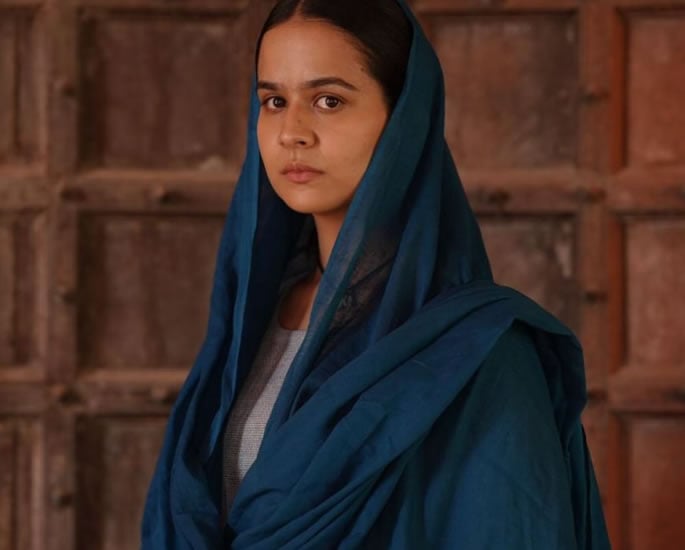
While Roopi had already established herself in Punjabi cinema, Bibi Rajni (2024) marked a significant stage in her development as an actress.
Taking on the title role, Roopi portrayed Bibi Rajni, a figure remembered for her faith, patience, and strength. The film required a performance built around emotional control and inner resilience.
Rather than relying on dramatic moments alone, Roopi focused on capturing the character’s devotion and personal struggles.
The role allowed her to lead a film centred on a powerful female figure and introduced her to audiences looking for meaningful storytelling.
Her award-winning performance in Bibi Rajni also reflected a wider trend within Punjabi cinema, where filmmakers are increasingly exploring stories rooted in history, culture, and community.
She continued this momentum with Majhail (2025), playing Basant Kaur and adding another layered character to her growing filmography.
Taking Punjabi Cinema to Cannes
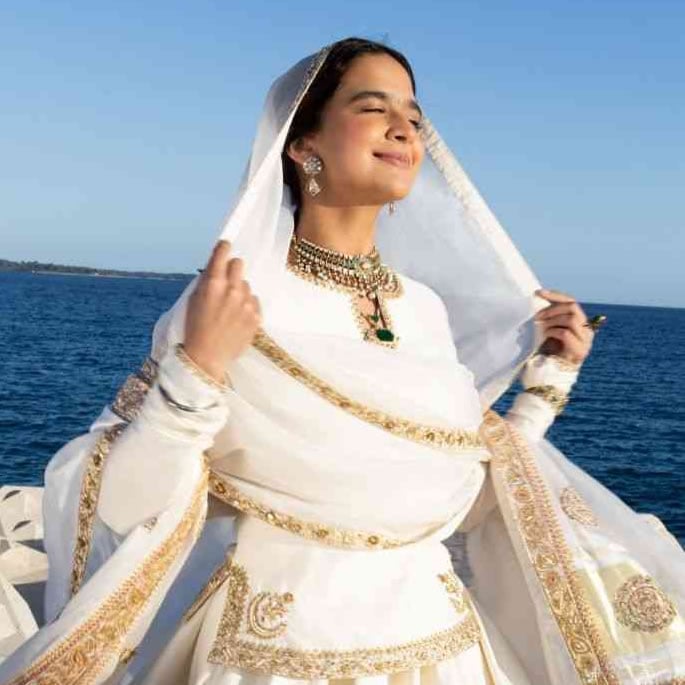
The biggest international moment of Roopi Gill’s career came in 2026 when she represented Punjabi cinema at the Cannes Film Festival with Chardikala.
Directed by Amarjit Singh Saron, the film was showcased at the Marché du Film, Cannes’ official film market. It tells the story of Bibi Bimal Kaur, a nurse whose life changes after she is falsely implicated in a major case.
Roopi’s portrayal of Bibi Bimal Kaur placed her at the centre of a story exploring injustice, resilience, and survival.
However, her Cannes appearance was significant beyond the film itself.
Roopi used the global platform to celebrate Punjabi heritage, wearing an ivory outfit inspired by Punjab’s royal traditions and featuring traditional craftsmanship and Gurmukhi motifs.
At a festival known for international fashion moments, her appearance stood out because it connected celebrity style with cultural identity.
Her presence at Cannes reflected the growing ability of Punjabi cinema to reach audiences beyond its traditional boundaries and introduce regional stories to a global audience.
Roopi Gill’s story is one of gradual transformation.
From a child adapting to a new country, to a familiar face in Punjabi music videos, to an actress representing Punjabi cinema internationally, each stage of her journey has shaped the performer she is today.
Her success has come through taking on diverse characters and allowing her craft to develop with every project.
Films such as Ashke, Bibi Rajni, and Majhail have helped establish her as one of the notable actresses of contemporary Punjabi cinema.
As Punjabi films continue to find audiences worldwide, Roopi Gill represents a generation of artists helping bring the region’s stories, culture, and creativity to a much larger stage.
Her Cannes appearance may have been a milestone, but it is another chapter in a journey that continues to evolve.