












































“This isn’t just a sport. It’s our heritage."
Bull racing in rural Pakistan is not just a sport, it is a living, breathing embodiment of heritage, community, and cultural pride.
Across dusty plains and narrow village tracks, the pounding of hooves and cheers of spectators signal more than a contest of strength and speed.
They celebrate a way of life, one that has weathered time, colonial repression, and modernity.
This traditional sport still draws thousands across the heartlands of Punjab and Sindh, where honour, rivalry, and legacy are tightly interwoven.
From the bond between jockey and beast to the pride of an entire village, bull racing captures the raw, untamed spirit of rural Pakistan.
The History of Bull Racing
Bull racing in Pakistan is steeped in history.
Some claim its roots stretch as far back as the Indus Valley, though evidence remains anecdotal.
In agrarian communities, it served a dual purpose, celebrating the harvest and testing the vigour of bulls.
Ghulam Hassan, a village elder in Punjab, says: “This isn’t just a sport. It’s our heritage.”
His sentiment echoes across generations.
The tradition survived the British colonial era, which saw a decline in native practices. Yet, in rural pockets, passionate individuals kept the sport alive.
After independence, it regained prominence as a symbol of identity and cultural pride.
Today, it remains a fixture of rural life, honouring ancestral customs.
Heartlands
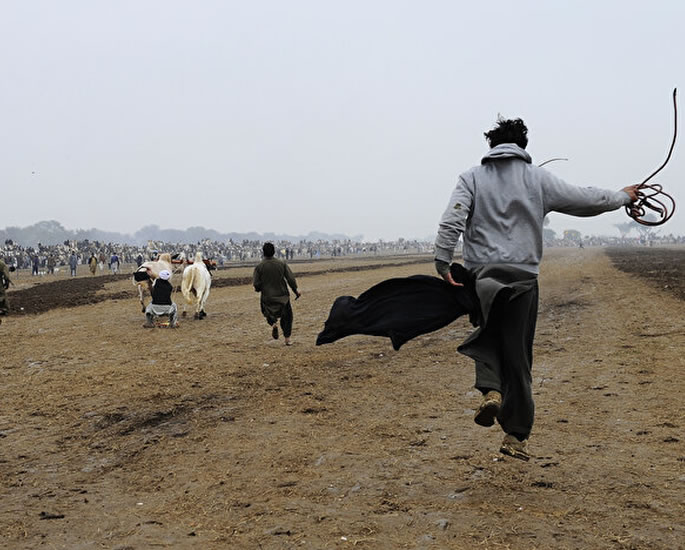
Punjab and Sindh are the strongholds of bull racing. These provinces, with their sprawling farmlands and pastoral communities, offer the perfect backdrop.
In Punjab, districts like Layyah, Bahawalpur, and Muzaffargarh are known for large festivals that draw crowds in the thousands.
Races are often tied to local religious or cultural events, transforming village tracks into roaring arenas.
In Sindh, areas around Larkana and Sukkur carry the same enthusiasm.
One farmer says:
“Our bulls are our pride. They represent our village’s honour.”
The terrain – flat, open, and expansive – allows for long, dusty tracks. These races forge a unique unity, drawing people together across class and background.
What are the Rules?
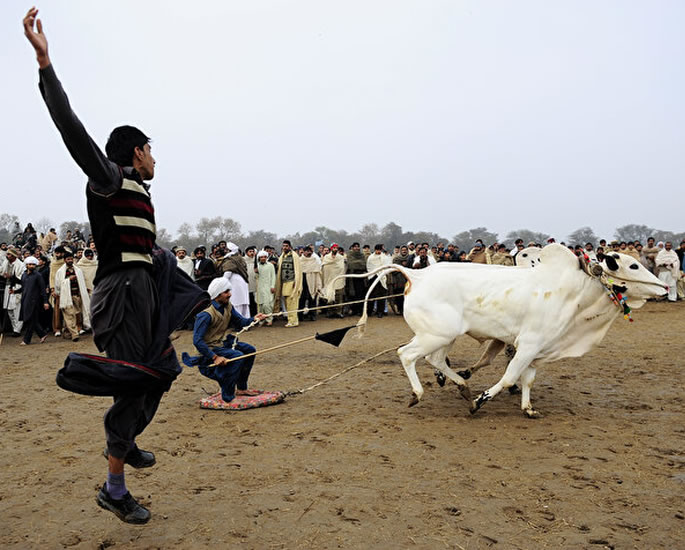
Bull racing in Pakistan follows a distinct set of customs and formats.
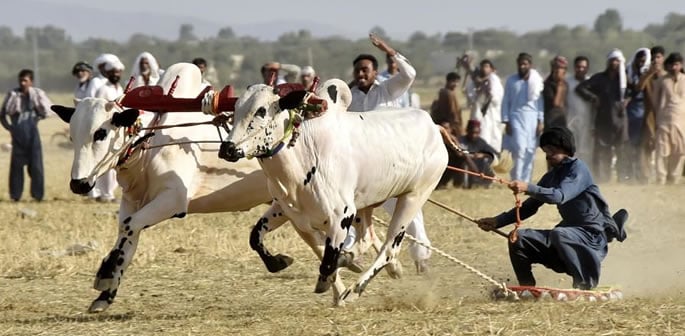
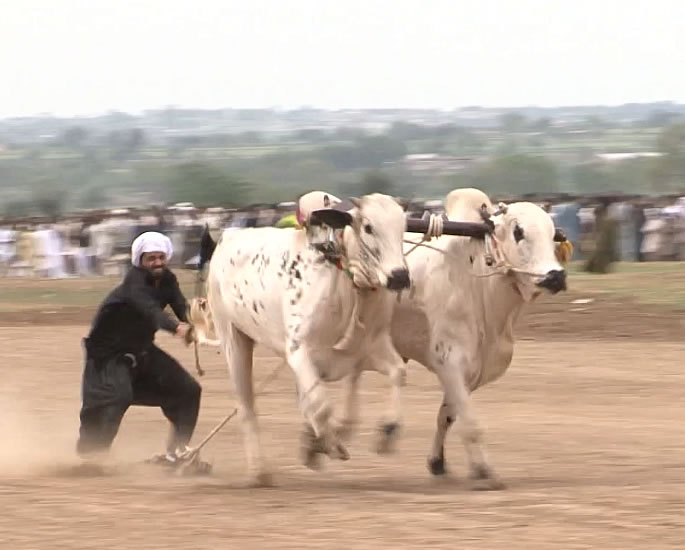
Typically, two bulls are yoked to a gada, a small platform for the jockey to stand on.
The jockey balances precariously on the wooden plank, guiding the bulls with calculated precision.
The goal is simple: cross the finish line first. Races are run in heats, with winners progressing to final rounds. The track, usually a kilometre long, tests both stamina and speed.
Rituals precede every race. Bulls are adorned with vibrant decorations. Owners seek blessings for victory, and jockeys steel themselves mentally.
Rivalries between villages often fuel the atmosphere. These rivalries are generational, with each race carrying the weight of its legacy.
Prized Bulls
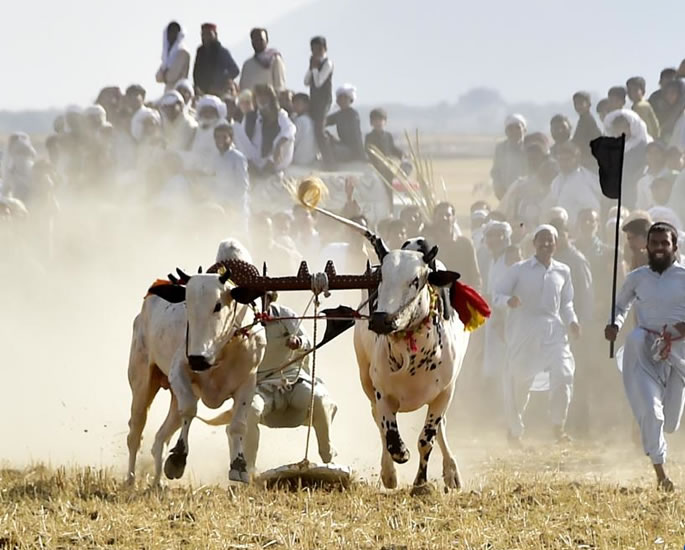
The real stars of the sport are the bulls themselves.
These animals are raised with meticulous care. Owners feed them diets rich in milk, butter, almonds, and protein supplements.
Training starts young, with bulls learning to race in pairs and respond to commands.
Veterinary care, massages, and grooming are routine.
A winning bull is not only a source of pride but can also fetch substantial sums, sometimes worth thousands of rupees.
Sardar Haseeb, whose family has organised races for generations, explains:
“This isn’t just entertainment. It’s tradition.
“We take pride in our animals. Farmers and landowners raise their bulls year-round just for this moment.”
“People are willing to pay high prices for a winning bull. It becomes a symbol of pride.”
In many communities, bulls are seen as a sign of prosperity and are treated with reverence.
Daredevil Jockeys
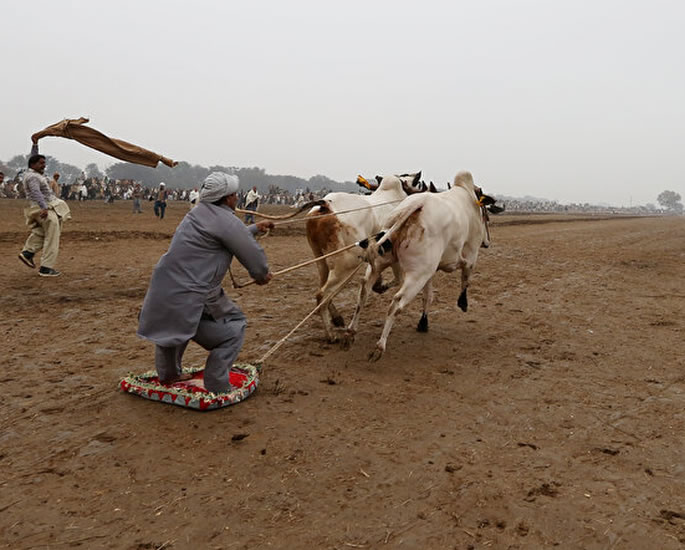
Daredevil jockeys guide the beasts across perilous tracks.
Balancing on wooden planks while steering powerful animals at high speeds requires agility and nerves of steel.
Many learn the craft from older family members, continuing a long-standing lineage of skill.
The relationship between jockey and bull is built on trust, with movement of the reins and instinct needed to claim victory.
The risks are real as it is not uncommon for bulls to unseat the jockeys, sending them tumbling through the dust.
Despite the danger, these jockeys are unsung athletes, central to the spectacle.
Cultural Significance
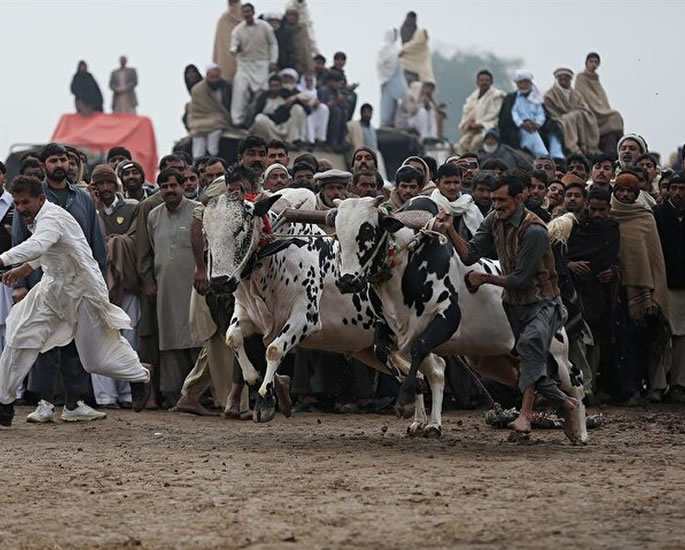
Bull racing is deeply embedded in rural life in Pakistan.
It is more than just a competition, it’s a celebration of identity and community spirit.
Races are usually part of broader village fairs or festivals that include traditional music, dance, and food.
The bustling scene generates income for local vendors, who benefit from the celebration of culture.
The sport also plays a crucial role in preserving tradition.
It keeps ancient practices alive and offers younger generations a link to their roots.
In a rapidly modernising world, bull racing remains a bastion of rural culture and intergenerational continuity.
It highlights a relationship between humans and animals that is both practical and emotional, formed through years of coexistence in agricultural settings.
Animal Welfare Debates
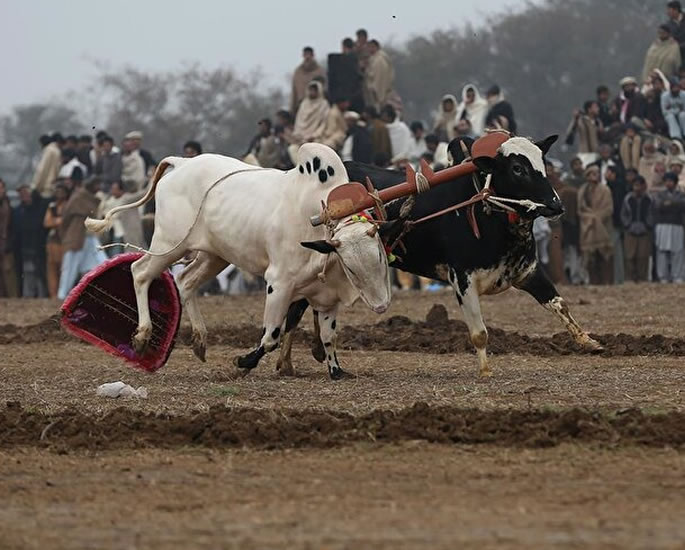
Although bull racing is a popular sport in Pakistan, questions around animal welfare are present.
Animal rights groups have raised concerns over treatment, especially the use of whips, overtraining, and the physical strain of long-distance races.
The welfare of the bulls, though valued by most owners, is not always protected by formal regulation. However, the conversation is changing.
Veterinary checks are increasingly being introduced at major races.
There have been calls for restrictions on harsh practices, though implementation remains inconsistent.
Balancing cultural heritage with humane treatment is a challenge.
Still, the community is beginning to take steps towards responsible evolution. Awareness campaigns and guidelines from animal welfare groups are helping push the sport in a more ethical direction.
The Future of Bull Racing
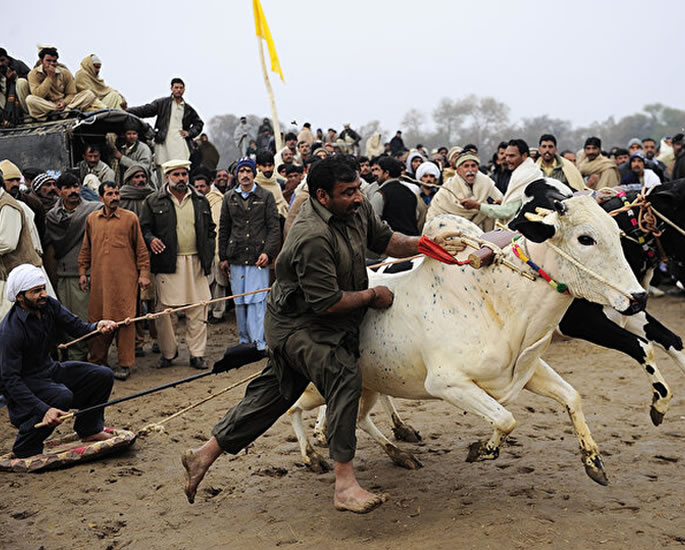
Bull racing in Pakistan faces an uncertain yet hopeful future.
Urbanisation, dwindling interest among youth, and growing scrutiny over animal rights all present challenges.
However, efforts are being made to ensure the sport endures.
Local governments in some districts provide logistical support and funding at the provincial level, but these are not widespread or consistent.
There’s an emerging consensus that the sport can modernise without losing its soul. Infrastructure improvements, such as safer tracks and formal race regulations, could enhance both safety and fairness.
Improved veterinary support would further bolster the welfare of the animals. These steps are essential if the sport is to thrive in the 21st century.
Bull racing in Pakistan is a breathtaking display of strength, skill, and tradition.
It brings together man and beast, village and community, past and present.
Though it faces modern-day challenges, its cultural significance cannot be overstated.
With responsible stewardship and evolving practices, this ancient sport can continue to thunder across the fields.
The hooves may kick up dust, but the legacy they carry runs deep. As long as the bulls run, the heart of rural Pakistan beats strong.