














"I’m still good enough to compete internationally"
Aneela Rose’s powerlifting journey began almost by accident after an injury changed the direction of her sporting career.
Having started strength training to support her javelin, she discovered she had a natural ability for lifting and entered her first powerlifting competition in 2016.
Two years later, she won World Championship gold in her age and weight class, beginning an international career that has continued into her 50s.
Alongside competing, Aneela has balanced training with running her PR agency, raising two teenagers and adapting to the physical changes of menopause.
In recent years, she has also taken her strength outside traditional competitions, from the Arctic to the Dubai desert.
In an interview with DESIblitz, Aneela Rose discusses her powerlifting journey, returning to the World podium and continuing to challenge her own limits.
Eight years after World Gold
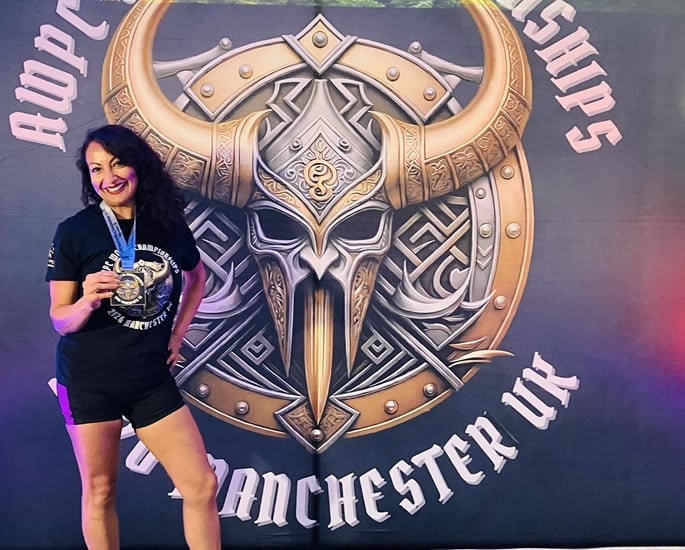
Aneela Rose returned to the World Championship podium in Manchester eight years after winning gold in her age and weight class in 2018.
Her silver came when she was balancing competition with life changes:
“Given that I’m older and going through menopause now, having dealt with some of the physical challenges that come with hormonal changes, reaching this level again has been a massive confidence boost.
“Eight years is a long time in sport and I’m a very different athlete now. I’m in my 50s, still running a business, mum to two teenagers, yet I’m more committed to my sport than ever!”
Despite getting older, Aneela is stronger than ever:
“What I love is that I’m actually stronger now than when I started. We hear so much about what gets worse for women as we get older, but not nearly enough about what can get better.
“When my name was called out and I stood on that podium, eight years after winning gold in my age and weight class, I remember thinking, ‘Wow, I’m still here’.
“I’m still good enough to compete internationally, and I’m still learning what I’m capable of. That means a lot.”
Facing a Setback
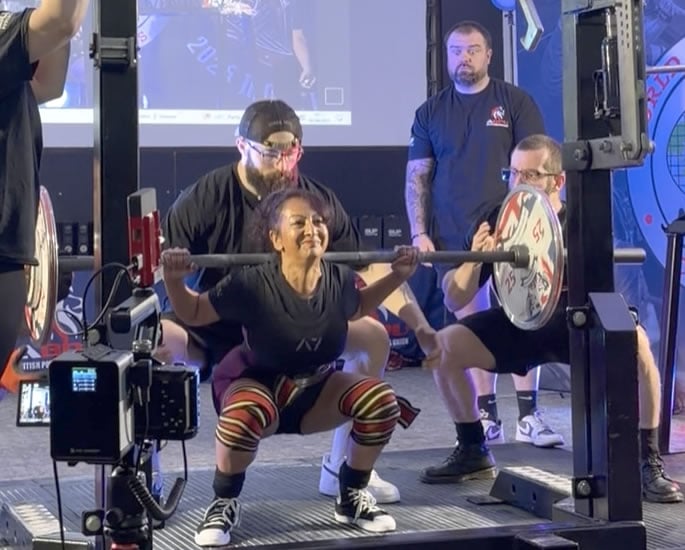
The silver medal followed a difficult April competition in Nottingham, where Aneela Rose failed all three squat attempts and was eliminated before reaching the bench press or deadlift.
Aneela admits: “It was horrible! I failed my opening squat at 80kg, a weight I warm up on in training and then went on to fail the other two attempts.
“That meant I was out of the competition before I even reached bench press or deadlift.”
She entered Nottingham expecting to qualify for the British Championships, but the competition ended early.
“I was devastated. I was in shock and cried, because it left me questioning what I was doing. I’d trained hard for months and turned up expecting to qualify for the British Championships.
“Suddenly it was over, in less than a minute.
“Failure in powerlifting is very public. You’re standing on a platform with everybody watching and there’s nowhere to hide.
“But looking back, Nottingham became one of the most important days of my season because of what happened afterwards.”
Overcoming Adversity
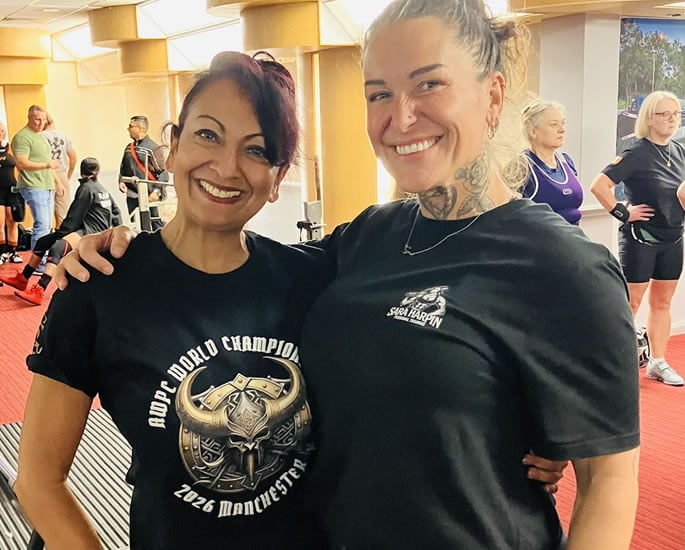
Just 13 days after the Nottingham competition, Aneela Rose had another opportunity at a qualifier in Eastbourne.
She already trained at the gym and had one of her powerlifting coaches based there, giving her a familiar environment.
Aneela explains: “Once the emotion and frustration of Nottingham had subsided, my coach helped me see things more rationally.
“She reminded me that I was good enough. One bad competition hadn’t suddenly changed what I was physically capable of.”
Aneela also felt the two competition environments were different, although she could not fully explain why Nottingham had gone wrong:
“Something about Nottingham just hadn’t felt right to me that day, I can’t really put my finger on it.
“The environment didn’t feel right for me, the energy felt negative and, for whatever reason, the universe definitely wasn’t speaking to me in a positive way that day!
“And then something just switched in my head. I thought, I’m not being beaten by this as I’d trained and dieted for months.
“Was I really going to let one terrible day end my whole season without putting up a fight?”
“My head was basically saying, ‘Come on Aneela, give it another go’.
“Because if I didn’t try, I knew I’d regret it. And for me, living with the regret of not trying would have been much harder than trying again and potentially failing.
“So, I entered the Eastbourne qualifier. I was nervous, of course, but I went back and thank goodness I did!”
At the Eastbourne competition, Aneela lifted 242kg to qualify for the British Championships.
Getting Stronger
At the British Championships in July 2026, Aneela won a silver medal. She went on to take silver at the World Championships in September.
There was no major overhaul to her training, as she details:
“There wasn’t a dramatic transformation or secret new training programme! I simply went back to work.
“I trained consistently and fully committed to the sport, to my coach and to a new keto-based, very low-carb diet.
“For me personally, it worked incredibly well. I lost weight while getting stronger, which was a first after several years of struggling with menopause-related weight gain.
“I finally felt I’d found an approach that suited my body.
“I also continued training during Ramadan this year, adapting things where I needed to, and that period actually reinforced how focused I’d become. Things were starting to fall into place physically and mentally.”
Consistency has been more important for Aneela:
“The truth is, a lot of progress is actually very boring and unglamorous.
“It’s consistency when nobody is watching. And that’s probably where I come into my own because once I’ve committed to something, I’m all in. You can’t easily stop me!”
Her experience in Nottingham also changed how she viewed failure during the rest of the season:
“The biggest change was in my head. Nottingham stopped being something I needed to erase and simply became part of the season.
“Five months later I was standing on a World podium.
“That doesn’t make Nottingham any less of a failure; it just means failure wasn’t the end of the story. For me, strength is what you do next.”
From Javelin to Powerlifting
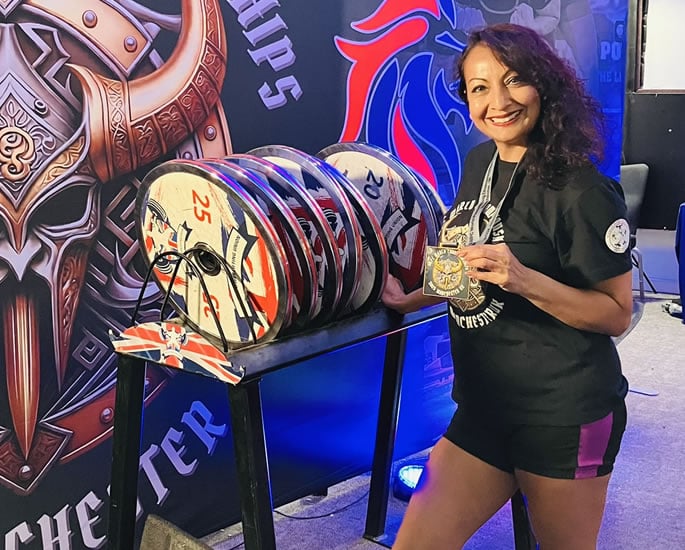
Initially, Aneela Rose did not set out to become a powerlifter.
Her sporting background was in javelin, which she returned to after watching the 2012 Olympics. She joined Crawley Athletics Club but repeatedly injured her throwing shoulder.
Her coach recommended strength training, leading Aneela to work with a personal trainer who quickly recognised her potential in lifting.
She recalls: “There’s a story that still gets repeated now.
“One day he looked at me and said, ‘Aneela, you don’t realise it, but you’re freakishly strong. You should compete in powerlifting!'”
At the time, javelin remained her priority but strength training gradually became a sport in its own right.
In 2016, Aneela entered her first powerlifting competition.
“I wasn’t exactly delighted because javelin was still my first love! But gradually the strength training took over.
“I loved the feeling of getting stronger and being able to do something this month that I physically couldn’t do a few months earlier.
“There wasn’t really a grand plan to become a powerlifter.
“I reluctantly switched sports because my shoulder kept letting me down, then discovered that I was actually rather good at lifting heavy things.
“Sometimes the thing you end up being good at isn’t necessarily the thing you originally set out to do.”
As her body changed, so has her training philosophy:
“I’m much better at listening to my body now.
“When I was younger, I probably thought more training automatically meant more strength. Now I understand that recovery is just as important as the training itself, as is consistency.
“Menopause has changed my body more than I ever expected.
“I’ve gone up a weight class; it takes me longer to recover and my body responds differently to training now.
“So, I have to work with the body I have today rather than wishing it behaved as it did 10 years ago.”
Aneela’s strength has increased, changing her understanding of what is possible later in life.
She says: “But I find it fascinating that I’m still getting stronger.
“How many sports are there where you can be in your 50s and genuinely say you’re better and stronger than when you started? It messes with your head!
“I’ve also learned just how valuable strength training can be for women as we get older.”
“Maintaining muscle becomes harder with age, and the decline in oestrogen around menopause can accelerate bone loss.
“Resistance training puts load through our bones, which helps stimulate them to maintain their strength, while also helping us preserve muscle and physical strength.
“I’ve learnt so much about my body over the years, and I strongly believe that if I hadn’t been strength training throughout this period of my life, I would have had a much tougher time through menopause.
“That’s something I think we sometimes miss when we talk about women lifting weights. Muscle is what you can see.
“The strength we’re building inside our bones is something you can’t.”
Redefining what a Powerlifter Looks Like
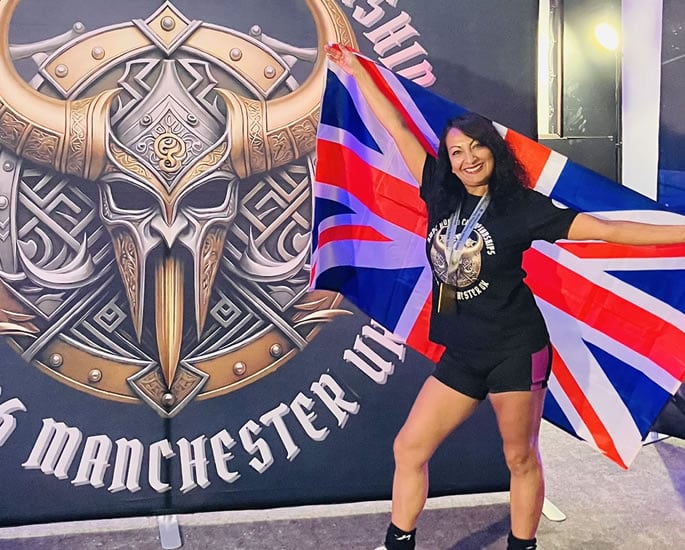
At 5ft 2in, Aneela Rose does not fit the physical stereotype some people may associate with an international powerlifter.
She recalls facing assumptions about her strength based on her appearance:
“I’m 5ft 2in, menopausal, a mum of two teens and a British Muslim woman with South Asian heritage.
“I’m probably not the first image that comes into some people’s heads when you say ‘international powerlifter’.
“But I’ve never gone into the sport thinking I needed to prove that somebody like me belongs there. I wanted to lift, so I lifted.”
Those assumptions have included people questioning whether she can be a weightlifter.
Aneela continues: “People make very quick assumptions about what strength looks like. I still get looked up and down in disbelief when I tell people what I do.
“Men have even asked to feel my biceps to check how big my muscles are, followed by, ‘You’re a weightlifter? Really? But you’re not very big!’
“I actually quite enjoy messing with the picture they’ve already created in their heads.”
During her time in the sport, Aneela has noticed greater female participation and more South Asian women competing.
“In the time I’ve been lifting, there are far more women taking part in the sport and I’m seeing more brown skin on the platform too, which is fantastic.
“I’d love to get to the point where seeing a South Asian woman lifting heavy weights is normal.
“More than anything, though, I wish women had more confidence in what they’re capable of.
“I talk to women all the time about powerlifting, how I train and how I fit it into an already busy life, and so many immediately tell me why they couldn’t do it. They’re not strong enough, not fit enough, too old, too busy, or they simply wouldn’t know where to start.
“I think we’re very good at ruling ourselves out before we’ve even given ourselves a chance.
“If sharing my story makes another woman think, ‘Actually, maybe I could’, and gives her the confidence to start somewhere, then that would make me incredibly happy.”
Svalbard to the Dubai Desert
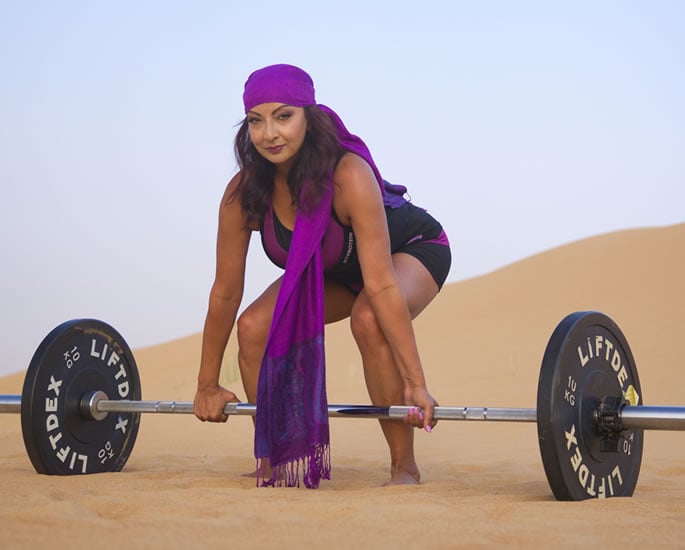
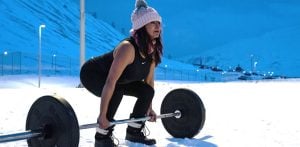
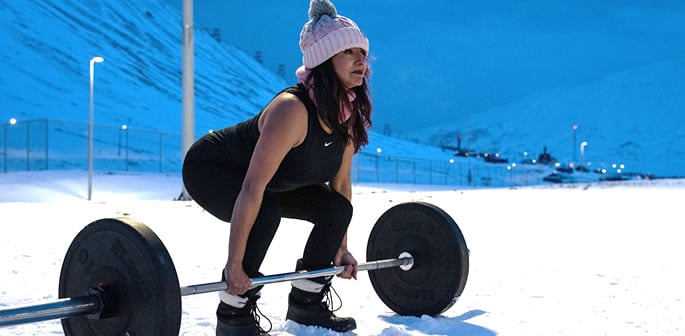
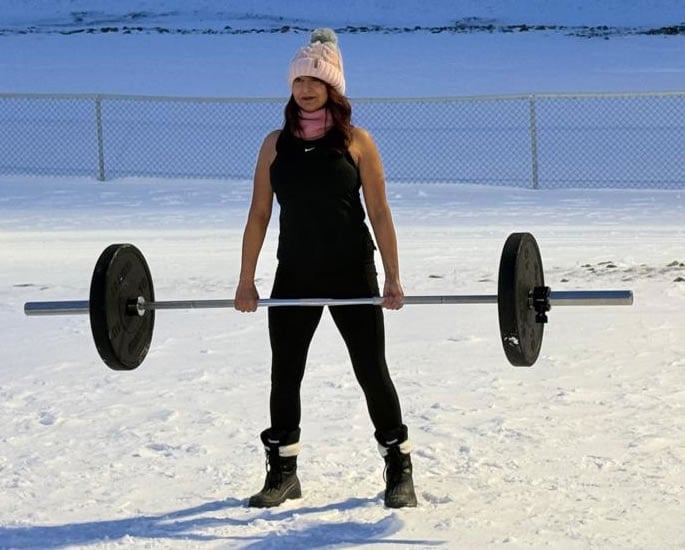
Aneela Rose has also taken powerlifting outside the conventional competition setting, including deadlifting in Svalbard at -23°C and in the Dubai desert with temperatures reaching 45°C.
Highlighting her “curiosity”, Aneela says:
“Competition is very controlled. Same lifts, same platform, rules, referees. I love that side of powerlifting, but I also love taking strength somewhere completely unexpected.
“Earlier this year I deadlifted outdoors in Svalbard at -23°C during the polar night, around 600 miles from the North Pole; it’s the world’s most northern permanently inhabited place.
“Then in August, I found myself deadlifting at sunrise in the Dubai desert with the temp heading towards 45°C. They couldn’t have been more different and I absolutely loved both experiences.
“For me, those challenges aren’t about how much weight is on the bar.
“They’re about taking something familiar and putting it somewhere unfamiliar; it’s a little crazy but so empowering.
“And I love the contradiction of it. People have an idea of what a powerlifter looks like and where powerlifting belongs. It seems mine sometimes belongs on ice or in a desert! Because, why not I say?!”
That willingness also plays a part in how Aneela approaches the future, as she details:
“Not knowing exactly what comes next is the best bit for me.
“I’ve realised that some of the most amazing things I’ve done have happened because I haven’t overthought them.
“Overthinking can be dangerous because if you give yourself long enough, you can talk yourself out of something!
“I’ve also learnt to pay attention to what excites me.
“If something gives me that rush, makes me smile but also gives me butterflies, a dry mouth and that nervous feeling in my stomach, I’ve realised that’s probably something I need to explore.
“The nerves tell me I care. Strangely, once I actually do the thing I was nervous about, I feel calmer because I’ve fulfilled something in me that needed doing.”
Her approach is to try, learn from what happens and attempt something again when necessary.
“You have to be a little bit brave and have the courage to take that first step.
“What’s the worst that can happen? It doesn’t always have to work out. Sometimes the fact that you were brave enough to try has to be enough.
“I’m pretty good at trying new stuff, failing and then having another go!
“That’s very much how I’m approaching what comes next. The destination deadlifts have started to take on a life of their own.
“After the High Arctic and Dubai desert, people have been suggesting some incredible places where I should lift next, so there are definitely a few ideas floating around. Let’s see where that takes me.”
Aneela plans to continue competing in powerlifting, with further goals still in sight:
“As for powerlifting, I’m definitely not done yet so I’ll keep competing for as long as my ageing body lets me.
“I’m still getting stronger, I still love the sport and there are still things I want to achieve.”
But Aneela hasn’t ruled out a return to her original sporting love:
“And I haven’t forgotten about my first love either… javelin. I think it might be time to brush the cobwebs off them soon and see what happens.”
Aneela Rose’s journey has taken her from a shoulder injury in javelin to World Championship gold, a difficult season setback and another international podium eight years later.
Her approach to powerlifting has evolved with age, but her willingness to compete, adapt and test herself remains unchanged.
From representing Team GB to deadlifting in Dubai, she continues to explore what her strength can look like in different settings.
And getting older has not narrowed her ambitions; it has given her a different set of questions to pursue.
With further competitions ahead and the possibility of returning to javelin, there is still plenty Aneela Rose wants to discover about what this version of herself can do.