













































"they provide another four, and all of them made sense."
A superbug problem that took microbiologists a decade to solve has been cracked in just two days by an artificial intelligence (AI) tool.
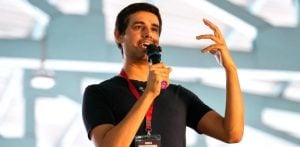
Professor José R Penadés and his team at Imperial College London spent years investigating why some superbugs resist antibiotics.
He gave “co-scientist”—a Google-made tool—a short prompt about his core research problem. The AI reached the same conclusion in 48 hours.
He was stunned, as his research was unpublished and unavailable in the public domain.
Professor Penadés said: “I was shopping with somebody, I said, ‘Please leave me alone for an hour, I need to digest this thing’.
“I wrote an email to Google to say, ‘You have access to my computer, is that right?'”
Google confirmed it did not.
The decade of research included years spent proving the findings. But had the team started with the right hypothesis, they say it would have saved years of work.
Professor Penadés said the AI did more than confirm his research.
He said: “It’s not just that the top hypothesis they provide was the right one.
“It’s that they provide another four, and all of them made sense.
“And for one of them, we never thought about it, and we’re now working on that.”
The team has been investigating how superbugs—dangerous germs resistant to antibiotics—develop.
Their hypothesis suggests superbugs form a tail from different viruses, allowing them to spread between species.
Professor Penadés compared it to superbugs having “keys” that let them move from one host species to another.
Crucially, this idea was unique to his team and unpublished.
So he decided to test Google’s AI.
Two days later, the AI returned several hypotheses. Its top answer matched his team’s research exactly.
AI’s impact on science is debated. Supporters say it will drive breakthroughs, while critics warn about job losses.
Professor Penadés understood the concern:
“I feel this will change science, definitely.
“I’m in front of something that is spectacular, and I’m very happy to be part of that.
“It’s like you have the opportunity to be playing a big match – I feel like I’m finally playing a Champions League match with this thing.”