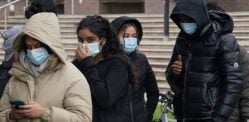


















































Links have been identified to Club Chemistry nightclub
The meningitis outbreak in Kent has raised urgent questions over its rapid cluster of cases in a matter of days.
The outbreak has been described as unprecedented and explosive, with at least 30 cases recorded since the weekend in one small area.
This sharply contrasts with the typical pattern of meningitis in the UK, where cases are usually isolated or occur in small clusters.
Meningitis has become relatively rare in the UK. Occasional clusters do happen, however, larger outbreaks have historically unfolded over much longer periods.
In the 1980s, a MenB outbreak in Gloucestershire led to 65 cases and two deaths. Those cases were reported over four-and-a-half years, not within a single week.
The speed and scale of the Kent outbreak have left experts searching for explanations. Meningitis requires close and prolonged physical contact to spread and transmits more slowly than infections such as measles, Covid or flu.
This raises a central question: how has such a rapid outbreak occurred under seemingly ordinary circumstances?
Early investigations suggest the situation is complex.
Links have been identified to Club Chemistry nightclub, where 11 of the first 15 affected individuals had attended. However, this alone does not fully explain the outbreak.
Meningitis B bacteria are also relatively common. Around 10% of the UK population carries the bacteria harmlessly in their noses. Among teenagers and young adults, this figure can rise to 25%.
In most cases, the bacteria do not cause illness. Only in rare instances do they cross into the body and lead to meningitis or sepsis.
For Professor Andrew Preston, from the University of Bath, there are two main possibilities behind the Kent cases.
He said there has either been an “astonishing rate of transmission” or the infection is proving to be “more invasive” in this instance.
The cause could lie in the bacteria itself, human behaviour, environmental factors, or a combination of all three.
Laboratory analysis has confirmed the outbreak involves group B meningococcal bacteria. But this category includes more than 100 strains, each behaving differently in the human body.
Some strains are more dangerous and more likely to cause invasive disease. Early findings suggest the strain involved has been circulating for the past five years.
Further genetic analysis is underway to determine whether the bacteria has mutated in a way that increases its severity or transmissibility. Scientists are also studying how the strain behaves under laboratory conditions.
Environmental and behavioural factors are also under scrutiny.
In regions such as the “Meningitis Belt” in sub-Saharan Africa, outbreaks are linked to dust, high temperatures and low humidity, which can damage the throat and allow bacteria to enter the body.
Similar mechanisms may be relevant in Kent, although no clear environmental trigger has been identified.
Attention has also turned to smoking and vaping. Both are known to irritate the airways and cause inflammation, which may make it easier for bacteria to invade the body.
There is particular concern about shared vaping devices. Passing vapes between individuals could facilitate the spread of bacteria through saliva.
However, vaping is widespread and not unique to Kent. On its own, it does not explain the exceptional nature of the outbreak.
The timing of hospitalisations suggests many individuals were infected at roughly the same time. This has led officials to consider the possibility of a super-spreading event.
With at least 11 cases linked to Club Chemistry, the head of the UK Health Security Agency, Susan Hopkins, said:
“This looks like a super spreader event with ongoing spread within the halls of residence in the universities.”
Super-spreading events occur when a single setting or gathering leads to a higher-than-expected number of infections.
Nightclubs and university halls can also act as mixing environments, increasing opportunities for transmission. However, these settings are common and do not fully explain the scale of this outbreak.
Experts are also exploring whether other infections played a role. Individuals with respiratory illnesses that cause coughing or sneezing may have unknowingly helped spread the bacteria.
Professor Andrew Lee, from the University of Sheffield, said: “In the scientific literature, there are some reported synergies between viral respiratory infections, for example flu, and meningococcal infections as the viral infections may potentiate the spread.”
This interaction could have increased transmission in crowded indoor settings.
There are additional questions about individual susceptibility. Some people may be more vulnerable to severe outcomes due to genetic or immune factors.
Another theory relates to the impact of Covid lockdowns. Young people who spent key years in isolation may not have developed the usual level of immunity to common bacteria.
Despite multiple lines of investigation, many uncertainties remain.
Hopkins added: “I can’t yet say where the initial infection came from, how it’s got into this cohort, and why it’s created such an explosive amount of infections.”
Health officials continue to monitor the situation closely as laboratory analysis and epidemiological investigations progress.
The findings will be crucial in determining whether this outbreak is an anomaly or a warning sign of changing patterns in meningitis transmission.