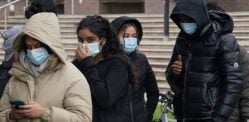


















































"It's the explosive nature that is unprecedented here"
Health chiefs have said the meningitis outbreak in Kent that killed two is “unprecedented”.
Health officials confirmed 20 cases of invasive meningitis in the Canterbury area. A 21-year-old university student and a sixth-form pupil at Queen Elizabeth’s Grammar School have died.
A targeted vaccination programme is now underway, with around 5,000 students in university halls set to receive the meningitis B vaccine.
Susan Hopkins, chief executive of the UK Health Security Agency, said:
“It’s the explosive nature that is unprecedented here – the number of cases in such a short space of time.”
Hopkins added that the outbreak may have been linked to a “super spreader event” within university accommodation, where students had been socialising.
She said officials could not yet confirm where the initial infection originated.
Deputy chief medical officer Thomas Waite described it as the fastest-growing outbreak of its kind in his career.
Health Secretary Wes Streeting also labelled the situation unprecedented, warning it was “rapidly developing”.
The UKHSA declared a national incident on Sunday to secure supplies of antibiotics and coordinate the response.
Vaccinations are due to begin on March 18 as officials attempt to contain the outbreak. In addition, hundreds of people identified as close contacts are being offered antibiotics as an immediate precaution.
Five schools in Kent have reported confirmed or suspected cases. These include Queen Elizabeth’s Grammar School, Norton Knatchbull School, Highworth Grammar School, Simon Langton Grammar School for Boys and Canterbury Academy.
Across the UK, demand for vaccines has surged. However, pharmacists said they have either run out of stock or are close to doing so as concerned parents and students seek protection.
Six of the confirmed cases have been identified as meningitis B, the most common cause of meningococcal meningitis in the UK.
Routine vaccination against MenB was only introduced in 2015, meaning many current university students were not eligible as children.
Laboratory scientists are now carrying out whole-genome sequencing on the strain involved to determine whether a mutation could be responsible for the rapid spread.
The strain will also be tested against existing vaccines.
More than 30,000 people across Canterbury have been contacted by the UKHSA, which described the outbreak as “particularly large”.
Professor Anjan Ghosh, director of public health at Kent County Council, sought to reassure the public:
“It is not a pandemic where it spreads like wildfire.
“It takes quite a lot of prolonged contact for the bacteria to spread from one person to another.”
The government is not advising widespread school closures, although some institutions in affected areas have temporarily shut as a precaution.