













































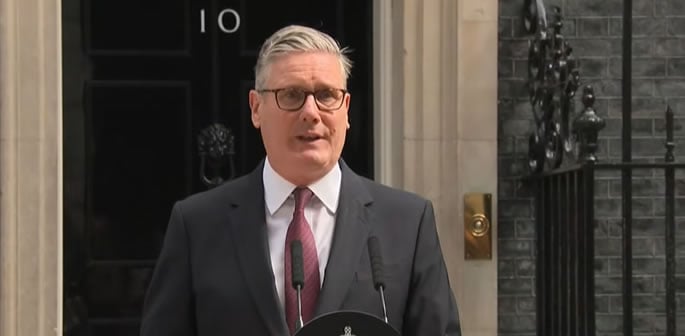
"I will resign as leader of the Labour Party."
Sir Keir Starmer has announced his resignation as Prime Minister and Labour Party leader, amid growing pressure over his leadership.
Starmer has faced growing internal unrest in recent months, with more than 100 Labour MPs calling for him to vacate Number 10.
Less than two years after leading Labour to a landslide General Election victory, his premiership has effectively unravelled under sustained political pressure and mounting criticism from within his own party.
Outside Downing Street, he said the question his party is asking is whether he is best placed to lead it into the next General Election.
Every decision, he said he has taken, has been about “putting the country I love first”, adding:
“I will resign as leader of the Labour Party.”
Starmer has asked the National Executive Committee of the Labour Party to set out a timetable with nominations opening for the leadership on July 9, and completed by the summer recess.
This will mean a new leader is in place before parliament returns in September.
He said that until then, he will remain as Prime Minister.
Pledging support to his successor, Starmer stated that after leaving the “biggest job in the country” he will spend more time on “the most important job”.
He concluded: “Being the best husband I can, to my fantastic wife Vic, who has been a rock by my side through good times and bad,.
“And being the best dad that I can to my beautiful children, who are my pride and joy.”
The resignation marks a dramatic fall for a leader who secured a landslide victory in 2024 on a wave of discontent against 14 years of Conservative rule.
However, that early momentum has been eroded by a series of scandals and policy disputes, which critics within Labour say have damaged public trust and weakened the government’s authority.
Calls for Starmer to step down have intensified since May, when Labour suffered heavy losses in local and regional elections, with Nigel Farage’s Reform UK making significant gains.
The results deepened internal divisions, with senior figures questioning the party’s direction and electoral strategy.
Those tensions were compounded by the departure of two Cabinet ministers.
Health Secretary Wes Streeting resigned last month, criticising Starmer’s leadership and signalling a possible future leadership bid.
Defence Secretary John Healey also quit following a dispute over military funding, accusing Starmer of failing to deliver on key promises.
Alongside internal instability, Sir Keir Starmer has faced reputational damage from a controversy surrounding the appointment of Peter Mandelson as US ambassador in December 2024.
The decision was criticised due to Mandelson’s friendship with convicted sex offender and financier Jeffrey Epstein.
Starmer later dismissed him after personal messages linked to Epstein emerged, while denying allegations he misled Parliament about the vetting process.
Mandelson was arrested in February on suspicion of misconduct in public office connected to Epstein, although no charges have been brought and he denies wrongdoing.
Attention has now shifted to Andy Burnham, the mayor of Greater Manchester, who has long been viewed as a potential challenger within Labour.
His return to Parliament after winning a special election is seen as a significant development, clearing a key procedural step should he formally enter the leadership race.