
















































"The film is not suitable for public exhibition."
The Sindh Board of Film Censors has refused to grant a censor certificate to the critically acclaimed Pakistani film Ghost School.
The decision prevents the film from screening anywhere in Sindh, including Karachi, which represents the country’s largest cinema market.
The refusal is particularly significant because the film was actually shot in Sindh, in Chashma Goth and another village on the outskirts of Karachi.
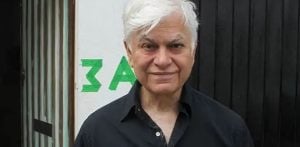
Ghost School was written, directed and produced by British Pakistani filmmaker Seemab Gul and addresses the deeply important issue of ghost schools.
The film also highlights the systemic obstacles that prevent girls from accessing education in rural and underserved communities across Pakistan.
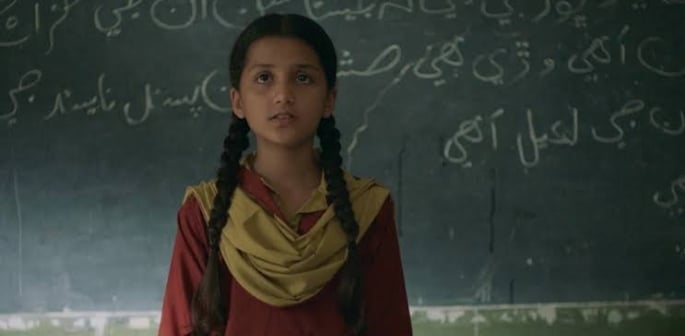
The story follows ten-year-old Rabia, played by Nazualiya Arsalan, as she desperately tries to pursue an education against mounting obstacles.
Her local school shuts down after a rumour spreads through the village claiming that the school building is haunted by spirits.
A teacher and a village elder are revealed to be using the haunting rumour as a deliberate pretext to close the institution entirely.
In a letter from the secretary of the Sindh Board of Film Censors, the board stated:
“After careful examination and due deliberation, the board found the film is not suitable for public exhibition.”
The letter offered no further explanation or detail about what specific content the board found objectionable within the film.
Gul expressed complete bewilderment at the decision, noting that no explanation was provided alongside the censor board’s formal rejection:
“I have no information about what the board members found objectionable in the film.”
Gul also noted that the federal censor board and authorities in Punjab raised absolutely no objections to the film whatsoever.
The contrast between the provincial rejection and the federal clearance has only deepened confusion.
Sindh Culture Minister Syed Zulfiqar Ali Shah responded to the controversy by defending the board’s authority and independence.
He told a private media outlet that the fifteen-member board operates as an autonomous body with the authority to issue and withhold film licences.
Shah maintained that the board must have had a valid reason for turning down the censor certificate application without elaborating further.
His response has done little to satisfy those who view the refusal as an unjustifiable act of censorship against an important artistic work.
Gul financed the production herself and continues to manage all distribution costs independently.
The denial of a Sindh censor certificate effectively cuts Ghost School off from its largest potential audience.
The financial losses created by this exclusion could be particularly severe.
What makes the Sindh board’s decision even more striking is the remarkable international recognition the film has already received.
Ghost School debuted at the Toronto International Film Festival, where it received a nomination in the coveted best film category.
It won the best director award at the UK Asian Film Festival, a significant recognition of Gul’s skill and vision as a filmmaker.
The film also screened at the Red Sea Film Festival in Jeddah and earned an honourable mention at the Indian Film Festival of Los Angeles.
Additionally, the project won a special award at the Asian African Latin American Film Festival, further cementing its international critical standing.
The film’s global acclaim makes the Sindh censor board’s refusal all the more difficult to comprehend for both Seemab Gul and the Pakistani audience.