

















































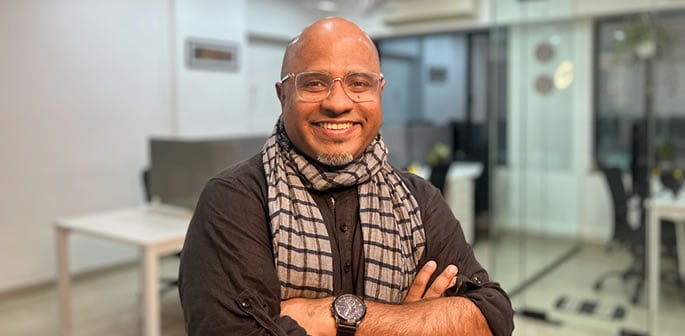
“The project began almost by chance."
Simit Bhagat, founder of Simit Bhagat Studios, has dedicated his career to preserving the rich musical heritage of northern India.
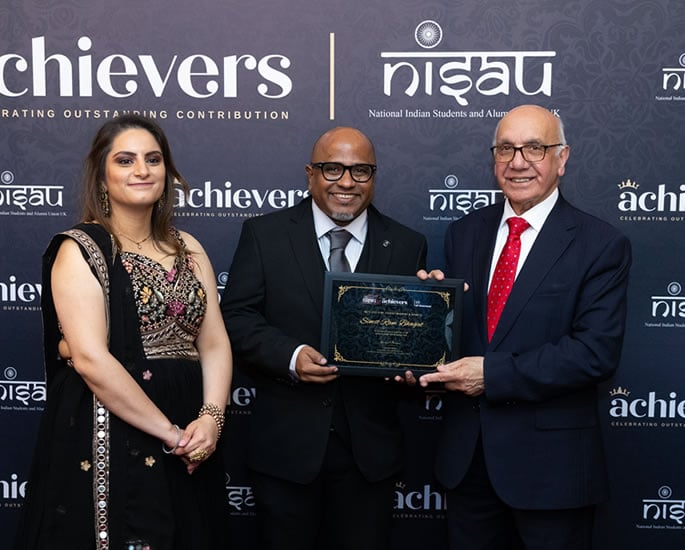
He recently received the India-UK Achievers Award for Arts and Entertainment for his work.
Bhagat leads The Bidesia Project, a digital archive that captures Bhojpuri folk songs and the migration stories they carry, tracing the journeys of Indian indentured labourers across the Caribbean, Fiji, Mauritius, and beyond.
These songs chronicle displacement, longing, and resilience, serving as living archives where written records are scarce.
Through field recordings, research, and contemporary reinterpretations, Bhagat ensures these traditions remain accessible, connecting past generations with a global South Asian audience.
Simit Bhagat talks to DESIblitz about the origins of the project and the importance of preserving these musical stories today.
Preserving Voices through The Bidesia Project
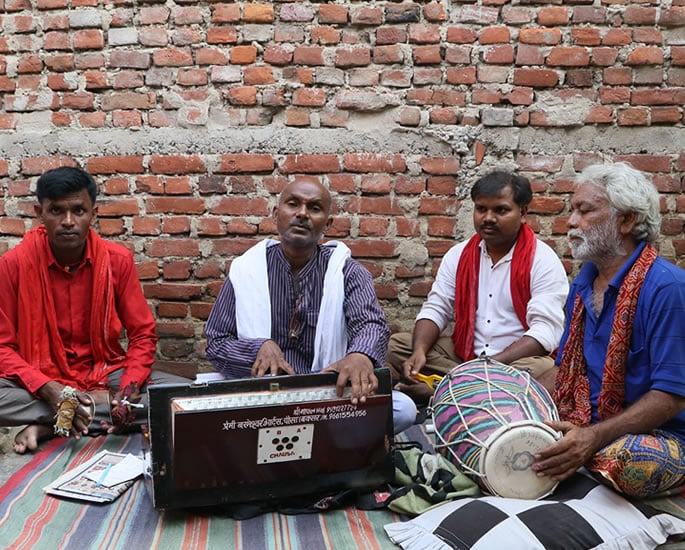
Simit Bhagat’s work on The Bidesia Project began during fieldwork in rural northern India, where he encountered Bhojpuri folk singers performing traditional songs in small community gatherings.
He recalls: “The project began almost by chance.
“I was travelling through villages in Uttar Pradesh for a monitoring visit for a large donor organisation. During that trip, I met Bhojpuri folk singers performing traditional songs in small community gatherings.
“When I listened closely, I realised many of these songs were about migration, longing and waiting. They told stories of people leaving their villages and families being separated.
“The music stayed with me long after I returned.”
A few months later, Bhagat returned with a camera and recorder, travelling nearly 750 miles across Uttar Pradesh and Bihar to meet singers and understand the music better.
He says: “Many of the artists I met were in their eighties and nineties.
“They had carried these songs for decades. I realised that if their voices disappeared, the stories would disappear with them.
“What struck me was that in many villages, these histories were not written anywhere. They survived only through music and memory.”
One encounter in particular stayed with him:
“One artist told me something that stayed with me. He said he did not care about money. He only wanted his music to reach people. That moment stayed with me.”
What began as documentation soon expanded into the documentary In Search of Bidesia, which travelled to festivals in India and globally, winning the Best Music Documentary Award at the 2021 Royal Anthropological Institute Film Festival, UK.
“Over time, this work grew into The Bidesia Project. The idea is to preserve the emotional history of migration through the voices of the people who kept these traditions alive.”
Migration, Memory and the Legacy of Indentured Labour
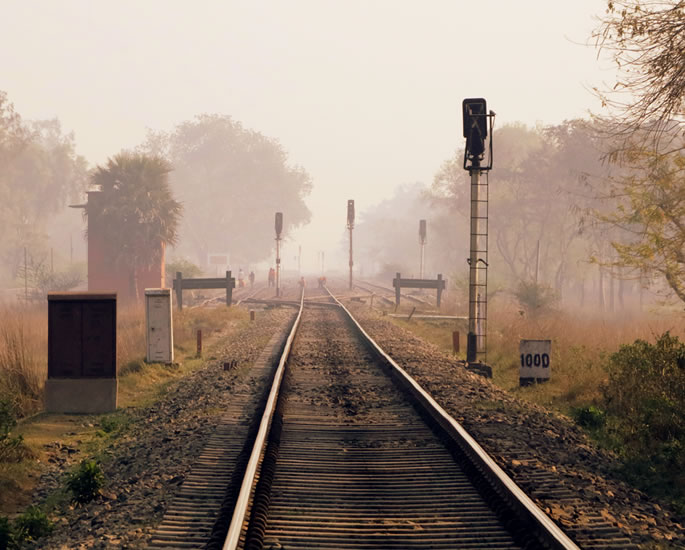
Bhojpuri folk songs carry the lived experience of migration, tracing the journeys of Indian indentured labourers across the British Empire.
Simit Bhagat says: “These songs are emotional archives.
“After slavery was abolished, the British transported nearly 2 million Indian labourers to plantations across the world under the indenture system.”
Most came from villages in Bihar and Uttar Pradesh due to the proximity of Calcutta (now Kolkata), often facing harsh conditions and separation from their families.
Bhagat elaborates:
“They were promised a better life but often faced harsh conditions, long journeys and separation from their families.”
Bidesia songs reflect this reality through intimate storytelling, as Bhagat says:
“Women sing about waiting for husbands who never returned. Men sing about why they had to leave home.
“The songs talk about ships, separation, letters that never arrived.
“Through these songs, we hear how ordinary people understood displacement long before historians documented it.”
The Challenges of Preserving Traditions
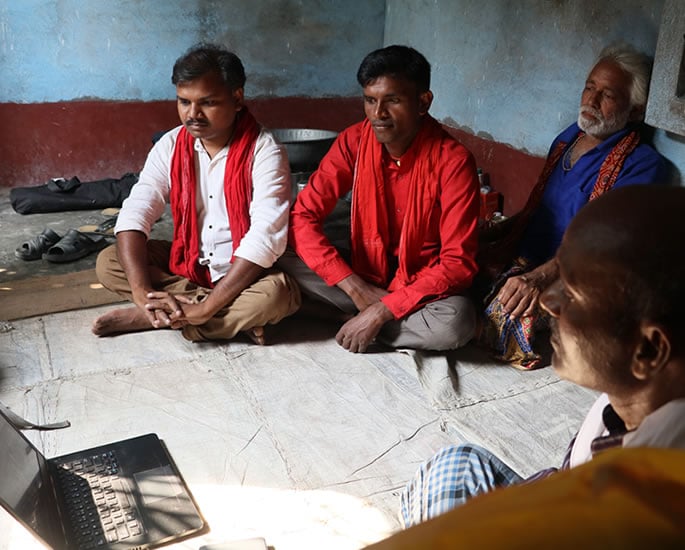
Preserving oral traditions comes with urgent challenges, particularly as the singers who carry them grow older.
Bhagat explains: “The biggest challenge is time. Many of the singers who carry these traditions are very old. Some are the last people in their villages who remember these songs.
“When a singer passes away, an entire oral history can disappear.
“Another challenge is documentation. These songs were passed orally for generations. Often nobody knows who originally composed them.
“Then there is perception. Folk traditions are often seen as outdated. Younger audiences sometimes move away from them.
“Also, as an independent project, resources are limited.”
Field research remains central to Bhagat’s approach.
“When I travel to villages, I try to record songs as they are sung naturally.
“Typically, these songs are sung in homes, courtyards, temples, fields and most recordings happen in the singer’s own environment. That authenticity is important.”
But Simit Bhagat says preservation alone is not enough:
“If the music is to survive, it must travel. So we also reinterpret the songs through film, digital archives, and collaborations with musicians and storytellers.
“The goal is to open new doors so that younger audiences can discover it.”
Music as a Global Thread
The legacy of migration is embedded in the music itself, carried by indentured labourers across the Caribbean, Fiji, Mauritius, and beyond.
Bhagat says: “When labourers left India for British colonies, they did not have a lot of possessions.
“But what they did have was language, memory and music. So they carried Bhojpuri songs with them.
“Over generations, those songs evolved and got mixed with local cultures and musical traditions.”
On what the cultural evolution means, Bhagat says:
“That is why Bhojpuri folk can still be heard in places like Trinidad, Guyana, Suriname, Fiji and Mauritius.
“Music, in a way, became a way for people to express their feelings and stay connected with their roots.”
Music also connects India, Britain, and global South Asian communities.
Bhagat continues: “The history of indenture connects these places.
“The migration itself was organised under the British Empire. Ships left Indian ports. Records were kept in British archives. Communities were formed across the Caribbean, Africa and the Pacific.
“Music is the common thread that binds Indian people with the people who left generations ago.
“A song recorded in a small village in Bihar can deeply touch someone in the Caribbean. In a way, that is the power of music and identity.”
Building a global archive has also transformed Simit Bhagat’s understanding of storytelling:
“At first, I thought I was making one documentary. But as I travelled and met artists, I realised the story was much larger and there is so much that needs to be archived.
“This realisation led to the creation of a digital archive that documents Bhojpuri folk music.
“The idea is to create a resource that can be accessed by researchers, musicians and the general public at large and understand and appreciate this music and culture.”
Preservation is urgent in the digital age, as Bhagat explains:
“Today, a lot of these songs and oral traditions are present in the memories of elders.
“Once they are gone, they are taking this intangible cultural heritage with them.
“Our work is to systematically preserve them before they get lost. This culture is a living history of people’s culture, identity and it helps us understand their roots.”
Recognition, which includes receiving the India-UK Achievers Award, has further amplified visibility and validation for both the project and the artists themselves.
Bhagat adds: “Awards and platforms create visibility. They bring new audiences to the music and new collaborators to the project.
“More importantly, they validate the importance of preserving cultural memory.”
“For the folk artists whose songs we record, it means their voices are being heard beyond their villages and sometimes across continents.
“In the end, the recognition belongs as much to them as it does to the project.”
Simit Bhagat’s work demonstrates how music can preserve histories that might otherwise be lost, linking personal memory with collective identity.
In documenting Bhojpuri folk traditions, he reveals the enduring impact of migration and the emotional depth carried across generations.
By creating an archive that is both scholarly and performative, he invites audiences to reflect on the ties between culture, memory, and diaspora.
His efforts remind us that heritage is not static; it lives through those who remember and those who listen.
In a rapidly changing world, the melodies of the past become a bridge, connecting distant communities and generations through shared human experience.