












































His line "Power is a great tonic" is chillingly delivered
The trailer for 840, Mostofa Sarwar Farooki’s long-awaited political satire, was released on December 6, 2024.
Also known as The Great Bangla Democracy Pvt. Ltd., the film is a sequel to Farooki’s 2007 cult classic 420.
The satire turned heads with its sharp critique of Bangladeshi politics and the sequel is already creating a buzz.
In 840, Farooki continues his exploration of the absurdities that define the country’s political landscape.
He has blended dark humour and biting satire to expose the manipulation of power at all levels—from grassroots politics to national leadership.
The 3-minute trailer sets the tone immediately with a provocative question:
“When a man wins an election with 103% of the vote, what does he ask for next?”
This opening line perfectly encapsulates the film’s premise, offering a critical commentary on electoral fraud and political corruption in Bangladesh.
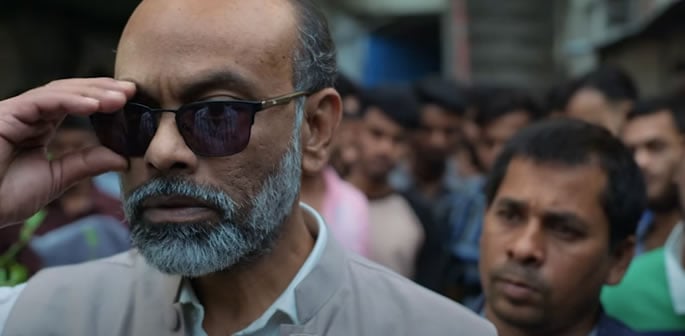
The character at the heart of the story, played by Nasir Uddin Khan, is a deeply flawed, power-hungry politician, who is determined to win a mayoral election by any means necessary.
His character is the epitome of hypocrisy: orchestrating a fire in a minority slum just to stage a grand relief effort afterwards.
His line “Power is a great tonic” is chillingly delivered, as his character realises that his manipulations aren’t getting him the admiration he craves.
In a bid to reach a wider audience, 840 will be released in theatres and on streaming services.
This wide-release format is fitting for the times, especially considering Farooki’s reflections on how Bangladesh’s political absurdity has only escalated.
He commented on social media that the situation in Bangladesh has become even more fertile for political satire.
Farooki said that due to this, he felt compelled to revisit the material.
Its predecessor, 420, became a cultural touchstone when it aired in 2007.
Now, 17 years later, Farooki is expanding the 420 universe with 840.
The film’s impressive ensemble cast includes Fazlur Rahman Babu, Shariar Nazim Joy, Nader Chowdhury, Marzuk Russell, and Bijori Barkatullah.
Farooki has also commented on the eerie similarities between today’s political climate and the period during which 420 was made.
He noted that both projects were created during politically unstable times – something he sees as unfortunate.
840 promises to be a bold and incisive commentary on the state of Bangladeshi politics.
840 is sure to offer both a sense of continuity and a new, more expansive vision of the political farce unfolding in Bangladesh.