















































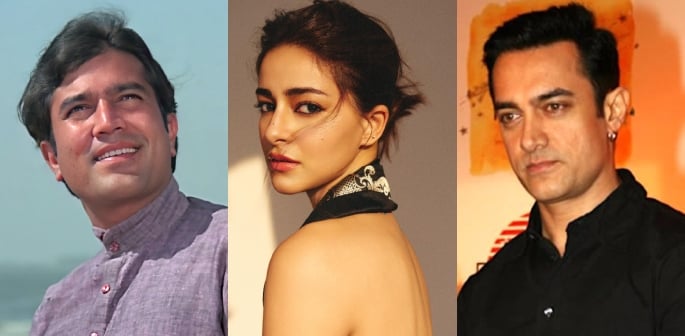
"That doesn't happen with this generation."
Bollywood superstardom is a mystical concept many actors seek when entering the industry.
The Indian film industry churns out over 1,500 films yearly, with the Hindi section being the biggest contributor.
Bollywood was started by Dadasaheb Phalke, with the first film of this sector being released in 1913.
Since then, the industry has seen many iconic stars and countless enduring and evergreen films.
However, with the rise of social media and paparazzi, is the era of enigmatic stardom over in Bollywood?
Join DESIblitz on an exciting ride as we discuss this idea.
Historic Icons
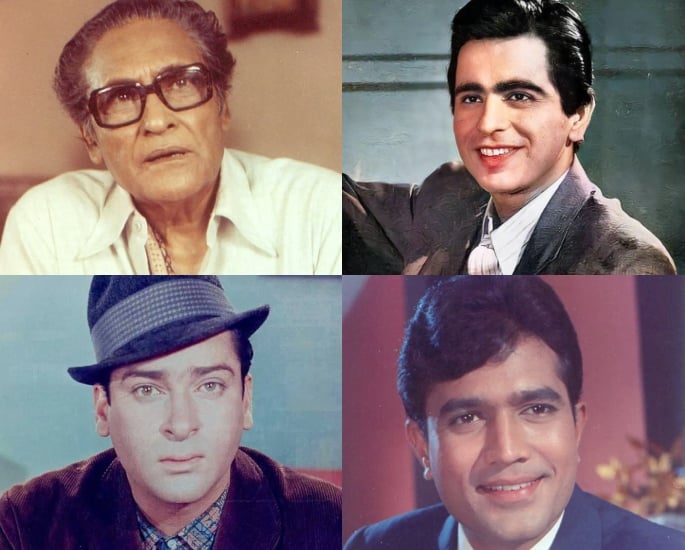 As we analyse the alleged fall of Bollywood superstardom, it’s important to look back and remind ourselves of previous legends who pioneered the idea.
Veteran stars in the 1940s included Kundan Lal Saigal, Ashok Kumar, Motilal, and Prithviraj Kapoor.
Prithviraj Sahab is regarded as the headliner of the Kapoor dynasty. The clan is credited with being one of the first families of Bollywood.
Meanwhile, Saigal Sahab was the first singing star of the industry, melding his brilliant acting with his iconic voice.
Ashok Kumar found stardom with Jhoola (1941). He went on to dominate the industry for most of that decade.
The mid-1940s saw the arrival of younger stars, including Dilip Kumar, Dev Anand, and Raj Kapoor.
These three stars captured the audience with their style and charisma and formed a unique trinity of popular actors which reigned supreme in the 1950s and 1960s.
Although other stars, including Shammi Kapoor, Sunil Dutt, Raaj Kumar, and Rajendra Kumar, made unquestionable impressions, this trio never lost their original charm.
However, in 1969, a young man burst onto the screen with Shakti Samanta’s Aradhana.
He mesmerised viewers in a way that was never seen before.
He proceeded to enjoy 15 consecutive solo hits over the next two years. But his inability to adapt to changing times swiftly took his crown away from him.
The man was Rajesh Khanna. Although his superstardom only lasted two years, the level of hysteria he achieved is still the stuff of legend in Bollywood.
Mystique & Mystery
 For decades, the only communication fans had with their favourite Bollywood stars was via their cinema.
Outside of movies, fans could send fan mail, but in the classic era, one couldn’t find their favourite star on a mobile app.
That added a significant amount of mystery and mystique around actors – people still wonder about them.
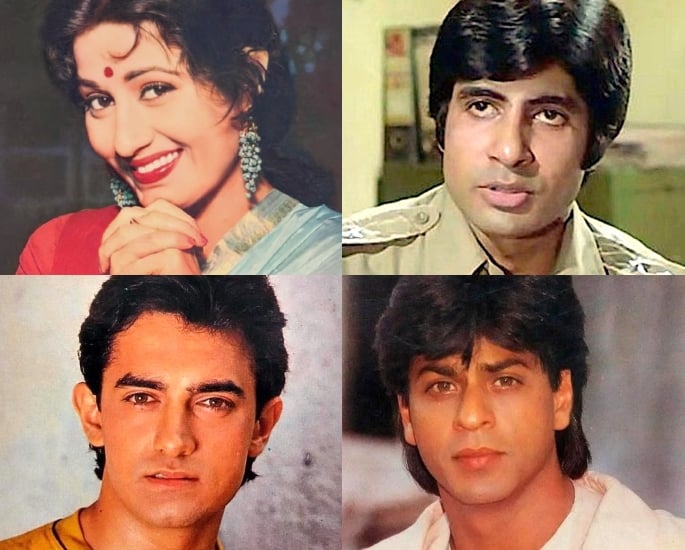
For example, the legendary actress Madhubala was noted for not attending film premiers or having a single televised or recorded interview.
Although Amitabh Bachchan has embraced social media and technology, during his heyday in the 1970s and 1980s, nobody could gain access to him.
This mystery and this wonderment are connotations of alluring stardom, which left fans hungry to know more about their stars.
In the 1990s, Aamir Khan, Salman Khan, and Shah Rukh Khan dominated the Bollywood landscape.
The media had grown stronger around this time, but information about the stars still depended on film magazines and written material.
This lack of accessibility surrounding actors increased their aura, and fans saw their interviews and sightings outside cinemas as a privilege.
It Started With A ‘Like’
 Bollywood superstardom repeated itself in 2000, when Hrithik Roshan burst onto the screen with Kaho Naa…Pyaar Hai (2000).
The dazzling combination of impeccable dancing and infectious acting that Hrithik presents was unlike anything anyone had ever seen before.
However, Hrithik is often regarded as “the last superstar of Bollywood”.
In the 2010s, social media reached a plateau of fame and accessibility. As a result, just like everyone else, the stars were also signing up to various platforms.
The pull of social media continues to grow, as actors including Jahnvi Kapoor, Ananya Panday, and Alia Bhatt have significant followings on social media.
In a 2022 interview, Anupama Chopra asked Karan Johar if stardom still existed in Bollywood. Karan replies:
“There is popularity, but there is no stardom. On a daily basis, I’m swiping you on my Instagram.”
“I know who you eat, who you meet, and what you do. How can there be any mystery attached?
“When I was at a party and Dilip Kumar, Amitabh Bachchan, or Shah Rukh Khan walked in, you felt that aura and energy.
“That doesn’t happen with this generation. I think they are brilliant artists, but I’m not sure about the magic and aura.”
Karan’s words describe how more availability has diminished classic Bollywood stardom.
Nepotism & Lack of Authenticity
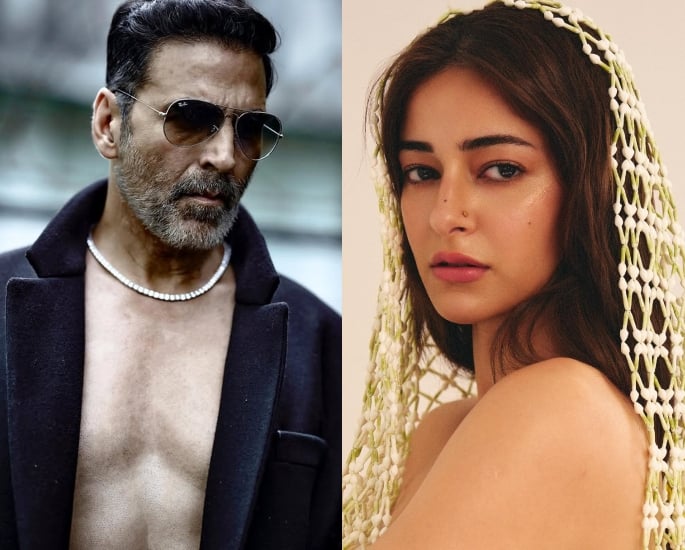 The term ‘nepotism’ refers to the practice of people gaining work through family connections.
This has resulted in galvanised debates and discussions surrounding how Gen Z actors have gained their break in Bollywood.
Nepotism often represents ‘star kids‘ who are the children of previously successful actors.
Such people include Ananya Panday, Sara Ali Khan, and Khushi Kapoor.
Young stars like these continue to face criticism about their opportunities in Bollywood, as some viewers opine that their talent doesn’t hit the mark.
Users on Reddit allege that Ananya is one such example. One person says: “I am yet to meet a person in the real world who is a real Ananya fan.”
Another declares: “OTT releases mostly always work.
“She would be a successful nepotism product when she pulls crowd as female lead or when the cast is not filled with bigger names than her.
“Her recent works have been good because she plays herself, and she basically sticks to playing what she is good at. Having good PR helps as well.”
This apparent lack of authenticity is not only in Gen Z stars. Salman Khan and Akshay Kumar have also seen their careers decline with the failure of their films.
This could indicate that actors are not enough to carry a film to success anymore. More attention and onus are being given to the story, characters, and screenplay.
What Next?
 We are living in an era where fame is largely driven by social media.
The number of followers a star has on TikTok or Instagram is almost equivalent to the ‘Golden Jubilees’ of the 1960s and 1970s.
Actors like Veer Pahariya and Rasha Thadani come from affluent families, with Rasha being the daughter of veteran actress Raveena Tandon.
However, the pair often face criticism for their alleged PR activities. For example, Veer has faced flak for having paid PR promotions for Sky Force (2025).
So, is the era of icons over? One could be forgiven for thinking as such, as before social media, stars had no external forces to rely on.
There would also be no film promotions. A single-page advertisement in a newspaper would lead to films running for over 25 weeks in cinemas.
Actors like Ranbir Kapoor have achieved dizzying levels of fame without a social media presence, but even they engage in PR and have regular interviews.
As we engage in social media and influencing techniques like never before, it’s safe to assume that this is the new definition of stars.
Bollywood superstardom is steeped with rich history and it can make for interesting discussion.
Before social media and AI took over, film stars were adorned with mystique, aura, and fans had curiosity about them.
As times change, so must the film industry. Perhaps the new concept of stardom is going to depend on how many ‘likes’ a person’s post receives.
However, one thing is constant: the zeal of our stars to entertain us isn’t slowing down.
For that, they deserve to be respected and supported.