















































"I grasped the psychology of the buyer and the tricks of the trade."
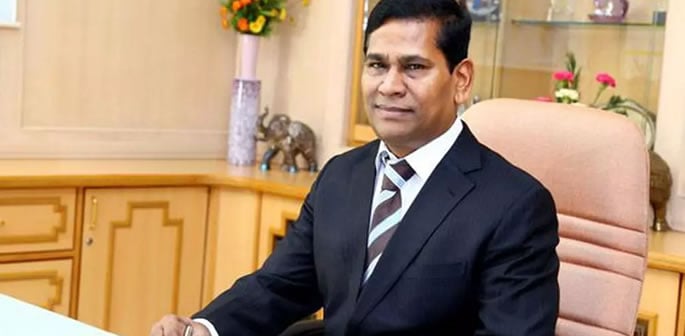
An Indian man who amassed his fortune by selling lottery tickets is in the headlines after he was revealed to be the top donor to political parties under a controversial funding scheme.
Santiago Martin’s Future Gaming and Hotel Services Pvt. Ltd bought electoral bonds worth £130 million between April 2019 and January 2024 under the scheme.
This allowed political donors to remain anonymous until the Supreme Court scrapped the scheme and ordered their names to be published.
Although donations under the scheme were not illegal, electoral bonds have been accused of making political funding more secretive.
The BJP introduced the scheme and was the biggest beneficiary, securing almost half of the bonds donated between 2018 and 2024.
It has now been revealed that of the bonds bought by Mr Martin’s company, nearly half went to the Dravida Munnetra Kazhagam (DMK) party, which governs Tamil Nadu where Mr Martin started his business.
It is unclear who the remaining recipients are.
As a teenager, Mr Martin worked as a daily wage labourer in Myanmar.
In the 1980s, he returned to India and worked at a tea shop in Tamil Nadu.
He noticed the popularity of lottery tickets throughout the state, especially among the poor.
This prompted Mr Martin to start his business.
He opened his first shop in Coimbatore and within a few years, overtook two competitors to become Tamil Nadu’s biggest seller of lottery tickets.
Mr Martin scaled up the sales of “two-digit” lottery tickets – scratch cards which revealed two digits that the buyer could instantly check against winning numbers revealed through a live telecast facilitated by his company.
According to a political observer, people crowded around small shops, watching lottery draws on small TV screens.
This led to higher sales but drove many into financial ruin.
Mr Martin’s lottery empire soon expanded to Karnataka and Kerala before reaching northern India.
In 2001, Mr Martin said he sold 12 million lottery tickets every day. By then, his business had agreements with several state governments for distributing the tickets.
According to Rediff, Mr Martin paid huge sums every day.
This included Rs. 350,000 (£3,300) in sales tax to the Tamil Nadu government and Rs. 759,000 (£7,100) to Sikkim’s government.
He said: “I succeeded because I grasped the psychology of the buyer and the tricks of the trade.”
But the 63-year-old has been embroiled in political scandals and has been accused of being involved in financial irregularities including lottery fraud.
Mr Martin’s associates refuted the allegations, accusing his rivals of collaborating with politicians to ruin his business.
In 2003, Tamil Nadu’s then chief minister, J Jayalalithaa, banned the sale of lottery tickets, acting on reports of people being financially ruined due to lotteries.
In 2011, again when Jayalalithaa was in power, Mr Martin was arrested and spent some months in jail in a case related to land-grabbing before getting bail.
In 2023, India’s financial crimes unit said it seized assets and bank deposits worth Rs. 4.5 billion (£42 million) after searching properties belonging to him and his associates.
That same year, Mr Martin’s appeal against the order was dismissed. He has not been convicted in any of the cases.
Santiago Martin has never addressed the allegations but his company’s website states that Future Gaming “is known for its compliance towards rules and regulations” wherever it conducts business.
According to the website, Mr Martin has also diversified his business into sectors such as real estate, hospitality and steel.
Even before the electoral bonds revelations, the ‘lottery king’ was in the news for alleged connections with political parties.
In 2007, a political scandal broke out in Kerala when then-Chief Minister VS Achuthanandan spoke out against his party’s newspaper accepting a donation of Rs. 20 million (£190,000) from Mr Martin.
The party eventually returned the money.
At the time, Mr Achuthanandan had launched a crackdown on illegal lotteries in the state.
Joseph Mathew, who was an advisor to the politician, told the BBC:
“His reasoning was that common people were losing lots of money and that there were many who had even died by suicide because they could not bear the losses they incurred from lotteries.”
In 2019, Tamil Nadu’s now-Chief Minister MK Stalin filed a defamation case against Junior Vikatan magazine after it published a story accusing him of “negotiating a deal of 5bn rupees” with Mr Martin as donations for the DMK.
Mr Stalin said it was a “figment of imagination of Vikatan” and that Mr Martin had never donated to his party.
The electoral bonds data has now led the DMK’s rivals and political observers in Tamil Nadu to question why the party received donations from Mr Martin when lotteries are banned in the state.
Mr Martin’s relatives also have political ties.
His wife Leema joined the Indhiya Jananayaga Katchi, an ally of the BJP while his son-in-law is a member of the Viduthalai Chiruthaigal Katchi, which is part of a Congress-led opposition alliance against the BJP.