















































"Both China and the US have sent clear messages"
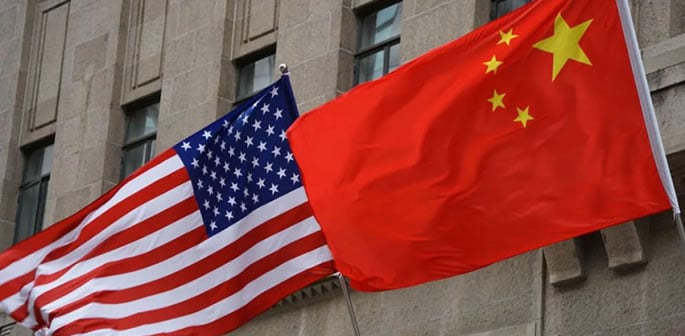
The tariff conflict between the United States and China has escalated to its most severe level yet.
Both countries are now imposing tariffs over 100% on each other’s goods.
This is not just a political standoff, it threatens global trade, disrupts supply chains, and hits consumer spending.
Prices could rise on everything from groceries to electronics, while markets brace for prolonged volatility.
Analysts warn the effects may be felt in households and economies worldwide for years to come.
Here’s how it could impact your money.
Triple Digit Tariffs
China has raised its tariffs on US imports to 125%, up from 84%.
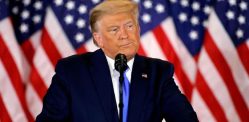
The move follows new tariffs imposed by President Donald Trump’s administration, which now imposes a 145% rate on Chinese goods.
That figure includes a 125% executive-order tariff and an earlier 20% fentanyl-related duty.
China’s finance ministry responded: “Even if the US continues to impose higher tariffs, it will no longer make economic sense and will become a joke in the history of world economy.
“With tariff rates at the current level, there is no longer a market for US goods imported into China.
“If the US government continues to increase tariffs on China, Beijing will ignore.”
Despite the tough tone, some analysts believe this is the peak.
Zhiwei Zhang, president of Pinpoint Asset Management, said:
“This is the end of the escalation in terms of bilateral tariff rates.
“Both China and the US have sent clear messages, there is no point of raising tariffs further.”
However, Zhang added: “There is no sign that the two governments would start negotiations and avoid major disruption in the global supply chains.”
Markets Already Feeling the Impact
The trade war is already hurting economic forecasts and investor confidence.
Goldman Sachs has cut its China GDP outlook to 4%, citing US pressure and global slowdown.
Exports to the US account for only 3% of China’s GDP, but millions of jobs are at stake.
Goldman Sachs estimates 10 to 20 million Chinese workers rely on exports to America.
China has held back on deeper retaliation.
It has not updated its “unreliable entity list” or imposed new export controls.
This signals a strategic effort to avoid damaging its own economy.
Still, China has vowed it will “resolutely counter-attack and fight to the end” if provoked further.
US Treasury Secretary Scott Bessent accused China of avoiding talks:
“It’s unfortunate that the Chinese actually don’t want to come and negotiate because they are the worst offenders in the international trading system.
“They have the most imbalanced economy in the history of the modern world, and I can tell you that this escalation is a loser for them.”
Everyday Costs will Rise
Consumers in both countries will feel the pressure.
Chinese goods will now cost more in US stores. The 145% tariff will be passed to consumers, adding strain to already stretched household budgets.
Meanwhile, US exports will be too expensive for Chinese buyers.
American farmers, automakers, and tech firms may lose access to one of their biggest markets.
This could lead to falling revenues, job losses, and slower investment in key sectors.
Investors aren’t spared either. Trade tensions often drive down stock prices and increase volatility.
Portfolios exposed to US-China trade will likely suffer.
Currency fluctuations are also affecting travel, import prices, and global investments.
Supply Chains Face Major Overhaul
The long-term impact may be a major global supply chain shake-up.
Companies built around low-cost Chinese manufacturing now face difficult choices. Many are being forced to relocate or diversify production.
These shifts are costly and complex, and will raise prices further.
Chinese exporters must find new buyers or sell more domestically.
US firms that depend on Chinese parts must now find alternatives, often at higher cost. The transition will take time, creating a lengthy period of disruption.
Diplomatic efforts are also shifting.
President Xi Jinping, meeting Spanish Prime Minister Pedro Sánchez, said:
“There is no winner in a tariff war and going against the world will only isolate itself.”
China and Spain pledged stronger ties in trade and innovation, signalling China’s interest in closer European partnerships.
Signs of Possible De-escalation
China has left the door open for talks.
A commerce ministry spokesperson said it is willing to negotiate with the US “on an equal footing”.
No new retaliatory measures have followed the recent tariff hikes.
This may reflect a strategy to keep pressure on Washington without burning bridges.
Still, a return to normal trade relations appears distant.
Markets and businesses must prepare for extended uncertainty. Small firms will need to rethink sourcing and trade strategies.
Investors should monitor exposure to vulnerable sectors and diversify where possible. Consumers should expect higher prices and less variety in the short term.
This is more than a temporary dispute, it’s a fundamental economic shift.
For decades, global trade revolved around US-China cooperation.
That era appears to be ending.
The impact will stretch from factory floors to family budgets.
Higher import costs, job uncertainty, and volatile investments are becoming the new normal.
While diplomats debate tariffs, ordinary people will feel the impact at checkout.
The trade war’s ripple effects are only beginning.
Adapting to this new landscape will take effort, awareness, and flexibility. Global tensions may shape your wallet more than any election or headline.