
















































"No power on Earth can stop an idea whose time has come.”
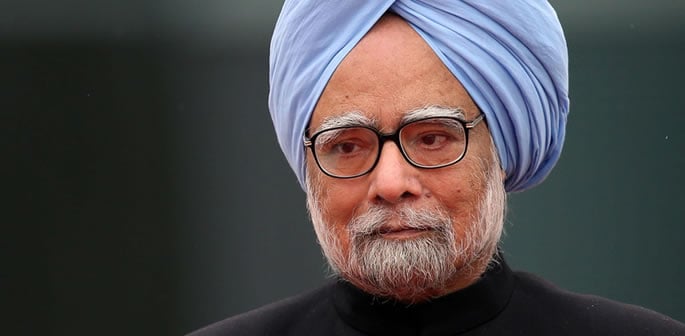
Former Indian Prime Minister Manmohan Singh has passed away at the age of 92.
A soft-spoken scholar with a legacy of groundbreaking reforms, Singh served as India’s Prime Minister from 2004 to 2014, following an illustrious career as finance minister and economist.
According to reports, Singh was hospitalised in Delhi after a deterioration in his health.
His passing marks the end of an era defined by steady leadership and sweeping economic change.
Born on September 26, 1932, in a remote village in Punjab, then part of undivided India, Singh’s early life was marked by hardship.
His village lacked basic amenities such as electricity and water.
Despite these challenges, Singh pursued higher education with exceptional determination, earning degrees from Panjab University, the University of Cambridge, and a DPhil from Oxford.
His time in England was marked by frugality, as detailed in a memoir by his daughter, Daman Singh.
She wrote: “He lived very stingily.”
She described how her father managed on limited funds while at Cambridge.
Beyond academia, Singh was remembered as a family man with endearing quirks—he couldn’t boil an egg or even operate a television.
Manmohan Singh rose to prominence in 1991, when India faced an economic crisis teetering on the edge of bankruptcy.
As finance minister, he unveiled a series of bold reforms that liberalised India’s economy.
Quoting Victor Hugo in his maiden budget speech, he declared:
“No power on Earth can stop an idea whose time has come.”
Under Singh’s leadership, taxes were reduced, the rupee was devalued, and state-run companies were privatised, creating an environment conducive to foreign investment.
His efforts revitalised India’s economy, curbed inflation, and set the stage for sustained growth throughout the 1990s.
In 2004, Singh became India’s first Sikh Prime Minister, stepping into the role after Congress leader Sonia Gandhi declined the position.
His tenure began with historic achievements, including a landmark nuclear deal with the United States that ended India’s nuclear isolation.
Singh also earned the distinction of being the first Indian leader since Jawaharlal Nehru to be re-elected after completing a full first term.
However, his second term was marred by corruption scandals and allegations of policy paralysis, which many believe contributed to Congress’s crushing defeat in the 2014 general election.
Despite criticism, Singh defended his record, asserting that his government worked tirelessly for the welfare of the Indian people.
His ability to maintain coalition alliances and navigate India’s complex political landscape earned him respect, even as critics labelled him indecisive.
Throughout his career, Singh was a consensus builder who balanced economic vision with personal humility.
His critics might have questioned his political strength, but his integrity and intelligence remained undisputed.
Manmohan Singh is survived by his wife, Gursharan Kaur, and their three daughters.
His passing leaves behind a legacy of resilience, intellect, and a transformative vision that reshaped India’s economic trajectory.